


New infrared sensors could support cancer screening and fall detection
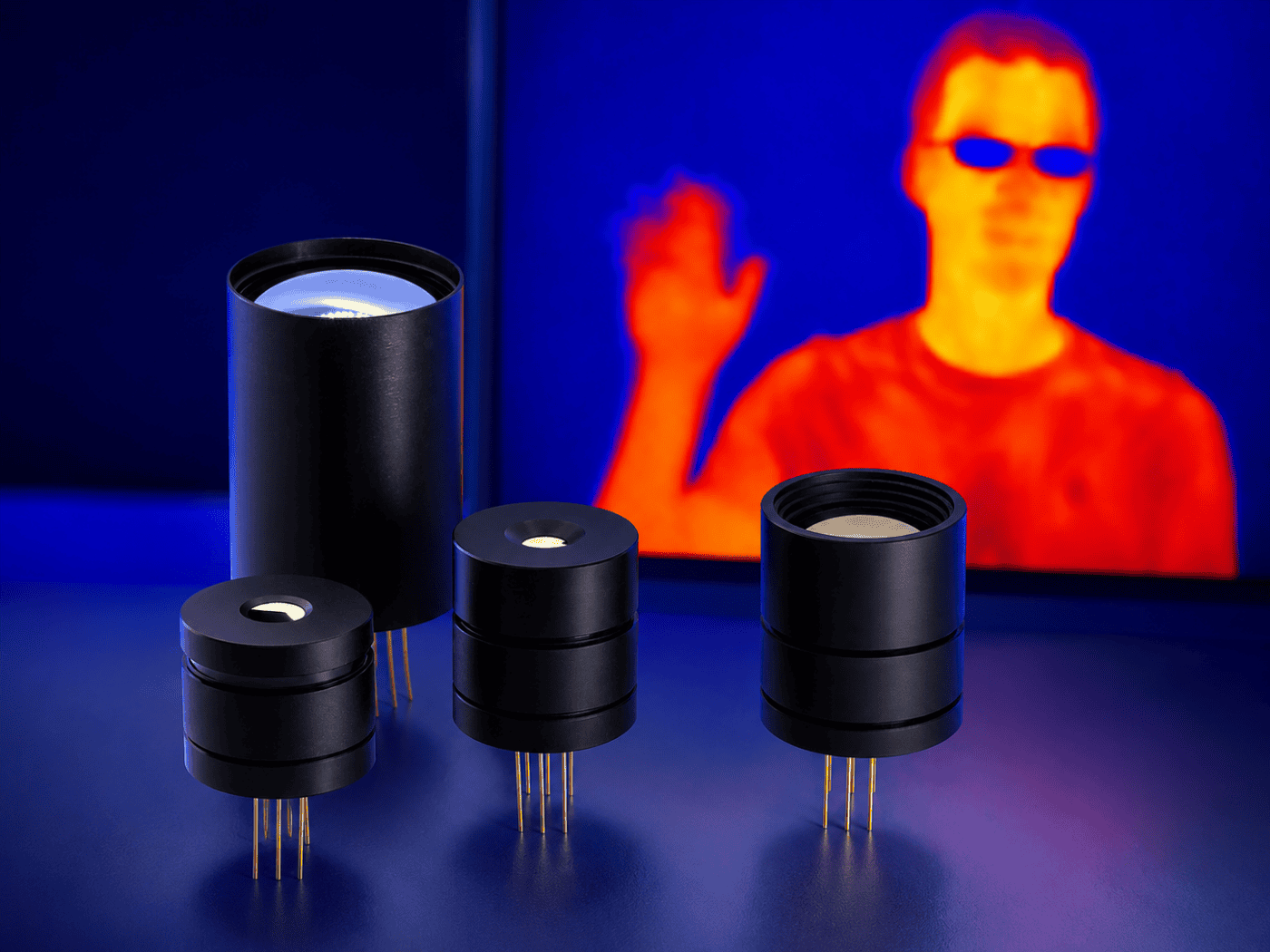
A fall in one’s own home. An infection that goes unnoticed. A driver who nearly misses a person on the street at night. In situations like these, new infrared sensors could help in the future. Researchers at the Fraunhofer Institute for Photonic Microsystems IPMS are developing them in collaboration with Heimann Sensor and the Leibniz Institute for Solid State and Materials Research Dresden (IFW Dresden).
The infrared sensors measure heat without touching anything. They detect the temperature of objects or people from a distance and use this data to create a thermal image. Such sensors are already in use today in building automation, security systems, and the monitoring of production processes. However, the materials used so far limit their performance.
New Materials for More Sensitive Thermal Sensors
This is exactly where the researchers from Dresden are focusing their efforts. For the first time, they are combining particularly high-performance materials with a manufacturing process similar to that used for modern computer chips. At the same time, they are developing a new design for the tiny sensors. This is expected to significantly improve their sensitivity.
The new infrared sensors are designed to detect even the smallest temperature differences. The goal is an accuracy of less than two hundredths of a degree Celsius. At the same time, the individual measurement points are to be made so small that thermal images will be significantly more detailed than before. Fraunhofer IPMS is developing the manufacturing processes for this and producing the first prototypes. Later, the new technology is also expected to be used in the institute’s own production processes.
Opportunities for Medicine, Mobility, and Industry
The higher sensitivity is expected to enable many new applications. In medicine, for example, the sensors could support early cancer detection or identify externally visible inflammation. In senior living facilities, they could reliably detect falls or emergency situations. Autonomous vehicles would also benefit from the more sensitive sensors.
For industry, new possibilities are opening up in thermography and process monitoring. Furthermore, the sensors are expected to enable cost-effective solutions for contactless temperature measurement in the future.
It will still be some time before infrared sensors can be used in everyday life. For now, the researchers are building initial test sensors. Later, these are expected to evolve into complete sensor chips in which the sensor and control electronics work together on a single chip.

