


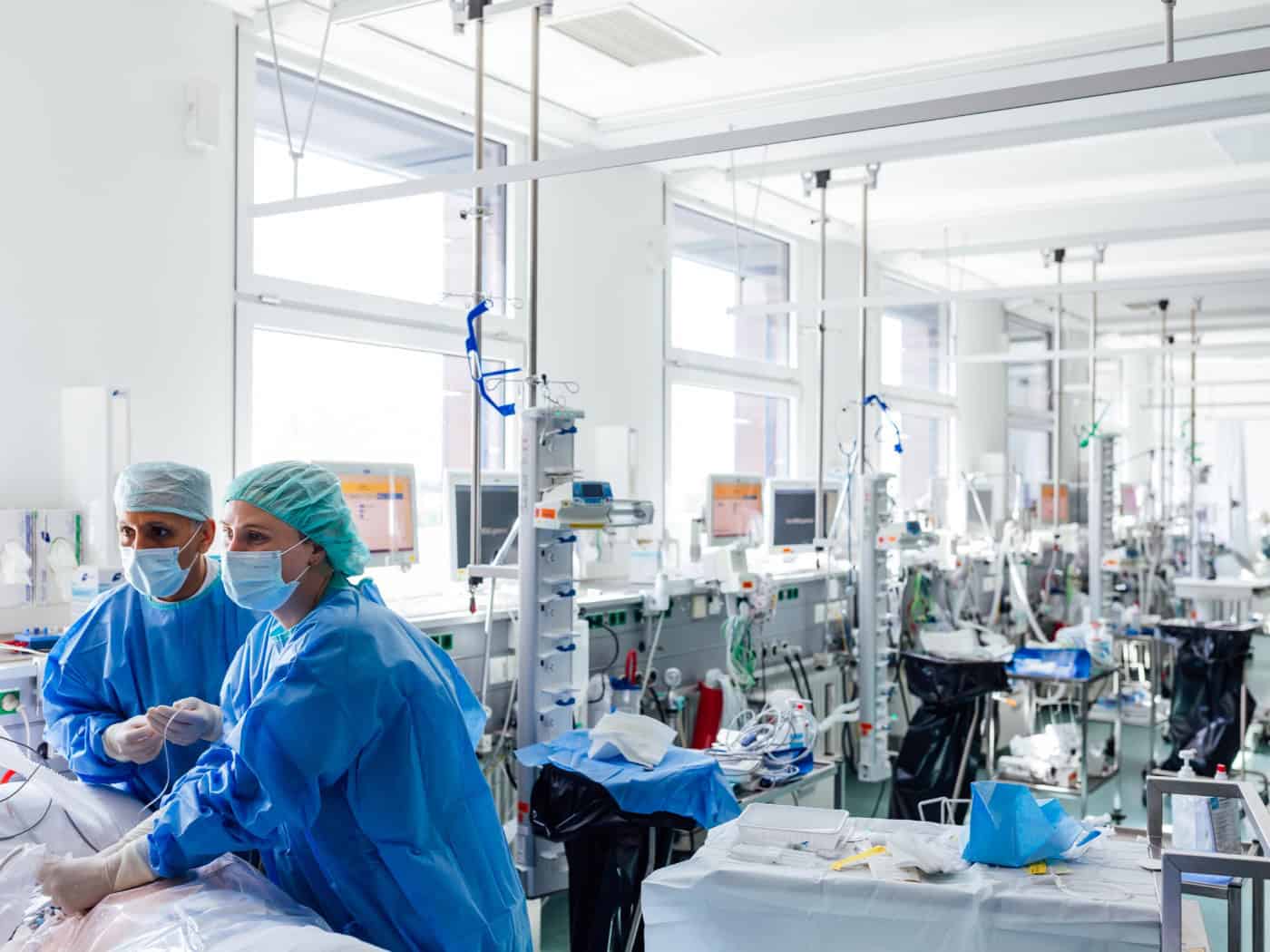
After heart surgery, most people assume a stay in intensive care is unavoidable. But Herzzentrum Leipzig has been showing for 20 years that this is not always necessary. Cardiac surgery is considered one of the most demanding types of surgery. It therefore seems only natural that patients would routinely require intensive care afterwards. But since 2005, the Leipzig Heart Center has been following a different approach.
The concept is called ERACS, short for “Enhanced Recovery After Cardiac Surgery.” Instead of being routinely transferred to the intensive care unit (ICU), many patients are first cared for in a specialized recovery unit known as the Post-Anesthesia Care Unit (PACU). There, anesthesiology specialists closely monitor patients during the first hours after surgery and support their early recovery..
Nine out of ten patients avoid the ICU
A scientific evaluation covering 15 years has now produced remarkable results. Of the 20,773 patients analyzed, more than 90 percent were treated without requiring a subsequent ICU stay thanks to the PACU concept. On average, mechanical ventilation ended after just under two hours, while patients stayed in the specialized recovery unit for around four to four and a half hours. They were then transferred first to an intermediate care unit and later to a regular ward.
For the concept to work safely, patients must already be stable after surgery. “In concrete terms, this means that patients must have a normal body temperature and stable circulation after surgery. They should also show no significant bleeding,” explains Jörg Ender, Chief Physician of Anesthesiology and Intensive Care Medicine at the Leipzig Heart Center. Patients who do not meet these criteria continue to receive intensive care treatment..
A team success with consequences for everyday hospital life
The concept has gradually expanded over the years. While the PACU started with three beds in 2005, it had already grown to eight beds by 2010. At the same time, the proportion of patients treated through this pathway increased from 19 percent in 2006 to 60 percent in 2020 — despite increasingly complex procedures and higher-risk patients. This also has practical implications for hospitals: ICU beds, which require particularly high levels of staffing and resources, remain more available for patients who truly need intensive care.
“The success of the Leipzig ERACS concept is above all the result of teamwork,” says Ender. Close cooperation between anesthesiology, cardiac surgery, intensive care medicine, nursing, physiotherapy and hospital management made it possible to improve procedures so that many patients stabilized more quickly and no longer required intensive care follow-up treatment. The study suggests that specialized recovery pathways can be safely integrated into routine cardiac surgery care.

