


Dangerous legacy of the gold mines
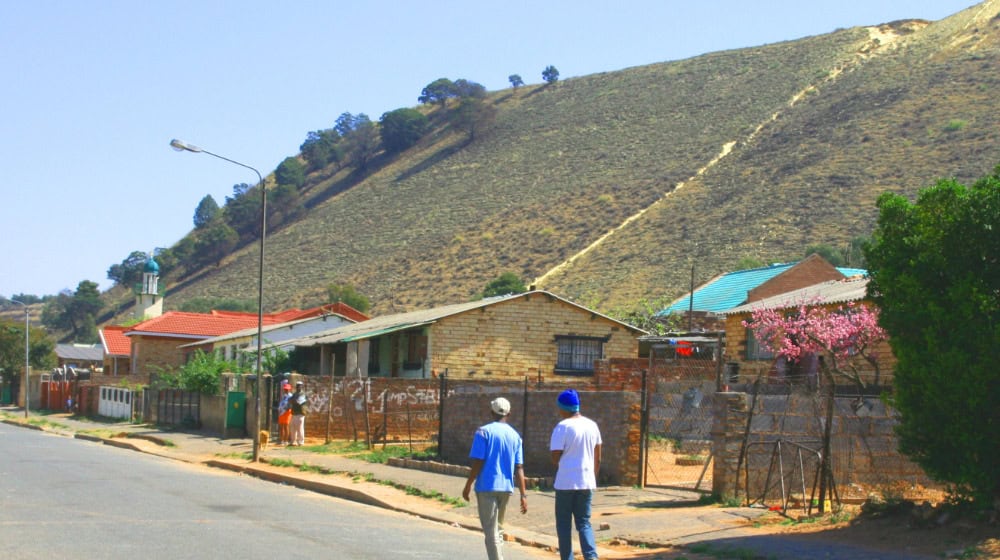
Thousands of families live near Johannesburg in South Africa surrounded by huge spoil heaps. The mounds of leftover rock are the result of 140 years of gold mining. The wind whirls up dust every day, which blows into houses and gardens. This dust contains uranium, a toxic heavy metal, and researchers from the Helmholtz-Zentrum Dresden-Rossendorf (HZDR) have now investigated the extent to which children in these areas are contaminated.
The scientists analyzed more than 400 hair samples from children. The result is clear: children from mining regions have significantly more uranium in their hair than children from areas without mines. "The dumps are often located directly in densely populated residential areas. It is known that toxic substances are transported to the houses in dust particles by wind, soil and water, especially in the dry season," explains Dr. Susanne Sachs from the Institute of Resource Ecology at the HZDR.
Hair stores pollutants for months
The HZDR collaborated with South African partners for the study. The researchers chose hair as the material for the study because it stores substances over a long period of time. Unlike blood, which only shows short-term exposure, hair documents the absorption of pollutants over months. Together with colleagues from the Wismut laboratory in Seelingstädt, the Dresden scientists developed a special method. This allows external contamination by dust to be distinguished from substances that have actually been absorbed.
After cleaning, the samples were ground and digested with acid. The analyses were carried out by the Association for Nuclear Process Engineering and Analytics Rossendorf (VKTA). Using high-precision mass spectrometry, the experts can measure even the tiniest amounts of trace elements. The South African team also recorded the age, gender and place of residence of the children. This information helps to understand which factors influence uranium exposure.
Further investigations needed
The study shows: The closer children live to the spoil tips, the higher their uranium exposure. Gender and age also play a role. The Witwatersrand Basin around Johannesburg is home to the largest gold deposits in the world. The spoil heaps extend over 400 square kilometers. They contain not only uranium, but also lead and arsenic. People absorb the toxins through the air, water, soil and food, especially through vegetables and grain from contaminated areas.
The researchers cannot yet say whether the measured values lead to health problems. This would require further studies. However, Sachs emphasizes the importance of the results. "The study helps to raise awareness in communities without unnecessarily stirring up fears," says the scientist. However, the measurements clearly show that better protective measures are needed for local people. In addition to the HZDR, the VKTA, Wismut GmbH and several South African universities were also involved in the international project. The researchers see their work as an important step towards better protecting affected communities.

