


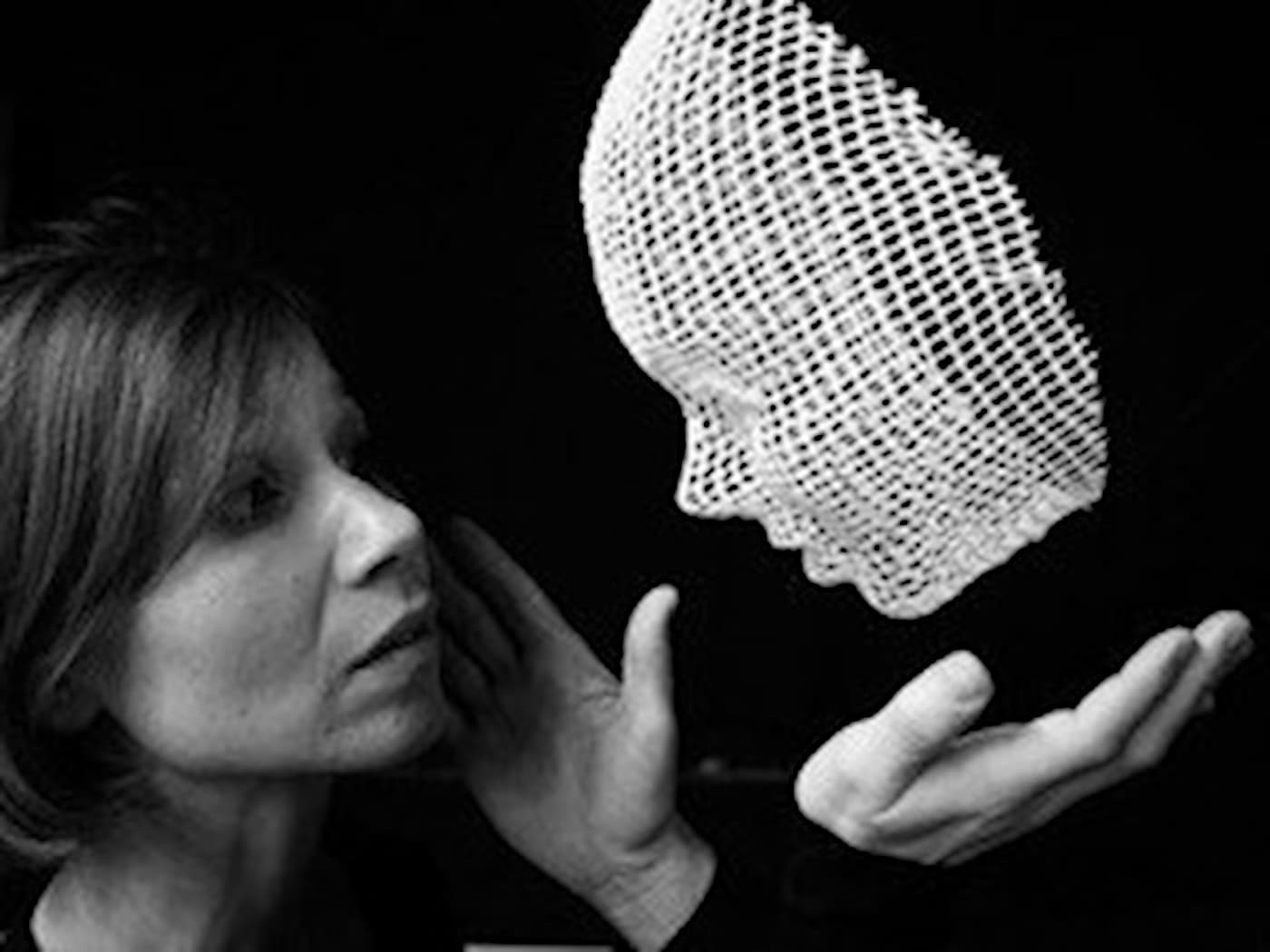
An actor stands on stage. He speaks, moves and follows the instructions of an artificial intelligence. What the two produce together surprises the audience and researchers alike. This experiment was the core of the art project "The Answering Machine". For four years, scientists from the Technical University of Dresden, together with partners from Zurich, Stuttgart and Tübingen, investigated how humans and AI can be creative together. The Volkswagen Foundation funded the project.
The team started with simple chatbots, i.e. computer programs that write texts and answer questions. The results on stage were still bumpy at the time. "We started with classic chatbots, which produced very creative but often absurd dialogues in the demo performances, for example," says Stefan Scherbaum, Professor of Methods in Psychology and Cognitive Modelling at TU Dresden.
Then came ChatGPT - and everything changed
ChatGPT was released at the end of 2022. The AI program was suddenly able to write much more fluently, understand contexts better and conduct more convincing dialogs. This was a turning point for the project. "We were able to experience live how the technology improved from week to week, enabling us to make progress and create interaction scenarios in the project that no one would have dared to think about at the start of the project," recalls Scherbaum.
Suddenly it was possible to investigate collaboration between humans and machines in a way that would have been unthinkable before. The researcher sees this as a particular stroke of luck. "It was a privilege to be able to conduct research on this topic at precisely this time and to be able to participate in the developments up close." Many experts compare the significance of AI today with the invention of printing - a technology that is changing how people think, learn and work together.
Conclusion with a public audience in Dresden
On March 25 and 26, 2026, the project will end with an international symposium at the Deutsches Hygiene-Museum Dresden. The title is "Teaming Up with Generative AI: From Tool Use to Partnership". Scientists, artists and practitioners from many disciplines will come together there. Their common question: How can AI not replace humans, but enhance their abilities?
Those who would like to experience for themselves how humans and AI interact on stage will have the opportunity to do so at three public events surrounding the symposium. The performances will be held in German.
Dates:
24.3.2026, 8 pm Project Theatre Dresden "Humanize Me" (Tickets)
26.3.2026 7.30 pm Hygiene Museum "Memories of my time as a human", incl. panel discussion (sold out, possibly still remaining tickets)
27.3.2026 19.30 Kulturhafen Dresden "Von der Wiege bis zur Bahre - Chatbots, Agents, Avatare" (Tickets)
KI Research - TU Dresden - Artificial Intelligence - The Answering Machine - ChatGPT - Stage Performance - Human-Machine Interaction - Deutsches Hygiene-Museum

