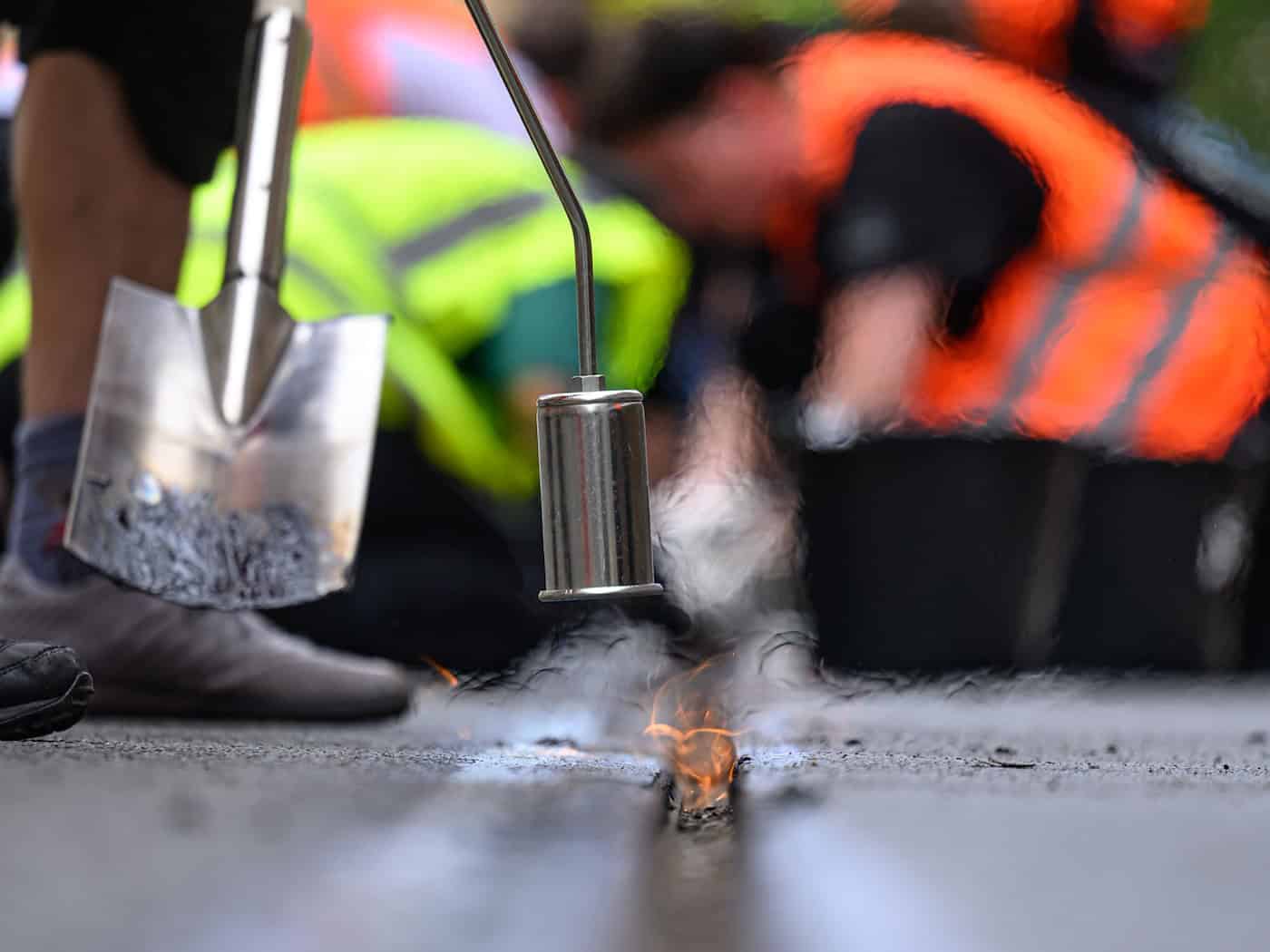
About a month after tram service in Leipzig was completely suspended due to heat-related damage, bus and train service in Saxony’s largest city has once again been restricted. Several bus and train routes were rerouted on Thursday. This is a consequence of the heat plan that was developed following the disaster at the end of June, said Marc Backhaus, spokesperson for the Leipzig Public Transportation Authority (LVB). The plan stipulates that, as a precaution, buses are no longer allowed to run on tracks when temperatures reach 33 degrees or higher. This is regularly the case in many parts of Leipzig. The buses had to either pull over to the side of the road or take a detour. The LVB posted information about the changes online. In addition, three tram lines in eastern Leipzig were rerouted. On June 27, tram service in Saxony’s largest city was completely suspended. Extreme heat, with temperatures around 40 degrees, had softened the joint sealant on the tracks. It caused the tracks to stick together. “We don’t want this to happen again. That’s why we have to be vigilant, monitor the situation, and close the lines as a precaution,” said Backhaus. An expert is still investigating the exact cause of the severe heat damage. One theory, however, is that buses and other vehicles with rubber tires pulled out the softened joint compound. The trams may then have spread the black, sticky substance further—until, ultimately, all service had to be suspended for safety reasons. Unlike at the end of June, the nights are now cooler, said LVB spokesperson Backhaus. This means that the heated joint compound can cool down more effectively. The transit authority planned to decide overnight how bus and rail service could operate on Friday. Copyright 2026, dpa (www.dpa.de). All rights reservedJoint sealant on the tracks softens
Cooler Nighttime Temperatures Help