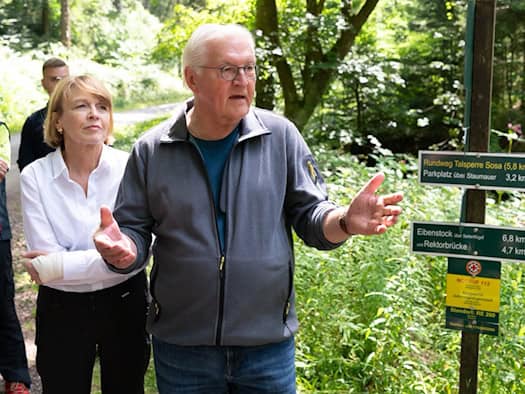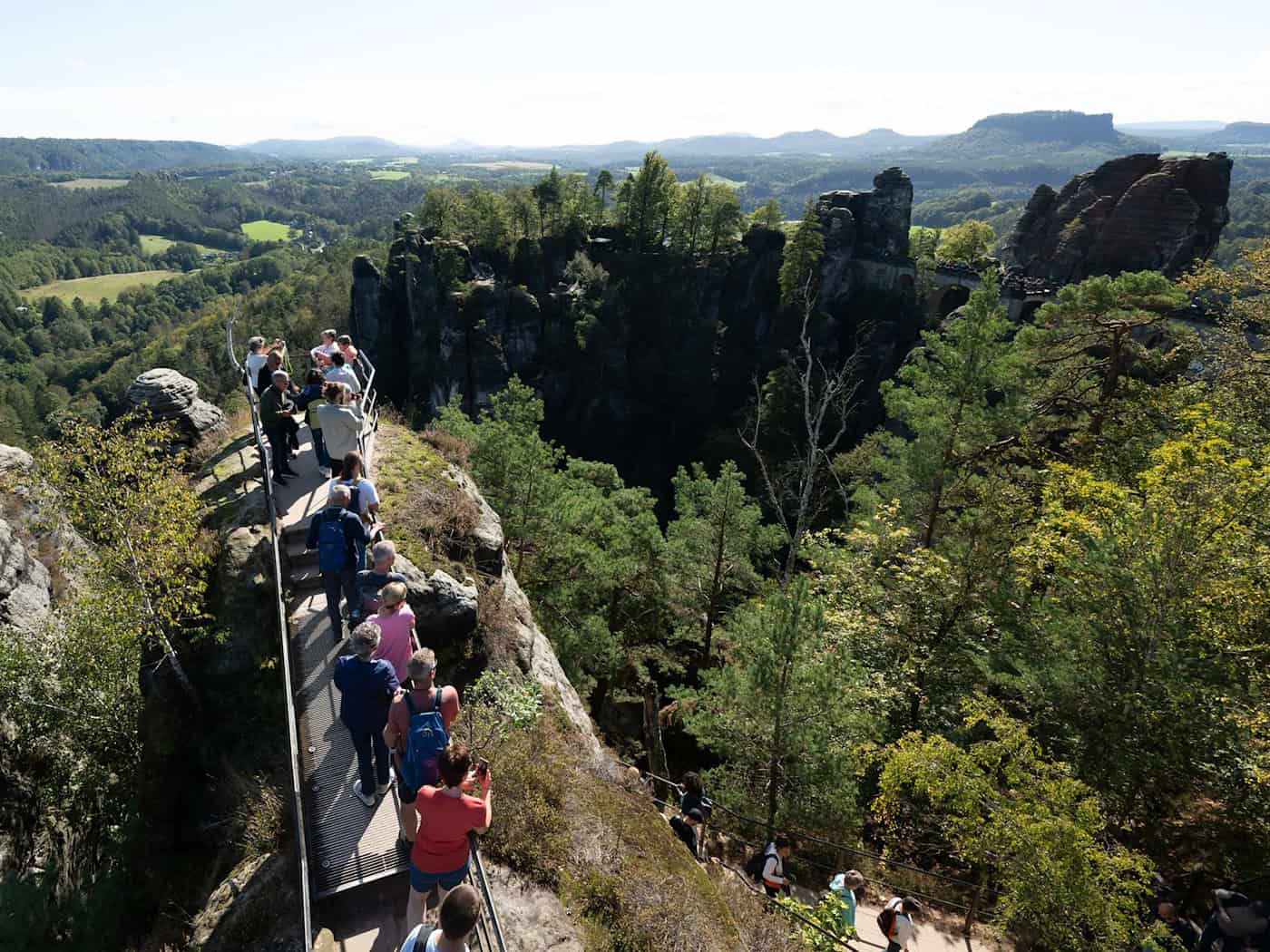
With the spring-like weather, the hiking season starts in many regions between Oberlausitz and Harz. With the start of the main season between April and May, hiking trails are checked and repaired in many places, according to the associations. Trails, bridges and steps need to be repaired, markings on trees or posts checked or paths checked for fallen trees. These are just some of the important tasks that need to be done. But who takes care of them? In many places, hiking regions rely on volunteer commitment - for example from hiking associations or so-called trail wardens. As volunteers, they help to maintain the hiking trails. "This commitment deserves great thanks and recognition," says the Saxony Tourism Association. According to Thüringer Tourismus GmbH, recruiting, training and retaining trail wardens in the long term is a challenge. Heavy rain and storms can damage the trails. They therefore need to be constantly monitored, according to the Saxony-Anhalt Tourism Association. But the summer months with heat and drought are not easy either. "Persistently high temperatures pose a challenge both for the trail infrastructure and for the health of hikers," it said. There is a lack of natural shade in open areas. Hikers are therefore advised to protect themselves from the sun and drink enough, especially in summer. The Thüringer Tourismus GmbH reported that some trails are closed due to climate damage and pests. The association in Saxony also reports that routes are closed when the condition of the forest requires it. Another problem encountered by trail wardens: Due to tree mortality, many signs have to be attached to posts instead of trees - these also have to be maintained. Ensuring safety on slopes, for example, is particularly challenging. Saxony-Anhalt has more than 5,000 kilometers of hiking trails, according to the state association of German mountain and hiking clubs based there. In Thuringia, hikers can use around 17,000 kilometers of trails. The state tourism association in Saxony speaks of around 19,000 kilometers of marked trails. Like the association in Saxony-Anhalt, Thüringer Tourismus GmbH points out the high costs associated with maintaining the hiking infrastructure: "The available funding is used efficiently and fully utilized every year, but is offset by rising costs". The association in Saxony-Anhalt reports high costs because people destroy signposts, for example. But hiking is no longer limited to the warmer months. More and more hiking fans are out and about in Saxony, Saxony-Anhalt and Thuringia all year round. Thüringer Tourismus GmbH attributes this to less fluctuating temperatures during the seasons. This is also due to winters with less snow. "The destinations are adapting to this and developing their offers accordingly, for example in the area of winter hiking," it says. Saxony is focusing on winter hiking offers, particularly in Saxon Switzerland. In Vogtland, hikes are also frequently organized in spring. Many people are also drawn to the Caspar David Friedrich Trail in Saxon Switzerland. Last year, the 15-kilometre circular trail between Krippen and Schöna was voted "Germany's most beautiful hiking trail 2025" in a public vote by the magazine "Wandermagazin". It came out on top in the day tour category. Copyright 2026, dpa (www.dpa.de). All rights reservedTrail wardens provide orientation

The climate influences the work of trail wardens
"The condition of the forests remains a challenge"
Maintaining thousands of kilometers of hiking infrastructure
Hiking all year round