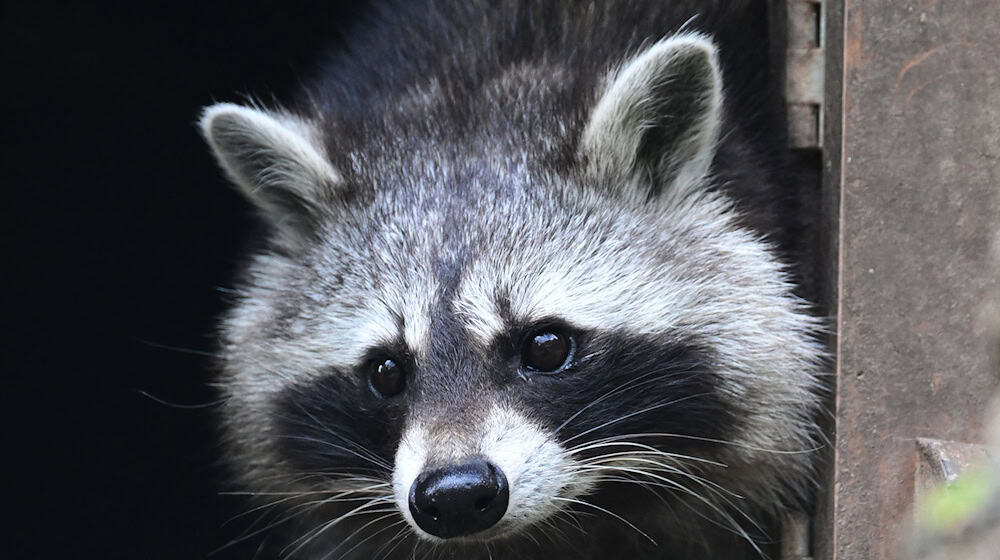
For some they are cute animals, but for some they are real pests: raccoons are also spreading rapidly in Saxony. Even if there are no exact figures, the hunting distances speak for themselves. In the 1992/1993 hunting year (April 1 to March 31 of the following year), raccoons were shot for the first time in Saxony's forests - three specimens. Ten years later, there were 80, and in the 2024/2025 hunting year there were already almost 27,000, according to the state hunting association.


What characterizes raccoons?
The raccoon is considered to be a very adaptable, clever and intelligent omnivore. This is why they can make almost any food source accessible to them. "The animals are inventive, cooperate in family groups, are patient and capable of learning. That's why they can often easily overcome obstacles that are too simple," reports Sievert. His association is therefore forced to construct and hang up "raccoon-safe" bird nesting boxes. This also applies to other nature conservation measures. Some species conservation projects are difficult to implement because of the raccoons.
What damage do raccoons cause?
The raccoon raids bird nests during the breeding season, eats migratory amphibians during the spawning season and occupies caves that are then no longer available for native species such as the tawny owl, lists the nature conservation association. Roosts of bats, squirrels and many other animals are also possible food sources for the raccoon. Locally, its presence can lead to the collapse of bird and amphibian populations, which have often previously been supported by laborious nature conservation measures.
The State Office for the Environment, Agriculture and Geology cites problems for homeowners and farmers - especially if farms grow special crops such as fruit or wine. "Economic damage can occur here, as the animals eat the fruit and damage plants." The small bears would enter houses in search of sleeping and birthing places. "They look for unsealed roof hatches or gaps in the roof covering. They enlarge these with their front paws until they are suitable as an entrance." This allows water to enter the building and cause consequential damage.