


Low Water Levels in the Spree River—Task Force Established
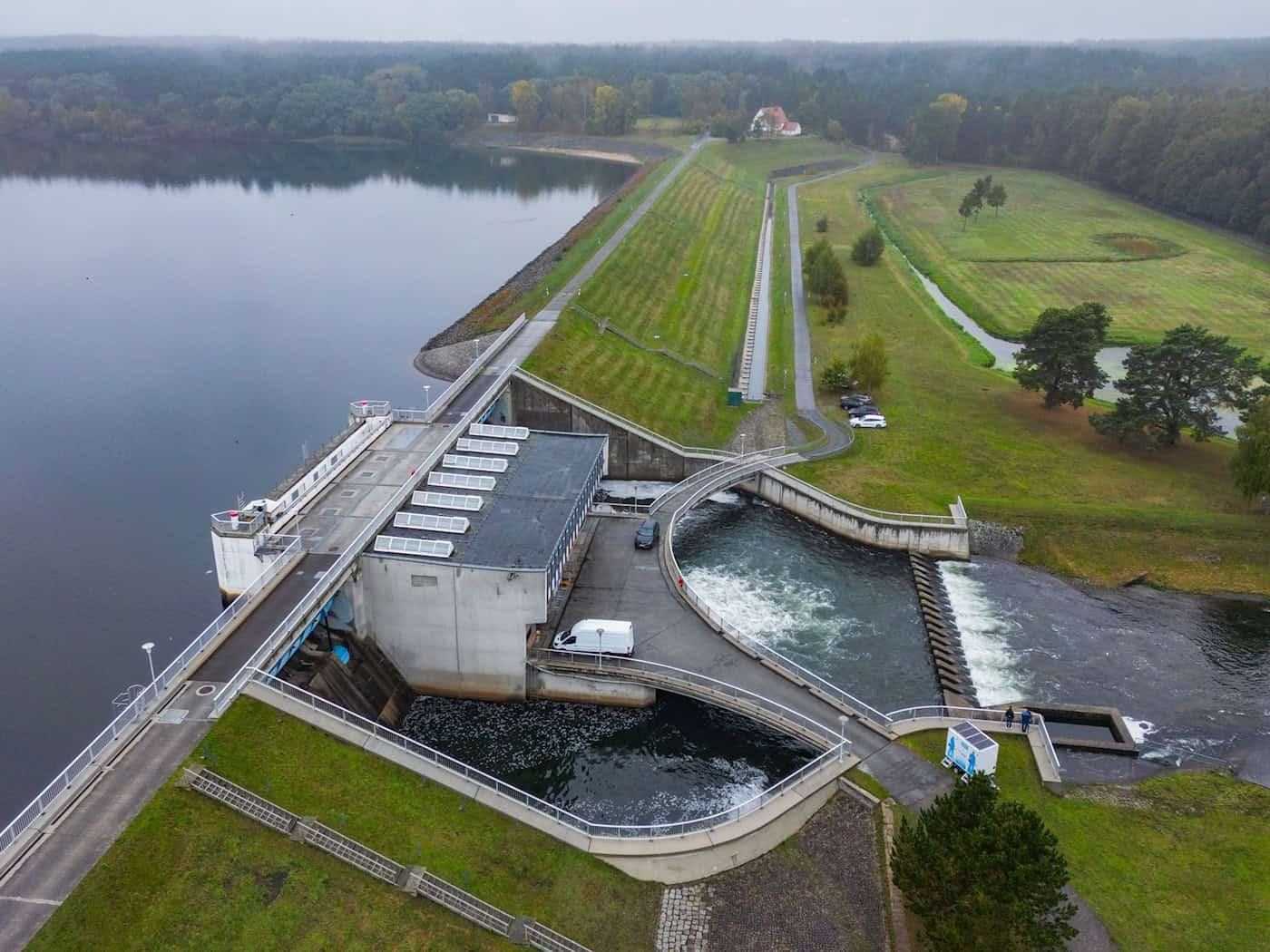
The Spree River is currently carrying so little water that officials in Berlin, Brandenburg, and Saxony are alarmed. An inter-state working group convened on short notice is now tasked with coordinating measures to increase the water level again, according to the Brandenburg State Office for the Environment (LfUI). Low-water level 1 out of 3 has been in effect for the middle Spree region since early June. One problem: Due to the dry conditions in winter and spring, the reservoirs—particularly in the upper reaches of the Spree on the Saxon side—are not sufficiently filled. “At the start of summer, the reservoirs in the Spree basin were only half full,” the LfU stated. As a result, not enough water can be released into the Spree to alleviate the situation. “The effects are particularly evident at the Leibsch Lower Gauge (UP) and Große Tränke Lower Gauge,” the LfU further reported. According to the report, since the end of May, the flow rate at the Leibsch Lower Gauge (UP) has reached only 3.46 cubic meters per second. Following the most recent rainfall in the Spreewald, however, a flow of just under 4 cubic meters per second was recorded at the end of July. “For comparison: The average July discharge for the 1991–2020 period at the Leibsch Lower Gauge is 7.09 cubic meters per second.” To compensate for the water losses, officials are now relying primarily on the Spremberg Dam south of Cottbus. According to reports, it is to release more water into the Spree in the coming days—until the water level in the dam has dropped from its current 90.33 meters above sea level to 90 meters. Then, necessary maintenance work could be carried out at the dam. The working group of the three states that has now been convened is tasked with determining the next steps and coordinating, for example, how much water can be released from which reservoirs. Copyright 2026, dpa (www.dpa.de). All rights reservedSpremberg Dam Must Release More Water

