


Master Pastry Chef from Dohna Competes with Team Germany for World Championship Gold
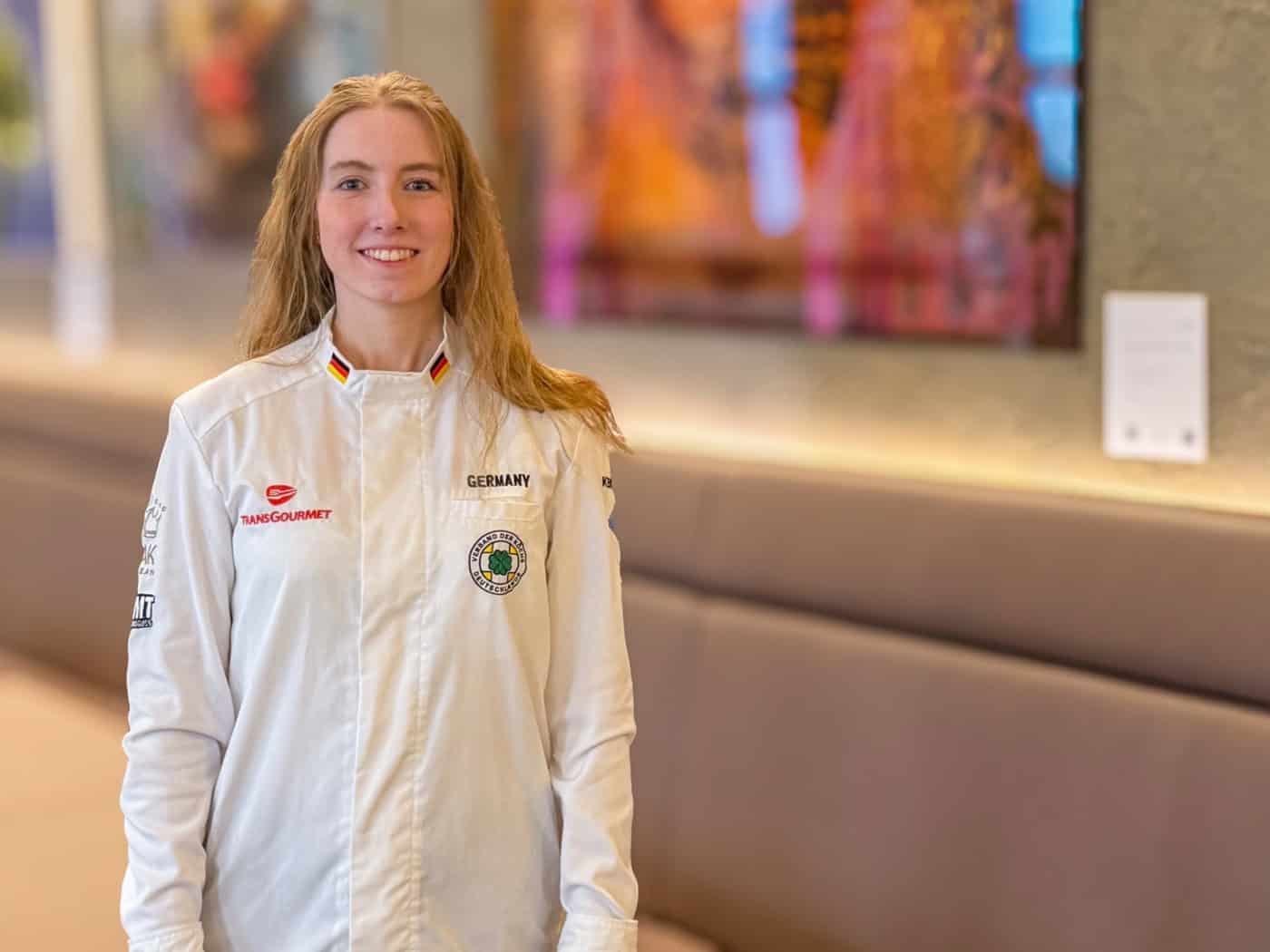
Julia Fuchs is part of Team Germany. Not on her own, of course—after all, a team always consists of more than one person—but the young master pastry chef from Dohna is a member of the German National Junior Culinary Team and is preparing with the ten-member squad for the Culinary World Cup in Luxembourg. National culinary team? World Cup? Never heard of it!?! Time to change that! Definitely—and since there will be a dress rehearsal at Kastenmeier’s in just over a week as part of the preparations for the World Cup, we met right there. Also there: Gerd Kastenmeier and his head chef, Sven Evers, who was a member of the National Junior Culinary Team in 2010.
What unites them both: dedication. A passion for their craft. Anyone who participates in the national team (whether junior or senior) does so on a volunteer basis—in their free time. The Chefs’ Association—which describes itself as “the largest community of chefs in Germany, a professional trade association that unites the most diverse sectors of the hospitality industry under one roof”—organizes the teams and supports them. This is funded by membership dues and through the coordination of sponsors. Transgourmet (the food wholesaler for the restaurant industry), for example, sponsors the supplies. After all, chefs and pastry chefs need plenty of them to practice and compete. But team members have to bring their own time and enthusiasm.
“Officially, we train as a team once a month—but really, you have to do something for the team every day!” says Julia Fuchs. She’s more of the quiet type—and determined: after completing her apprenticeship at the organic pastry shop & Bucheckchen in Leubnitz-Neuostra, she continued her training and became a master pastry chef at just 20. Now she’s pursuing a dual degree in food management, so she commutes between the Saxony University of Cooperative Education and her employer, Dresdner Mühle. Speaking of employers: “Anyone who’s part of the national team naturally needs an understanding employer!” That doesn’t mean the employer always has to give time off—“For the competition in Luxembourg, we’re all taking vacation—unpaid if necessary—or using up our overtime!” says Julia Fuchs.
One of the World’s Largest Cooking Competitions
The Culinary World Cup in Luxembourg is one of the largest and most prestigious cooking competitions in the world. It has been organized since 1986 by the Luxembourg Chefs’ Association, Vatel Luxembourg, and takes place every four years. A total of 60 national teams compete, including 15 youth national teams. More than 200 teams from over 50 nations battle it out in individual and special competitions. Team Germany’s youth national team will cook on Sunday, November 22 (three-course menu), and Wednesday, November 25 (Chefs’ Table).
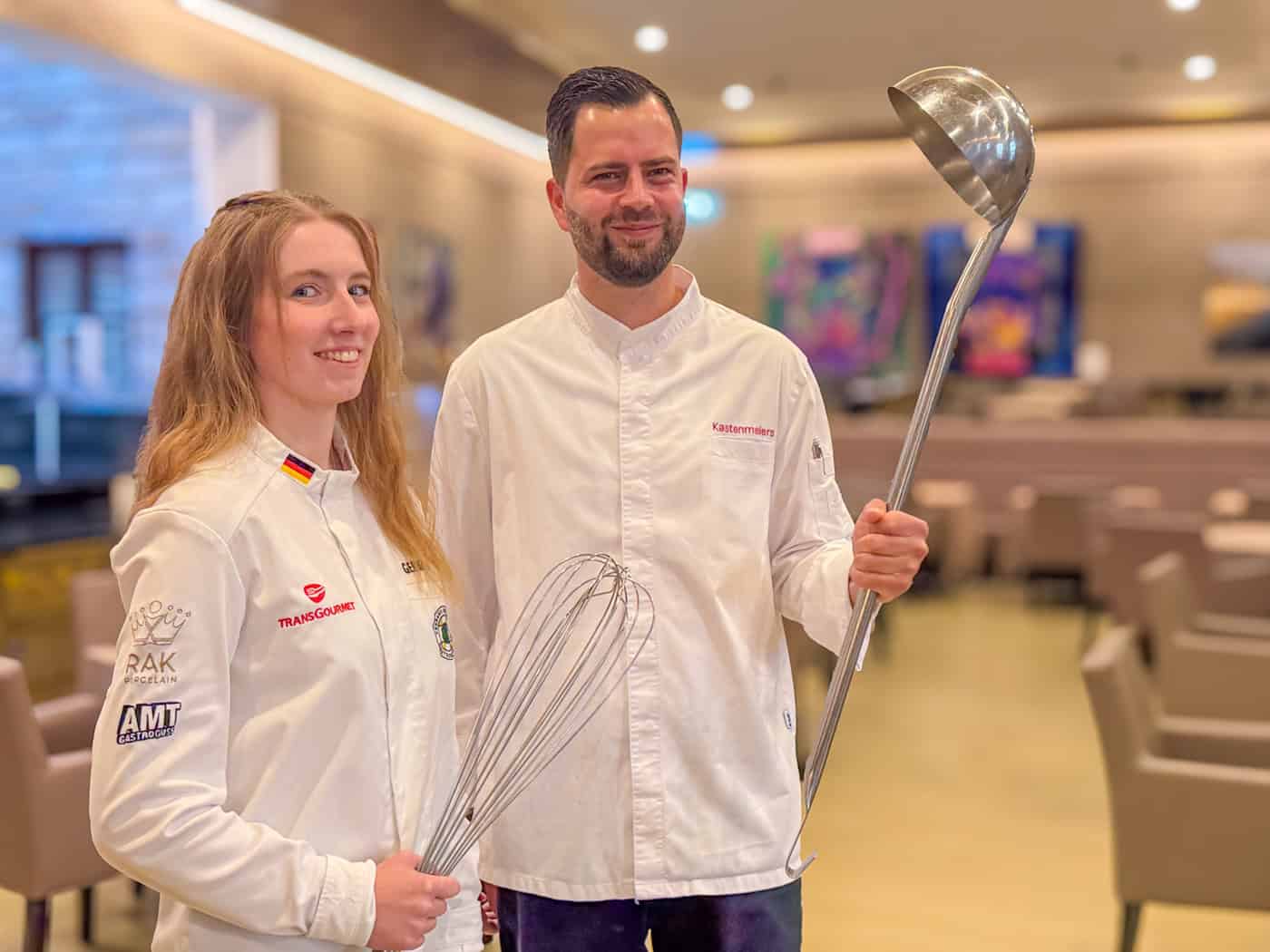
The details of the three-course menu are still a secret—after all, in a competition like this, you don’t want to give too much away. But during a test cooking session at the conference center of the Federal Ministry of Defense (a location chosen for a reason: Team Bundeswehr is competing in the institutional kitchen category), led by coaches Paul Neitemeier and Marcus Prahst as well as team leader Tobias Laabs, we got a sneak peek under the lids. They cooked for 70 people—because that’s exactly the number of servings that will be submitted during the competition. “The jury will then select any one of the 70 plates to evaluate,” Sven Evers reports from his experience. That’s why the number of people was set exactly at 70 for the dress rehearsal at Kastenmeiers as well, adds Gerd Kastenmeier.
What we already know about the three-course menu: it combines German roots with modern techniques and international accents. The appetizer features an autumnal interplay of earthiness, freshness, and texture. Ingredients include celery, apple, rutabaga, and nuts. The main course focuses on classic meat preparation techniques. The centerpiece is veal, prepared in various textures and using modern cooking techniques. And the dessert will revolve around a delicate balance between sweetness and acidity, as well as different temperatures (e.g., through ice cream or sorbet components). The seven-member core team (plus three assistants for prep work) has four hours to prepare the menu, with two hours planned for service. And by the end, everything will be eaten—and Team Germany will certainly be richer for the experience. Perhaps even from the winner’s podium…