

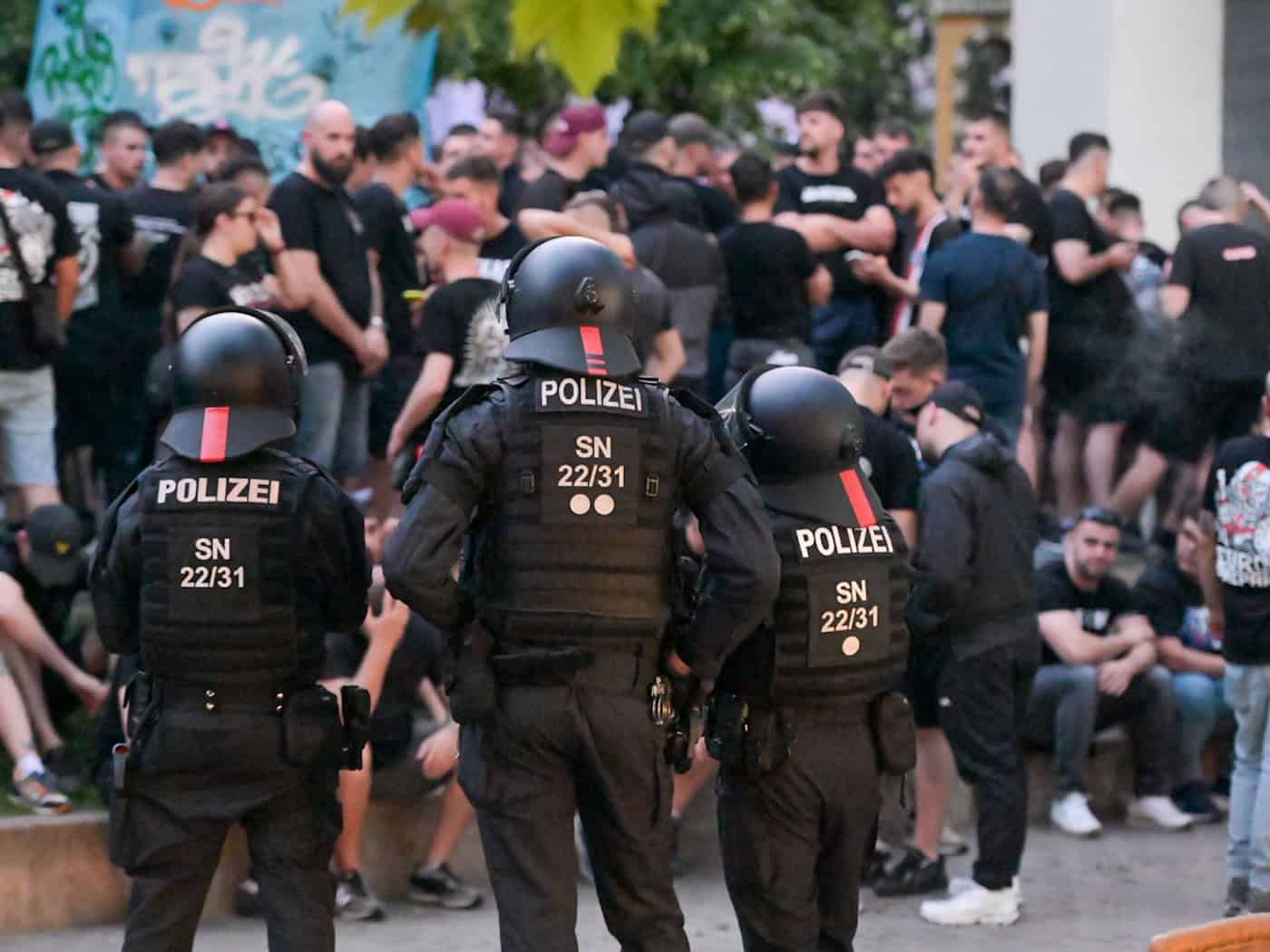
Proposals to curb violence at soccer matches are providing plenty of fodder for discussion at the spring conference of federal and state interior ministers in Hamburg. According to the German Press Agency (DPA), which obtained information from participants at the Conference of Interior Ministers (IMK), several states submitted requests for amendments to a relatively general draft resolution shortly before the conference began on Wednesday evening. Saxony’s Interior Minister Armin Schuster believes the time has come to move forward with the long-controversial demand for the sale of named tickets. The CDU politician told dpa that the fact the German Football Association (DFB) and the German Football League (DFL) have implemented the plan—developed jointly with the IMK—for a central supervisory and review body for stadium bans represents progress. Now, he said, it is necessary to develop a binding model security concept for stadiums, make progress on the long-standing issue of pyrotechnics, and issue personalized tickets in pilot projects with select clubs. Following serious riots during the second-division match between Dynamo Dresden and Hertha BSC Berlin in April, the DFB Sports Court recently imposed harsh penalties. These include the implementation of a security plan for the next two league matches between these two teams. The ticket allocation for the visiting club, Dresden, was restricted, and the tickets in the visiting allocation must be personalized. The DFB Sports Court’s latest rulings have sent “strong signals in favor of personalized tickets,” says Schuster. This has shown that: “The DFB also understands that stadium bans only make sense if they can actually be enforced.” This means cross-checking the stadium bans imposed on certain fans against the names on the tickets. This is already the case for Conference League, Europa League, and Champions League matches, argues Saxony’s Minister of the Interior. That’s why, for example, at the Conference League final in Leipzig—when riots broke out between English and Spanish fans the night before—they were able to work with UEFA immediately to ensure that those people didn’t enter the stadium. When asked for which games he believed personalized tickets should be issued, Schuster replied: “I think it makes sense in every case, from the first to the third division, but I admit this is a highly controversial issue among fans—the DFB and DFL don’t have it easy there.” That’s why he believes pilot projects with cooperative clubs make sense for now. “We have such clubs in Saxony,” he added. At the same time, he emphasized: “We have to find a way to preserve German fan culture in the stadiums.” His goal is not to eliminate standing room; it’s only about access control, not about which fan stands in the third or fourth row. Copyright 2026, dpa (www.dpa.de). All rights reservedInterior Minister Schuster: A Model Security Plan Must Be Implemented
DFB Sports Court: Harsh Penalties Following Hertha vs. Dresden Match
“Strong signals” from the DFB Sports Court
Standing room is to remain


