

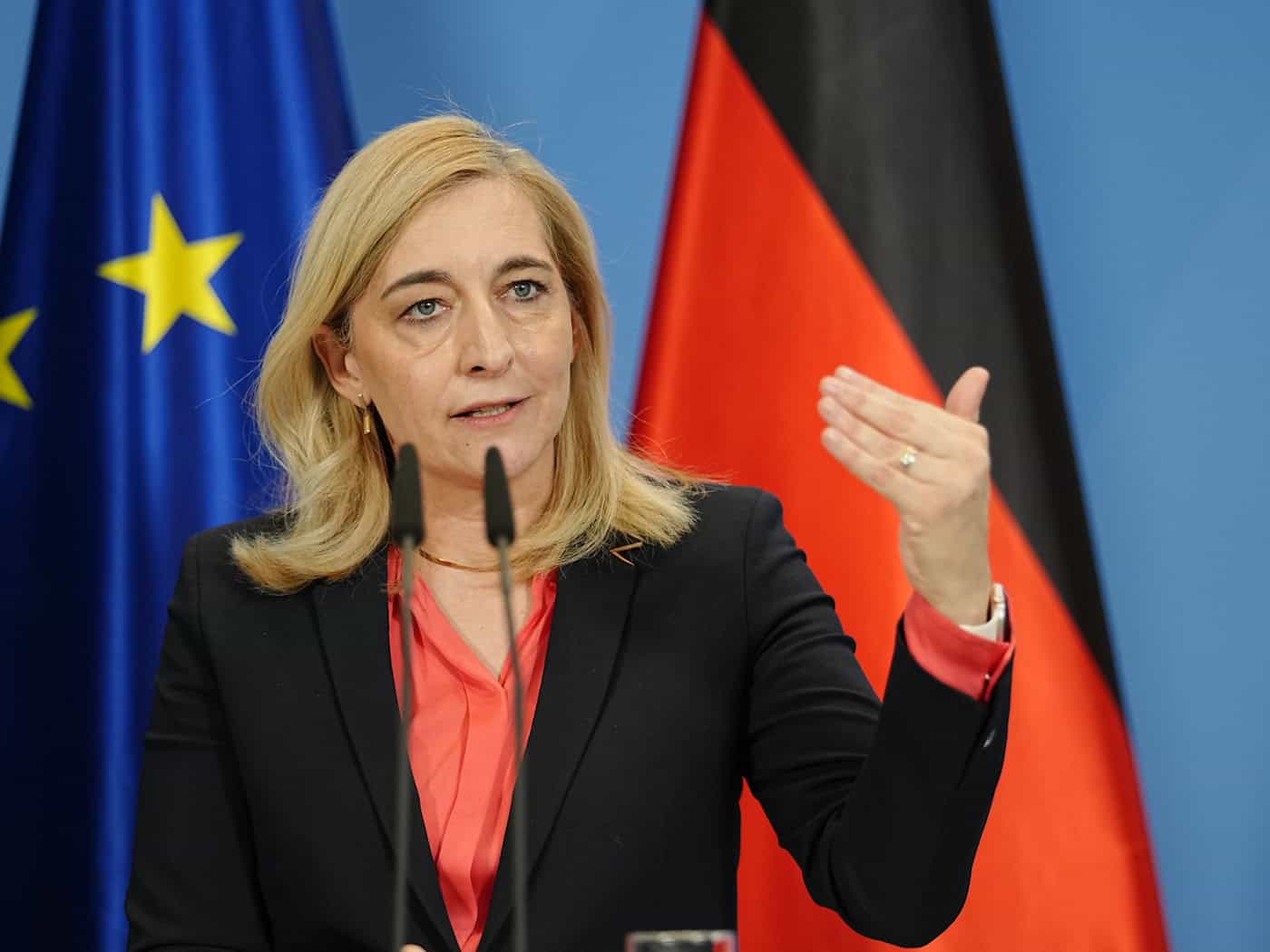
Nina Warken, head of the Chancellor's Office, downplayed the dispute between Chancellor Friedrich Merz and the CDU state premiers from eastern Germany over the pension reform plans. Of course, the abolition of the so-called “retirement at 63” is also a key component, the CDU politician said on the ZDF program “Berlin direkt.” “But we’ll do it with transition periods; we’ll do it with provisions for hardship cases—that’s already planned. In that respect, I don’t see any major disagreement with the state premiers.” The three East German CDU state premiers—Sven Schulze (Saxony-Anhalt), Michael Kretschmer (Saxony), and Mario Voigt (Thuringia)—had jointly opposed the abolition of the early retirement pension without reductions after 45 years of contributions. Chancellor Merz emphasized last Wednesday that he intends to stick to this position—and expressed “some surprise” at this statement, which, in his view, was “not supported by sufficient factual arguments.” At the same time, he expressed openness to hardship provisions, which are also recommended by the Pension Commission. Warken said the commission had presented a “very well-rounded proposal”—now it is everyone’s shared task to implement this proposal. “And of course, as proposed, there will also be opportunities to take into account special life achievements, as well as specific personal situations and circumstances.” She also referred to the proposal for a new protective pension for long-term contributors who can no longer work in their profession due to health limitations. Copyright 2026, dpa (www.dpa.de). All rights reserved


