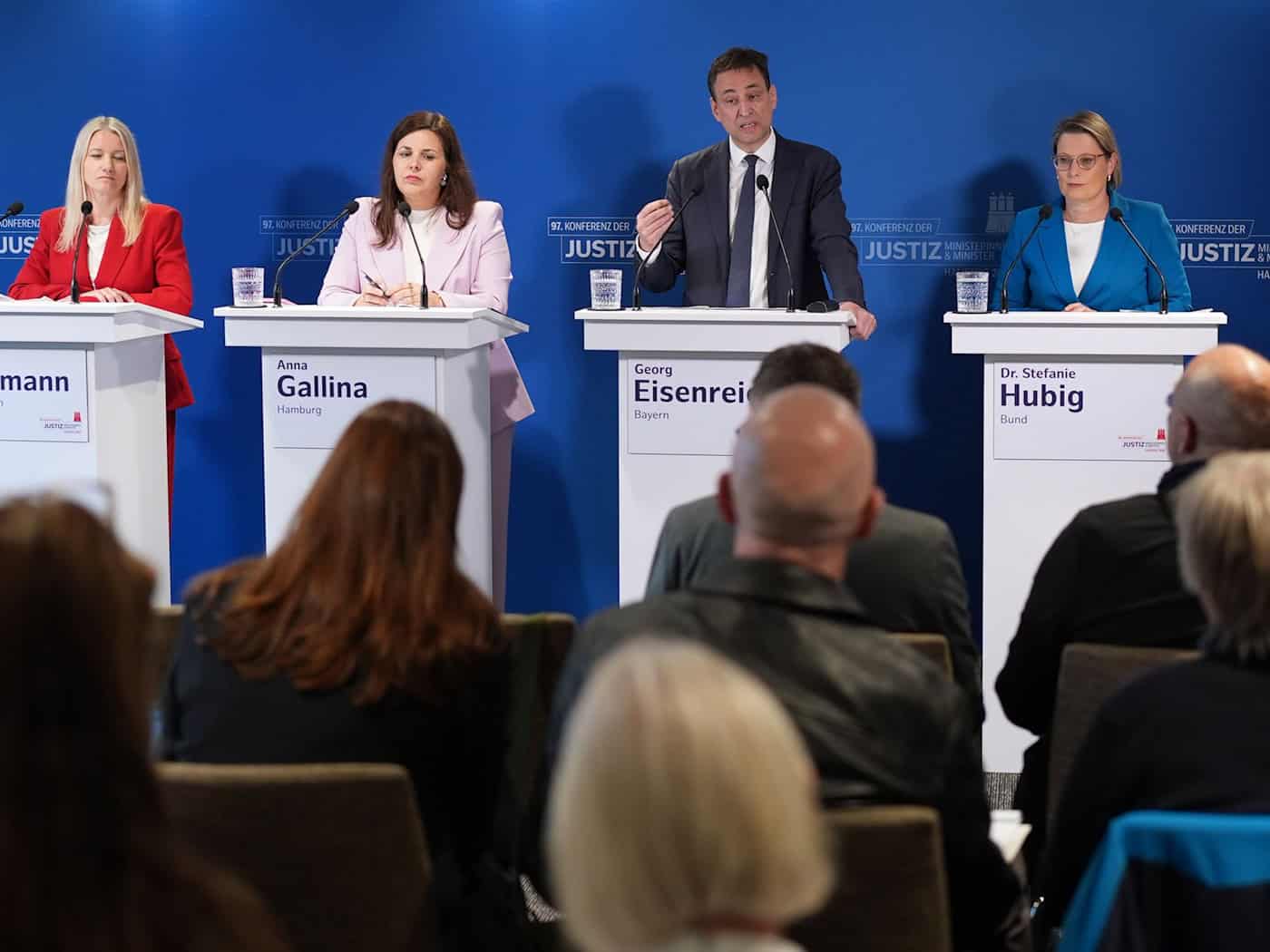
The Conference of Ministers of Justice is calling for stricter measures regarding the so-called Self-Determination Act. A motion by Saxony, Saxony-Anhalt, and Thuringia calling for measures against the abusive alteration of gender entries received majority support at the spring meeting of the Ministers of Justice in Hamburg. The Federal Ministry of Justice is called upon to immediately submit a legislative proposal that establishes a proportionate, legally certain, and destigmatizing review mechanism for cases of obvious abuse of the law. “Every single case of abuse weakens the legislative aim of providing lasting protection for those actually affected and jeopardizes social cohesion,” the resolution states. The review is to be conducted by the civil registry offices as soon as a change to the gender entry is made. Most recently, the arrest of convicted right-wing extremist Marla Svenja Liebich in the Czech Republic reignited the debate over the Self-Determination Act. Liebich had her gender entry changed from male to female and her first name from Sven to Marla Svenja. In 2023, he—at the time still a man—had been sentenced to a total of one year and six months in prison without parole for, among other things, incitement of the people, but had not begun serving his sentence and had fled to the Czech Republic. “Experience to date shows that the current legal situation can lead to considerable practical and legal uncertainties in individual cases,” the resolution states. Particularly in protected spaces, “for example for women and in the promotion of women, situations may arise in which there are significant doubts about the sincerity of a declaration or the falsity of the declaration is obvious.” However, current law does not provide sufficiently clear standards for assessment and action in this regard. The resolution notes that the Self-Determination Act, which came into force in November 2024, can make a “valuable contribution achieving legal recognition of their gender identity without unnecessarily stigmatizing administrative hurdles.” Copyright 2026, dpa (www.dpa.de). All rights reservedRegistry offices to investigate potential abuse
Gender transition of a right-wing extremist fueled debate
Seriousness of gender change to be examined