Logo Die Sachsen News
News / Politics

How is Germany responding to the explosive-laden drone?

How is Germany responding to the explosive-laden drone?
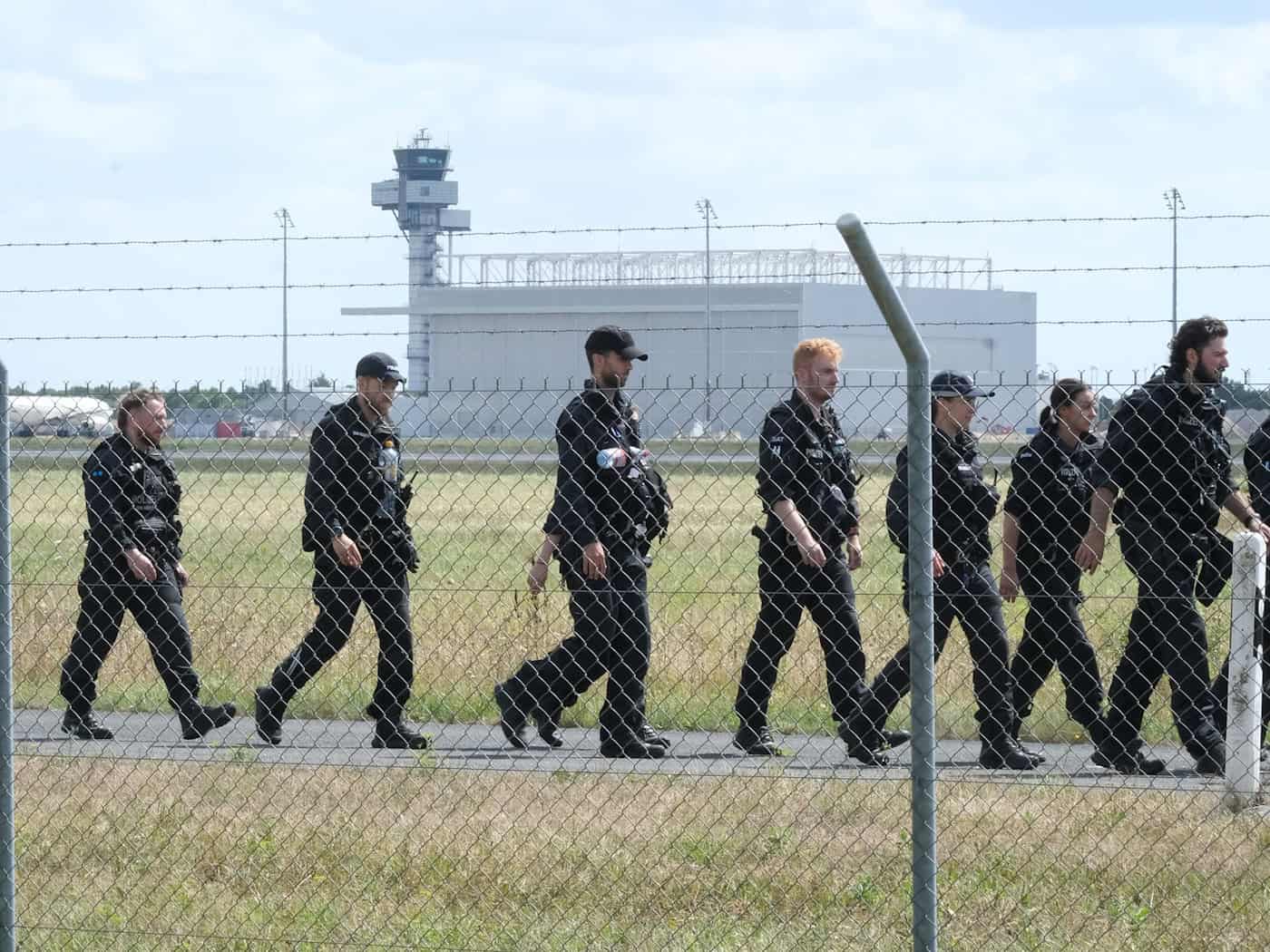
A bus driver had spotted the drone at the Leipzig/Halle Airport. It had been rigged with explosives. (File photo) / Photo: Sebastian Willnow/dpa
From: DieSachsen News
Restrictions on Russian institutions, pressure on the shadow fleet: How does Germany plan to respond to the attempted attack at Leipzig/Halle Airport? What risks are associated with each option?

The German government now considers the evidence clear enough to take action: It holds Russia responsible for the attempted attack using an explosive-laden drone at Leipzig/Halle Airport. What does this mean? The most important questions and answers:

What reactions were conceivable on the German side?

There is no set list of consequences for such cases. Rather, it is a political decision. What is certain is that the German government wanted to respond as quickly and decisively as possible. The drone was discovered a month ago. Furthermore, it was clear that a retaliatory action—in which Germany would carry out a comparable operation—was out of the question.

What measures has the German government decided to take?

  • Closure of a diplomatic mission: The federal government has repeatedly declared Russian diplomats “persona non grata.” In total, around 80 employees of the Russian Embassy have been ordered to leave the country in recent years. Now the Consulate General in Bonn is to close. Foreign Minister Johann Wadephul (CDU) made no comment regarding the diplomats stationed there. This leaves the embassy in Berlin as Russia’s only diplomatic mission in Germany.
  • Summoning the ambassador: A formal summons is considered a strong diplomatic measure through which the host country’s government signals significant displeasure. According to the latest reports from the Foreign Office in Berlin, Russian Ambassador Sergei Nechayev has been summoned more than a dozen times since the start of Russia’s war of aggression against Ukraine in February 2022, most recently in mid-July over allegations of cyberattacks against several European countries. Now he must return to the Federal Foreign Office for another meeting.
  • Disruption of Russia’s shadow fleet: It targets tankers and cargo ships that Russia uses to circumvent sanctions, for example in oil transport. In addition, these vessels are increasingly being linked to acts of espionage and sabotage. According to Western sources, the ships either turn off their automatic identification systems or transfer their cargo at sea to another tanker, thereby concealing its origin. According to Wadephul, Germany intends to increase pressure on the Russian shadow fleet in the future.
  • Cultural institutions close: The Russian House—a cultural institute—has been controversial for years. The seven-story concrete block has stood on Berlin’s Friedrichstraße since 1984. At the time, it was the largest Soviet cultural institute abroad. Today, it is operated by the State Agency for Cultural Cooperation. It reports to the Foreign Ministry. Now the contract is to be terminated. The program includes World War II commemorations, film screenings, and courses in Russian, ballet, and drawing. A recent assessment by the French Ministry of the Interior stated that the building is being used by Russian intelligence services as a cover. 

What possible options has the German government not yet pursued?

  • Expulsion of diplomats: The German government has on several occasions in the past declared Russian diplomats “persona non grata.” In total, around 80 employees of the Russian Embassy have been ordered to leave the country in recent years.
  • Article 4 of the NATO Treaty: It provides for consultations among allies when a NATO member state perceives an external threat. This is often the preliminary step toward coordinated protective measures. This article is invoked very rarely. In September 2025, for example, Estonia requested consultations after three Russian fighter jets flew through Estonian airspace for about twelve minutes. The German government, however, decided against playing this card.
    NATO consultations under Article 4 can result in threatened states receiving additional support from the alliance for deterrence and defense. As a rule, they are primarily intended as a signal to the adversary and thus differ from military support under Article 5 of the NATO Treaty. This article governs the alliance’s obligation to provide military assistance. 

What are the pros and cons of individual responses?

  • The expulsion of diplomats is a measure that has already been used several times in recent years. This response alone would therefore likely not have sent a strong enough signal. It is also possible that Germany did not want to risk Russia retaliating in kind.
  • Elevating the incident to the NATO level would have shown that Germany is prepared to respond decisively to such potentially far-reaching attacks. On the other hand, the question arises as to whether this would have been proportionate, especially in light of serious incidents in other eastern NATO member states.
  • Measures against the “shadow fleet” in the Baltic Sea could deal a severe blow to the Russian economy. However, they carry the risk of escalation should confrontations at sea occur. 
    The Russian Navy is “aggressive at sea, through the spying on bases and units, through intimidation and sabotage attempts, drone overflights, and the deployment of the shadow fleet in the Baltic Sea,” said the Inspector General of the Navy, Vice Admiral Jan Christian Kaack, a few days ago. He made it clear that Russia is now also protecting the ships of the shadow fleet with weapons, either through naval vessels or through guard teams on board. 

  • By closing the Russian Cultural Institute in Berlin, the German government would likely risk the closure of the Goethe-Institut in Russia. That is why it has so far hesitated to take this step. 

Copyright 2026, dpa (www.dpa.de). All rights reserved

The translations are automated with the help of AI. We look forward to your feedback and your help in improving our multilingual service. Write to us at: language@diesachsen.com.
Sachsen News
Article from

Sachsen News

Sachsen News is responsible for the content itself. The platform's code of conduct applies. The platform checks and treats content in accordance with the legal requirements, in particular the NetzDG.

Social Media

