


Crane Migration: Experts Warn of Avian Flu Risk
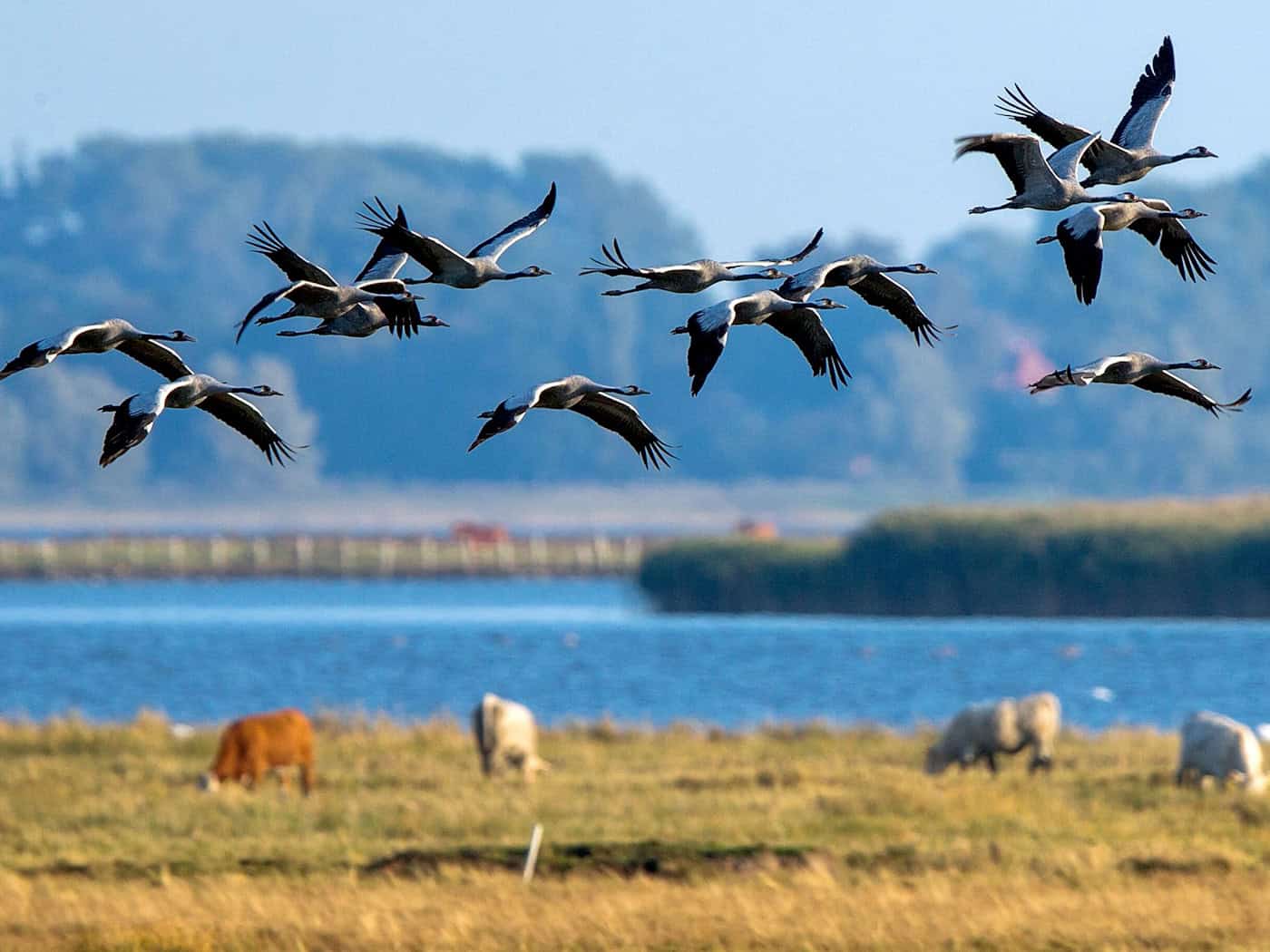
Against the backdrop of the ongoing fall bird migration, experts at the Friedrich Loeffler Institute (FLI) are anxiously monitoring the situation for possible outbreaks of avian influenza. It is not possible to reliably predict how high the risk will be this season, a spokeswoman for the Federal Research Institute for Animal Health in Greifswald told the German Press Agency. Last year, thousands of cranes died as a result of infection with the H5N1 avian influenza virus. Hundreds of thousands of farm animals in poultry operations had to be culled due to infections. The virus was also detected in isolated cases among wild birds last summer. In addition, a poultry farm was affected by an outbreak. The FLI anticipates an increased risk of further outbreaks in the coming months, the report continues. In this context, experts remind farmers to adhere to biosecurity measures on their farms should outbreaks of avian influenza occur in their vicinity. The virus can be spread not only by infected birds but also by “contaminated shoes, clothing, equipment, vehicles, feed, or water.” In the coming days, bird conservationists expect thousands of migrating cranes to stop over on their way south—for example, at the Kelbra Reservoir on the border between Thuringia and Saxony-Anhalt. According to the affected counties, authorities and volunteers collected thousands of dead birds there alone last year. “Last year was terrible; we’re still traumatized and we all cried,” said Astrid Koschorreck, executive director of the Südharz/Kyffhäuser Landscape Conservation Association. According to FLI experts, it is unclear whether the cranes are less susceptible to the virus this year. There is “no reliable data” on this. Only the analysis of blood samples from a sufficiently large number of the birds could provide insight. “However, this is currently not compatible with the legal framework governing animal and species protection.” Copyright 2026, dpa (www.dpa.de). All rights reservedOutbreaks Also Occurred Last Summer
No Data on Crane Immunity Following Mass Die-Off

