


Exceptional breeding success of kingfishers at Floßgraben 2024
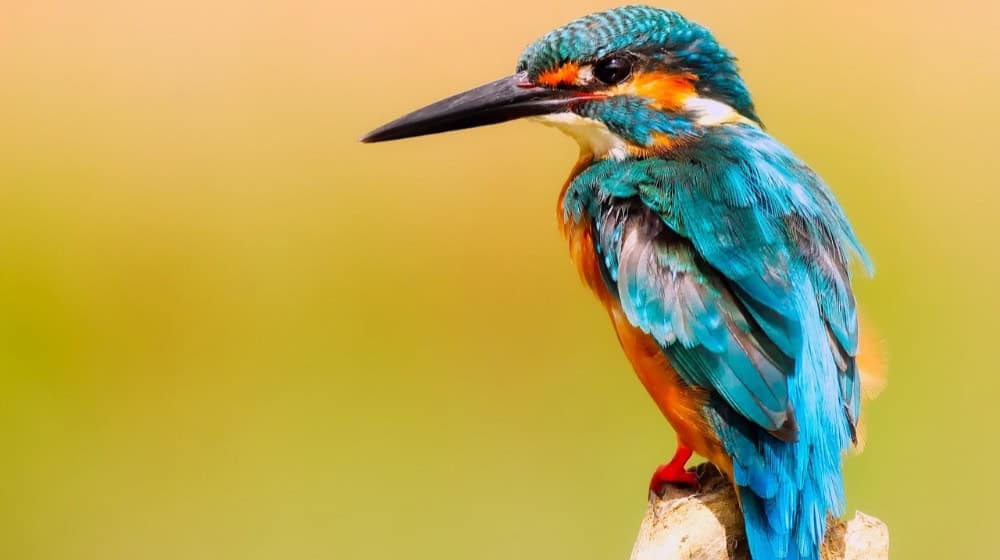
The kingfisher feels at home in the Floßgraben. According to the 2024 monitoring, the population was stable with two breeding territories. A similar population recovery after the collapse in 2021 and 2022 was recorded throughout Leipzig's alluvial forest. There was also an extraordinary breeding success, as Jens Kipping from the commissioned BioCart office reports: "One of the breeding pairs at Floßgraben bred four times in a row. This is the absolute record for a kingfisher pair ever documented for the Leipzig alluvial forest. The fledging of a total of 19 young birds from a breeding pair is an enormous physical feat for the animals."
A total of 31 inspections were carried out from mid-March to the beginning of September 2024 as part of the annual kingfisher monitoring at Floßgraben since 2013. In addition to the breeding pair at the traditional breeding site in the Floßgraben, which bred four times in a row, a breeding territory was found in the surrounding forest where the Floßgraben flows into the Pleiße. Fledged young birds were observed here several times. In addition to the breeding activities, disturbances caused by boat traffic and their effects on the broods were also documented. As a result, no significant impairments to the hunting and feeding behavior of the kingfishers or breeding tasks were identified. The exceptional breeding success also suggests this.
Rüdiger Dittmar, Head of the Office for Urban Greenery and Waters: "Thanks to the monitoring, we can see that the kingfishers have come to terms with water tourism use despite their fundamental sensitivity to disturbance and in particular due to the regulations from the general ruling for the Floßgraben." The general ruling for the protection of the kingfisher (Alcedo atthis), which has been valid indefinitely since 2016, primarily restricts the use of the Floßgraben during the annual breeding season from March 1 to September 30. To ensure that the animals are able to hunt, it is therefore strictly forbidden to use any kind of machine-driven boat. Kayaks and canoes (muscle-powered) can only use the raft ditch to a limited extent from 11 am to 1 pm, from 3 pm to 6 pm and from 8 pm to 10 pm. As a further protective measure, landing, disembarking, fishing, walking and the free running of dogs on both sides of the banks at a distance of 20 meters is also prohibited during the breeding season.
Compliance with the general ruling was checked in 2024, among other things, by 5 large-scale inspections. These were carried out by the Office for Environmental Protection in cooperation with the municipal regulatory service and the water police, which resulted in a total of 19 violations being punished. "The forest population and the positive development of the kingfisher population in the Floßgraben speak for the success and effectiveness of the protective measures," emphasizes Peter Wasem, Head of the Office for Environmental Protection.
In addition to monitoring the kingfishers, the sensitivity of red kites and black kites to disturbance from water tourism use was also investigated in 2024. The three breeding pairs observed in the Floßgraben and Oberer Weiße Elster areas showed no reaction to passing boats, even during the sensitive breeding season.

