

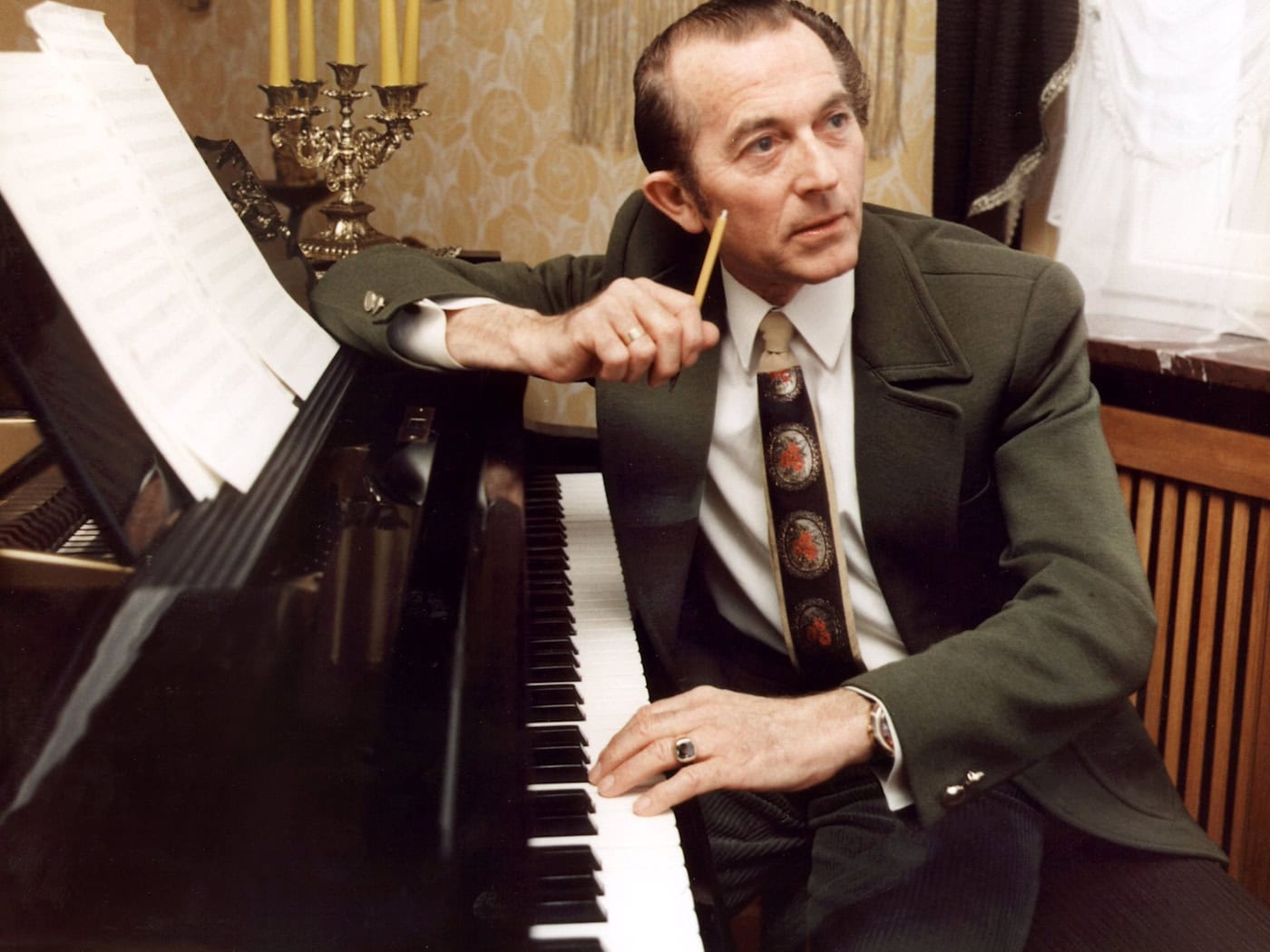
Did Herbert Roth expect this? Even 75 years after he first performed it in public as a composer and singer, the Rennsteiglied is still celebrated. It is often described as the "secret anthem" of Thuringia; it is regarded as a musical declaration of love by Roth (1926-1983) from Suhl to his homeland. When Roth and his instrumental group played the Rennsteiglied in public for the first time in 1951 in a community hall in Hirschbach near Suhl, it is said to have been met with rapturous applause. The three verses are about the connection to nature and the joy of hiking and, of course, the Rennsteig - the not quite 170-kilometre-long high-altitude hiking trail in the Thuringian Forest. The line "Am Rennsteig, wo ich wandere" is said to have been written by Roth himself, later his childhood friend Karl "Kaschi" Müller (1925-2011) wrote the lyrics with the well-known opening line "Ich wandre ja so gerne am Rennsteig durch das Land". The song didn't just spark enthusiasm. According to music historians, GDR officials accused Roth, who was drafted into the navy in 1944, of kitsch and suspected nationalism behind the love of the homeland sung about. Later, however, SED leader Walter Ulbricht is said to have invited him to a private concert and approved of the music. Roth and the Rennsteiglied became a cult song in the GDR. This remained the case even after the fall of the Wall, and over the years, well-known musicians also discovered the song for themselves: Florian Silbereisen and the Wildecker Herzbuben have sung it, and there are also recordings of Gunther Emmerlich. Versions keep popping up online: There are several clips on the video platform YouTube that have been clicked on tens of thousands of times over time. One video, in which Roth himself can be seen, has more than one million views. The anthem can also be found on the music streaming service Spotify. The Thuringian top luger Max Langenhan (27) proved that younger generations can also master the song when he sang the lines with confidence after his Olympic victory in Italy in February and also got the former head of the International Olympic Committee Thomas Bach to clap along. In addition, the cultural accolade was awarded this year: Thuringia included the singing of the Rennsteiglied in its list of intangible cultural heritage. It also includes the carnival tradition of East Germany, playing skat and the Thuringian bratwurst culture. The official classification states that the catchy song describes the love of the Thuringian Forest and hiking on the Rennsteig trail. It is sung on many occasions in Thuringia, on hikes, at folk festivals and sporting events. "The Rennsteig song creates identity, strengthens the sense of community and conveys a feeling of home and belonging." "Home is a special feeling. And no one has put this feeling into music as wonderfully as Herbert Roth, who would have celebrated his 100th birthday this year," was the assessment of Thuringia's Minister President Mario Voigt. The song lines tell "of people who go out into the world - and yet know in their hearts where they belong", said the CDU politician, who according to the state chancellery is a fan of the song himself. Voigt was even clearer in his enthusiasm for the song in his government statement on March 27 in the state parliament in Erfurt: in it, he said that the Rennsteiglied should be taught in all Thuringian schools "because we also want our traditions and our history to be appreciated and valued". Copyright 2026, dpa (www.dpa.de). All rights reservedNoses turned up and then cult
Lyrically confident Olympic champion
Included in the cultural heritage series with bratwurst and carnival
A Prime Minister with a mission


