


Lutz Geißler, a geologist by training, has taught many people in German-speaking countries how to bake bread—for years through hundreds of recipes on his free blog, and since 2024 on the same blog, but largely behind a paywall—the logical consequence of the fact that his hobby had turned into a profession ten years earlier. From the very beginning, writing books has also been part of his livelihood. The first was published in 2013 (Bread Baking Book No. 1), and the most recent one has just come out. It’s part of a series of books, each of which explores 111 aspects of a particular topic. Lutz Geißler has now compiled “111 Bread Myths That Can Go Crumbly.”
That’s quite a journey: starting with a standard reference work that clearly explains the basics of bread baking, all the way to a typical gift book (an invitation to Miller's? Something under 20 euros!). The title is off-putting in several ways, starting with the ominous 111 (in numerology, one of the most powerful angel numbers…) and ending with the slightly contrived title (featuring myths that crumble). This could turn out to be a shallow read. But where it says “Lutz Geißler” on the cover, you can of course count on finding the knowledgeable and usually outspoken baking guru inside.
In his monthly newsletter, Lutz Geißler calls the new release a nonfiction book; the publisher describes it as a guide. Neither is wrong, of course, but a nonfiction book without an index? It’s doable, but not very classy. I prefer to call *The Crumbling Myths* a reading book. It’s perfect, for example, for passing the time during long waits at the doctor’s office. Or for enjoying little nuggets of knowledge—written in a conversational tone—before falling asleep—because reading it certainly won’t make you any dumber.
That said, the tip to “read before falling asleep” could very well backfire for sensitive readers, as Geißler’s text might sometimes cause agitation. For example, I found myself (in the waiting room, by the way…) annoyed by the self-promotion casually sprinkled throughout—especially since Lutz der Fuchs, contrary to his stated goal in the foreword of wanting to create transparency, goes about it in the most sly way possible. “At www.brotcheck.de, you can test whether you’re eating really good bread,” I learn in the fifth myth, “Bread tastes best with toppings.” “You can find good recipes at www.brotbacken.de, among other places,” reads the note for myths number 8 and 9; myths 79 and 102 also point there. The Master’s campaign against the mandatory apprenticeship requirement in the baking trade concludes with “…read more at www.querbäcker.de.” All of these seemingly different websites, however, redirect to a single site—coincidentally, the author’s ploetzblog site, which is largely behind a paywall. A single note there (in the foreword or on the back cover) would have sufficed! The (subjective) recommendations in *Handwerksbäcker-Mythos* No. 14 might be helpful: “You can find good bakeries at www.bäckereifinder.de”—behind that is a link to a Geißler map on Google Maps.
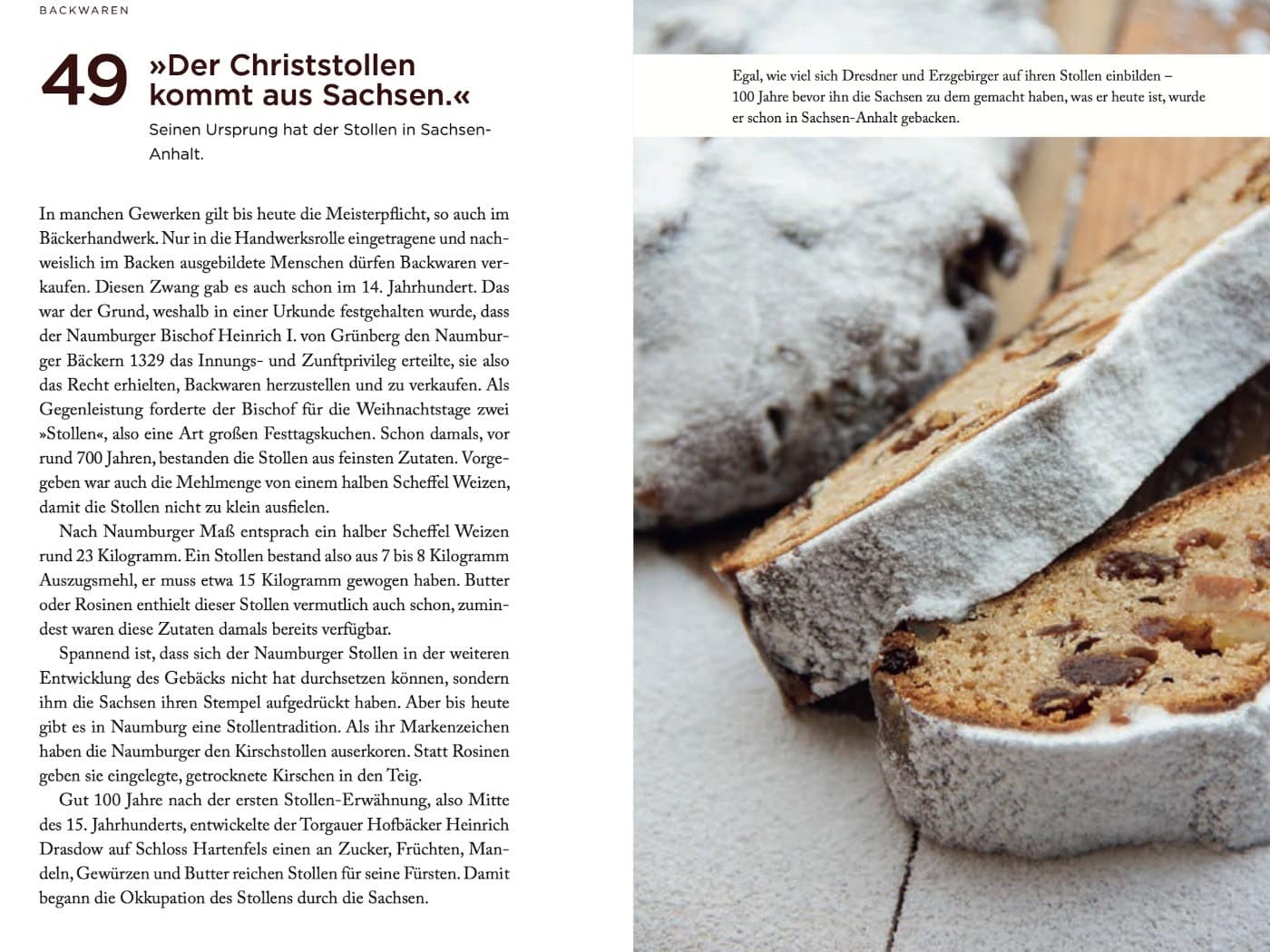
Otherwise, hobby bakers (m/f/d) will of course also find truly helpful tips while browsing. For example, how to revive bread rolls that are no longer fresh or have been frozen so they’re ready for breakfast, or that (thanks to new varieties…) you can bake rye bread entirely without sourdough—though, to paraphrase Mr. Geißler from memory, it does, of course, taste quite different. And baking a loaf using only the leavening power of your own sourdough naturally makes you proud (see, however, Myth 9 on the psychology of hobby bakers). In keeping with the season—and especially for Dresdeners—Myth 49 comes highly recommended—in it, the Freiberg bread expert addresses the “occupation of the Stollen by the Saxons”! With some of the myth explanations, however, you’ll notice that Lutz Geißler rightly has a reputation for being quite pedantic. He always prefers technical jargon over colloquial language—which could be a bit annoying. Or you can just smile. Take, for example, Myth No. 26, which states that flour types do not correspond to the fineness of the flour but rather indicate its mineral content. Technically correct, no doubt, but in everyday conversation, it’s pretty much irrelevant…
Lutz Geißler, 111 Bread Myths That Can Crumble
240 pages, 1st edition, 2026
14 × 21 cm
Publication date: September 30, 2026
Publisher: Emons, ISBN: 978-3-7408-2942-1
€19.95

