

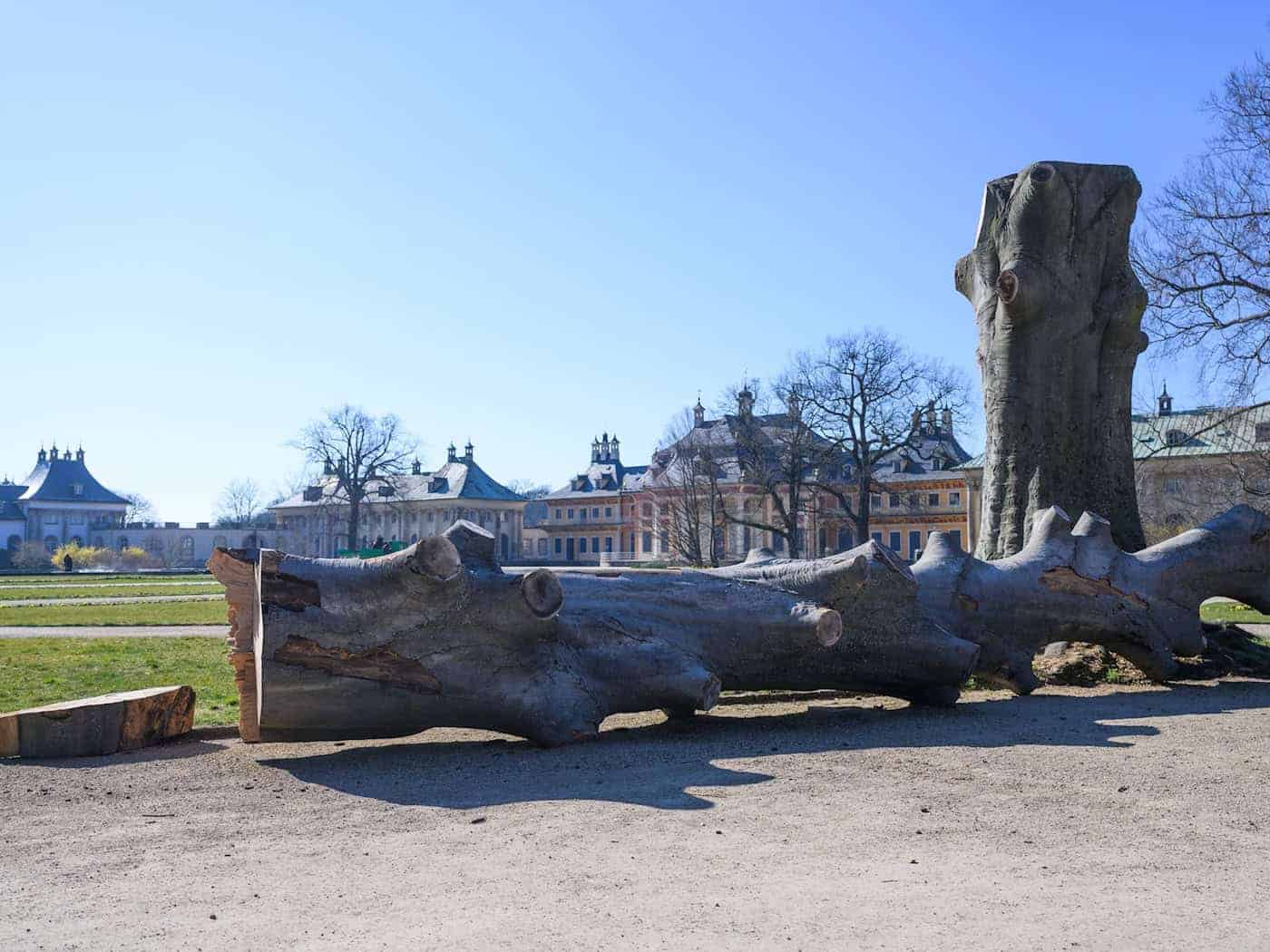
The fight against the effects of climate change continues in the grounds of the State Palaces, Castles and Gardens (SBG) even after the end of a pilot project. Since 2022, a total of three million euros in federal and state funding has been invested in the project. "Drought, rising temperatures, persistent heat, decreasing rainfall, falling groundwater levels and increasingly severe weather events are weakening the old tree population. Without timely countermeasures, it will no longer be possible to save the listed plants, which are often hundreds of years old," said the state-owned company, describing the situation. The aim of the project was to improve the scientific basis, develop measures and at the same time make a contribution to climate protection and climate adaptation. "All of these goals were achieved, contribute to the long-term preservation of the historic gardens and are transferable to other sites in Saxony and beyond." The SGBs announced that they would continue and expand the measures they had started. Further plantings of "climate-adapted" trees and shrubs are in preparation. The findings are to be incorporated into a Germany-wide project research by the Gardens Section of the Association of German Palace Administrations. The "Climate change in historic gardens" project covered three areas. In the "Soil-Water-Tree" module, a tree nursery was set up in the Great Garden of Dresden and an area for the cultivation of woody plants in Pillnitz. A plant was also installed in the Grosser Garten that utilizes chopped wood residues to improve soil quality. In future, biochar will be used for new plantings. It has a sponge effect and can store many times its own weight in water and nutrients and slowly release them again. Two water wells have been built in Pillnitz to secure the supply during dry periods. The prototype of a semi-autonomous watering robot for Pillnitz Palace Park was developed in the "Robotics" module together with scientists from Dresden University of Technology. "Gießbert" and "Gießela" - as the robots are called - are to help water the 500 potted plants. The company is now looking for a partner to further develop the prototype, have it certified and make it ready for series production. "Historic parks throughout Germany have followed the development so far and have signaled interest in the product ready for series production," the SGB announced. The "Communication" module accompanied the project in the form of exhibitions, publications and events. Copyright 2026, dpa (www.dpa.de). All rights reservedPlanting "climate-adapted" trees
Measures to improve soil quality
Prototypes help with irrigation in Pillnitz Palace Park


