


Dress Rehearsal for the Culinary World Cup: Competing for Acclaim in the Art of Cooking
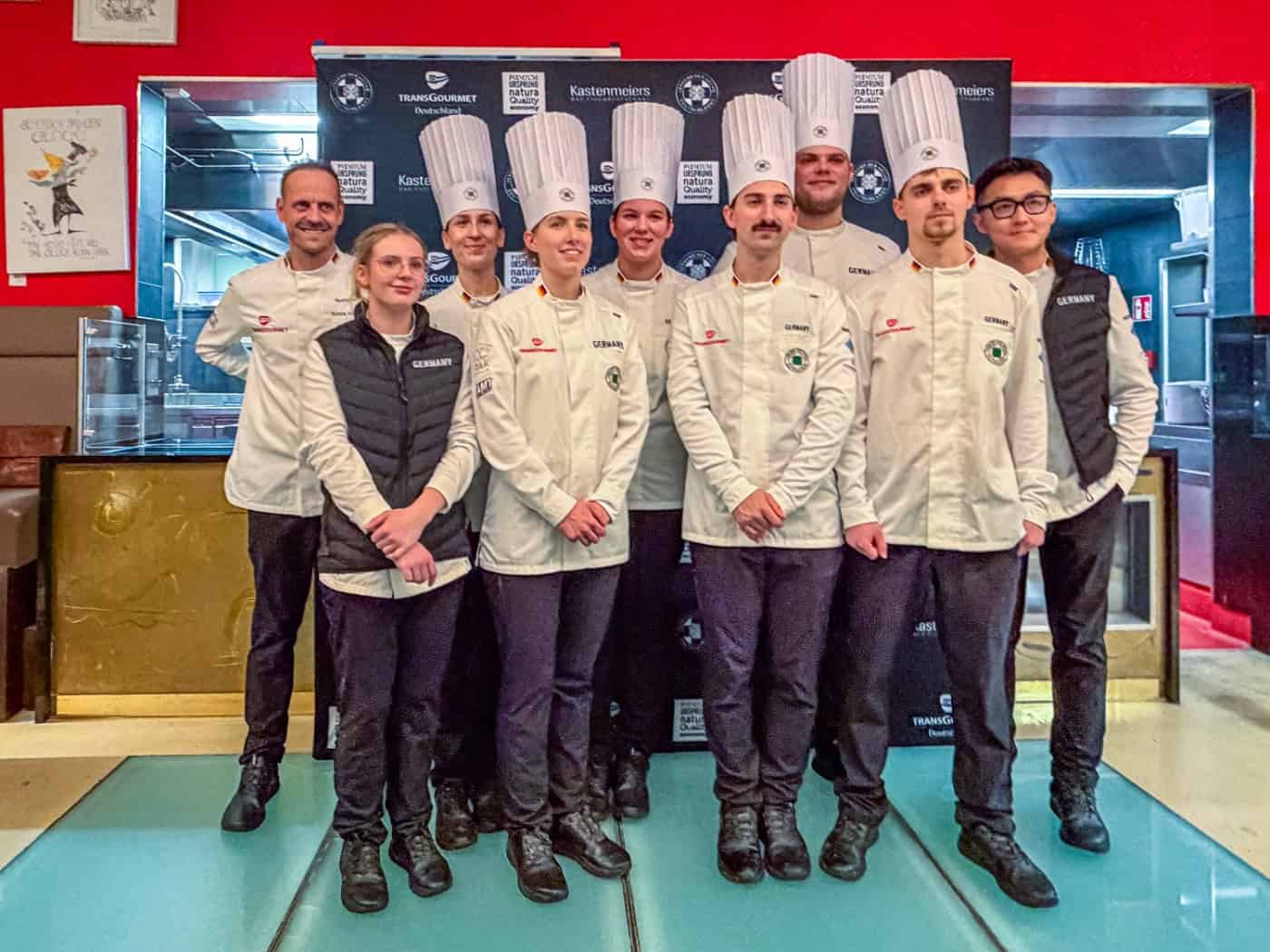
“As long as the food’s good,” say the people of Saarland. In neighboring Luxembourg, they basically see it the same way—not only (but also) during the Expogast trade show. Every four years, the trade show serves as the venue for the RAK Porcelain Culinary World Cup. In November, the national youth team of the Association of German Chefs (VKD) will compete there against 14 other teams from around the world. Of course, the competition is about the fundamentals of gudd gess—but it’s also about the second part of the phrase: culinary art. The dress rehearsal took place at Kastenmeiers in Dresden—the very city where the Association of German Chefs, the predecessor of today’s VKD, was founded in 1884.
It was the last chance to practice as a team before the World Cup—so the young chefs (all under 25—the youngest on the team is just 19!) focused intently on preparing their base ingredients. The countdown to the preparations ran down to the minute, and the three courses were served with precision that evening. “Everything exactly as it will be on November 22 in Luxembourg,” Thorben Grübnau tells me at the table. He is a member of the VKD executive board and had traveled from Bad Zwischenahn that day—and he has it relatively easy this evening: like 69 other guests, he gets to enjoy the youth team’s menu! The number 70 is part of the challenge: that’s exactly how many menus the teams must serve at the World Cup. The ten jury members don’t know which of the 70 plates they’ll pick—so every single one, from the first to the last, must be equally good and look exactly the same.
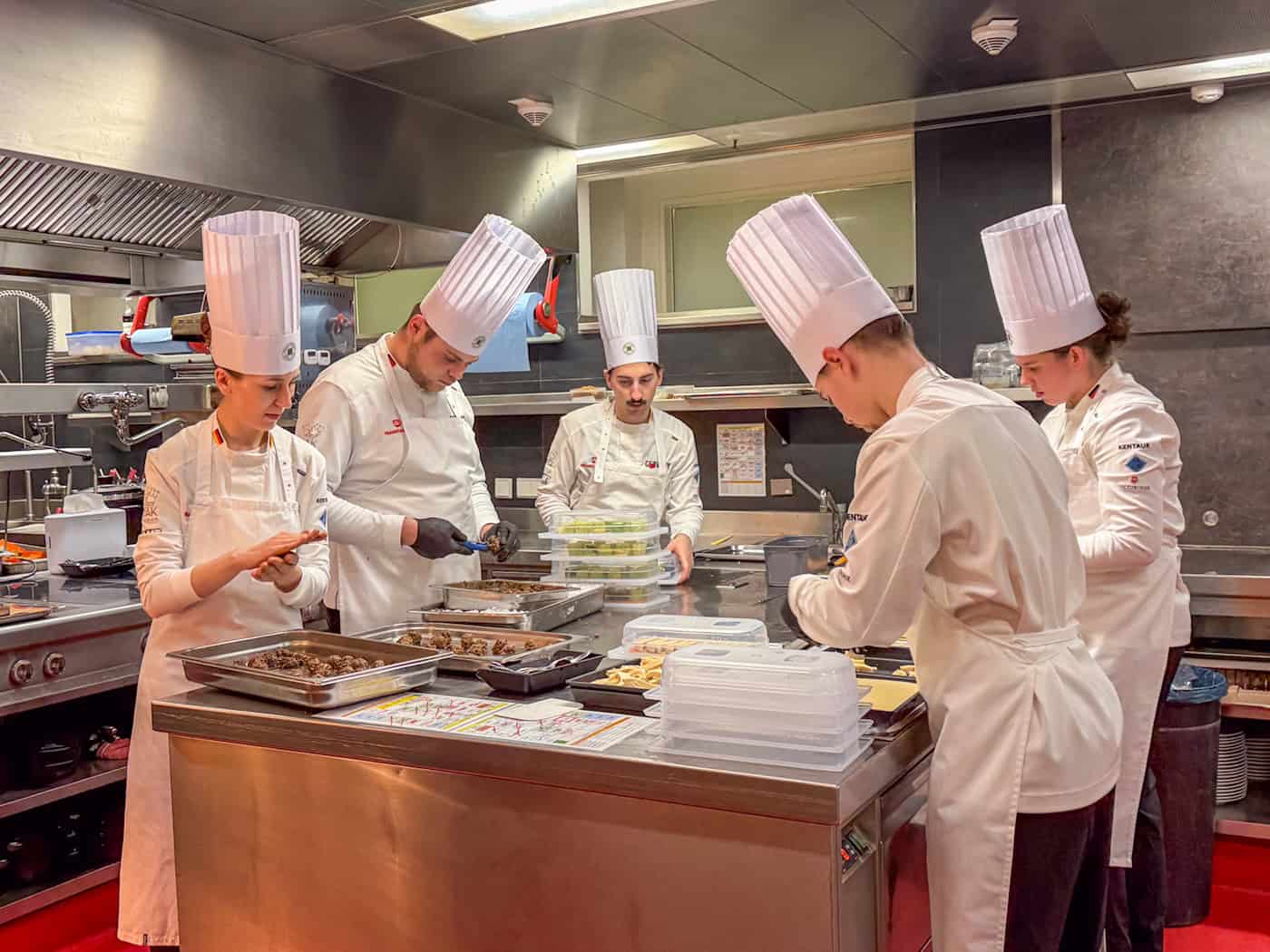
So it’s all about precision and concentration (which is no reason not to have a hearty laugh now and then while chopping or shaping (savory) pralines as part of a course). It’s all about teamwork and precise timing. For the latter, a digital timer counts down—clearly visible from the prep station in Kastenmeier’s open kitchen—and the concept of teamwork can only truly be practiced through hands-on collaboration. The chefs work in various locations across Germany, hailing from Hamburg, Lower Saxony, North Rhine-Westphalia, the Saarland, Bavaria, Thuringia, and Saxony (we’ve actually featured Julia Fuchs here before briefly introduced here). That’s a long way to travel for the monthly training sessions in the training kitchen in Teltow near Berlin. The young people handle these trips—like everything else related to this national team—on a volunteer basis, in addition to their jobs and apprenticeships. There’s no time left for leisure: they do it in their free time (and if not as part of the team, then they simply tackle their own tasks alone at home).
It’s also about emotions
During preparation (which in any professional kitchen is more than half the battle for a successful meal) as well as during the evening event, the team is under critical scrutiny. Team leader Tobias Laabs—himself an experienced competition participant—stands at the pass; he can look stern (very, very stern) and he can laugh—not a second too soon or too late. It’s also about emotions, and you’ll never win a competition with a bad attitude. But neither will you with poor ingredients and a lack of culinary skill. So everything has to come together. Perfect ingredients are guaranteed—thanks to numerous sponsors. Culinary skills are constantly being learned, applied, and refined. The team leader is responsible for spotting the finer details—and during the competition, so is the jury. Of course, there was also a preview of a judge’s observations during the dress rehearsal: Michael Hummel accompanied the team with a pen and notepad. You couldn’t see what he was writing down: after all, the man is a pro, and he always has a completely blank sheet of paper next to the ones filled with notes. Of course, this served as a screen to shield the curious, but perhaps also as a goal: only when there’s nothing left to complain about are you at the top of your game. Sven Evers also offered some practical tips. He’s the head chef at Kastenmeiers and was allowed (just like his boss, Gerd Kastenmeier) to be a guest at his own restaurant that evening. But he also knows what it’s like in a competition like this, because Sven Evers was part of the National Junior Culinary Team in 2010.
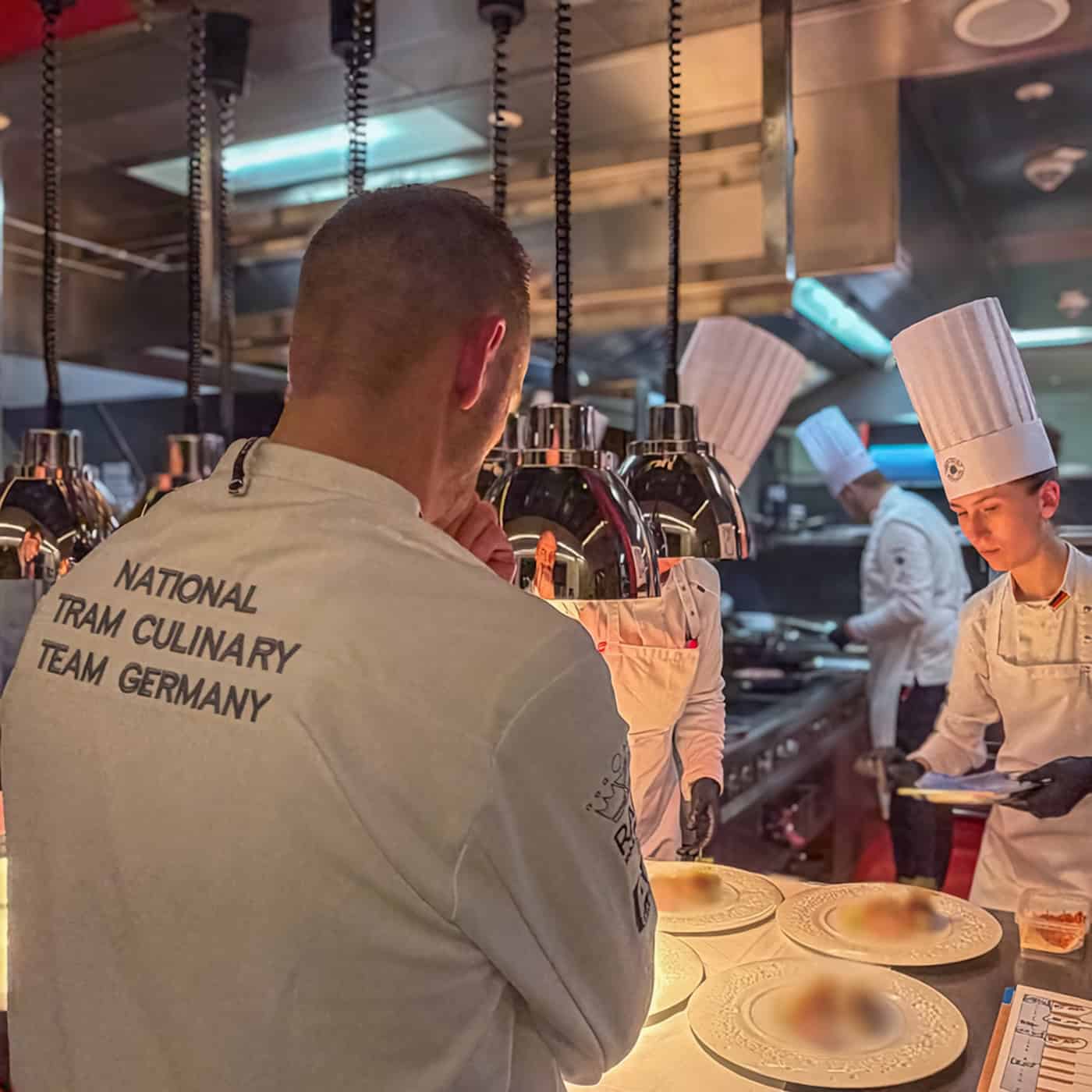
Incidentally, exactly what was served and what it looks like will remain a secret until the competition in Luxembourg. However, we are allowed to reveal the components of the three courses: the appetizer is a composition of celery, apple, rutabaga, and nuts. The main course sounds almost like a traditional Sunday dinner, featuring veal, potatoes, savoy cabbage, and buckwheat. And lime, nougat, and bergamot provide an exquisite finish. Another thing that’s no secret: the guests loved it! Now it’s just a matter of working through the points outlined in Michael Hummel’s notes—and convincing the jury on November 22.
Info: Website of the National Culinary Teams