

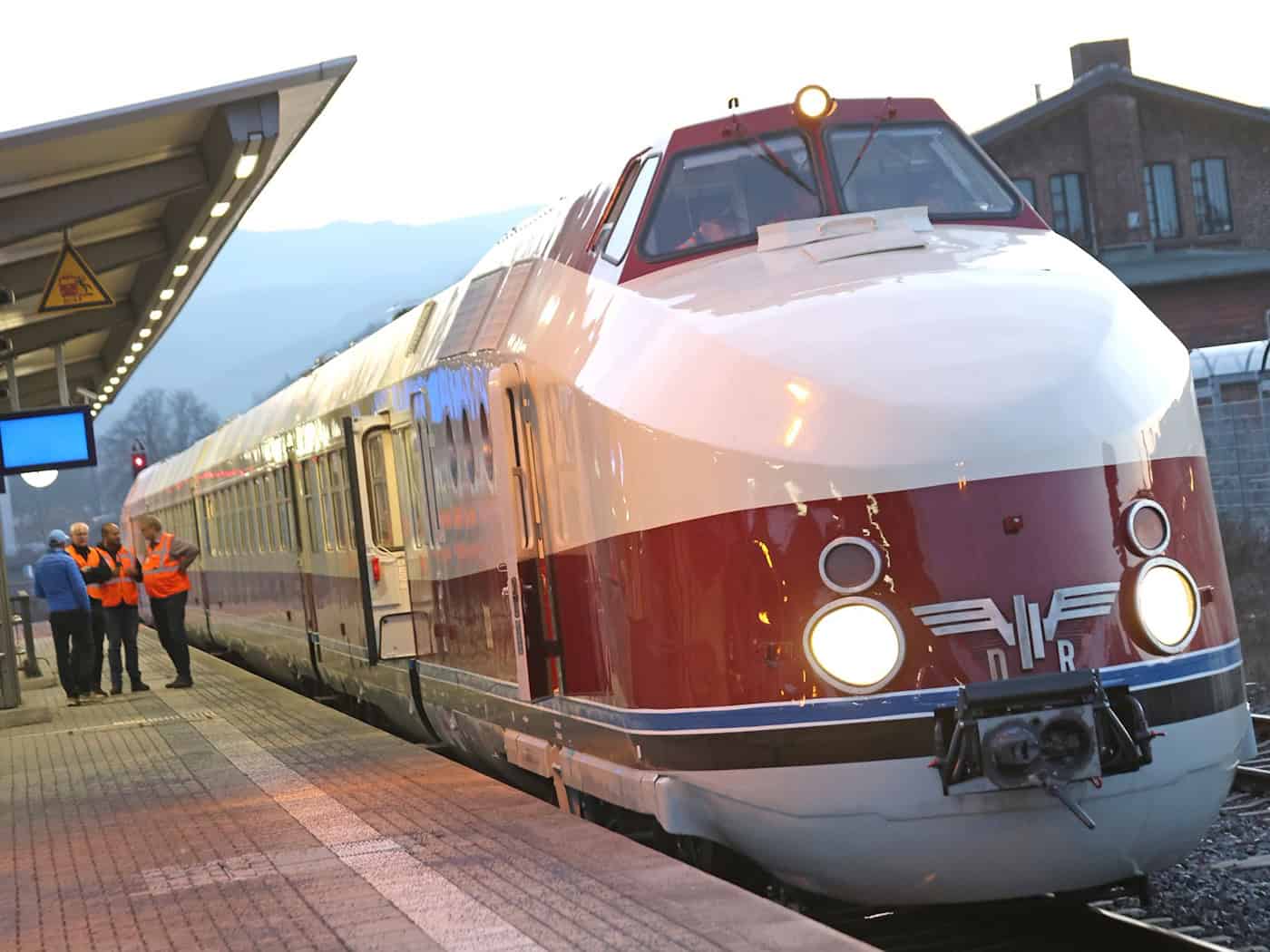
The legendary GDR express train SVT Görlitz is set to return to the tracks soon following engine trouble. Repairs are expected to be completed by mid-August, said Mario Lieb of SVT Görlitz GmbH. Afterward, the train will undergo test runs in the workshop—and special trips could then resume as well. The engine failure was discovered after just a few public trips in June. It was reported that a suspected hairline crack in a prechamber of the engine led to a fatigue fracture. Since then, the historic train—with its streamlined front and distinctive nose—has been undergoing repairs in Radebeul. The repair will cost approximately 20,000 to 25,000 euros, Lieb said. The former flagship vehicle of the Deutsche Reichsbahn for international service dates back to 1968 and underwent extensive restoration over a period of more than five years. The cost of this restoration was reported to be about 7 million euros. Behind the project are railroad enthusiasts who have joined forces in the non-profit limited liability company SVT Görlitz, founded in 2019. Their goal is to operate the vintage train on a commercially viable basis. The train was supposed to be available for regular special trips, such as to Prague and Karlovy Vary or to Hamburg and Sylt. At the end of June, it was scheduled to take fans of the band Keimzeit (“Kling Klang”) from Dresden to a concert in Cottbus. However, this did not happen because engine damage was discovered shortly before the trip. A total of eight trains of this type were built in the 1960s. The high-speed railcar was certified for a top speed of 160 kilometers per hour. The train once connected Berlin with Prague and Vienna, among other destinations. Copyright 2026, dpa (www.dpa.de). All rights reservedRegular Special Trips Planned


