

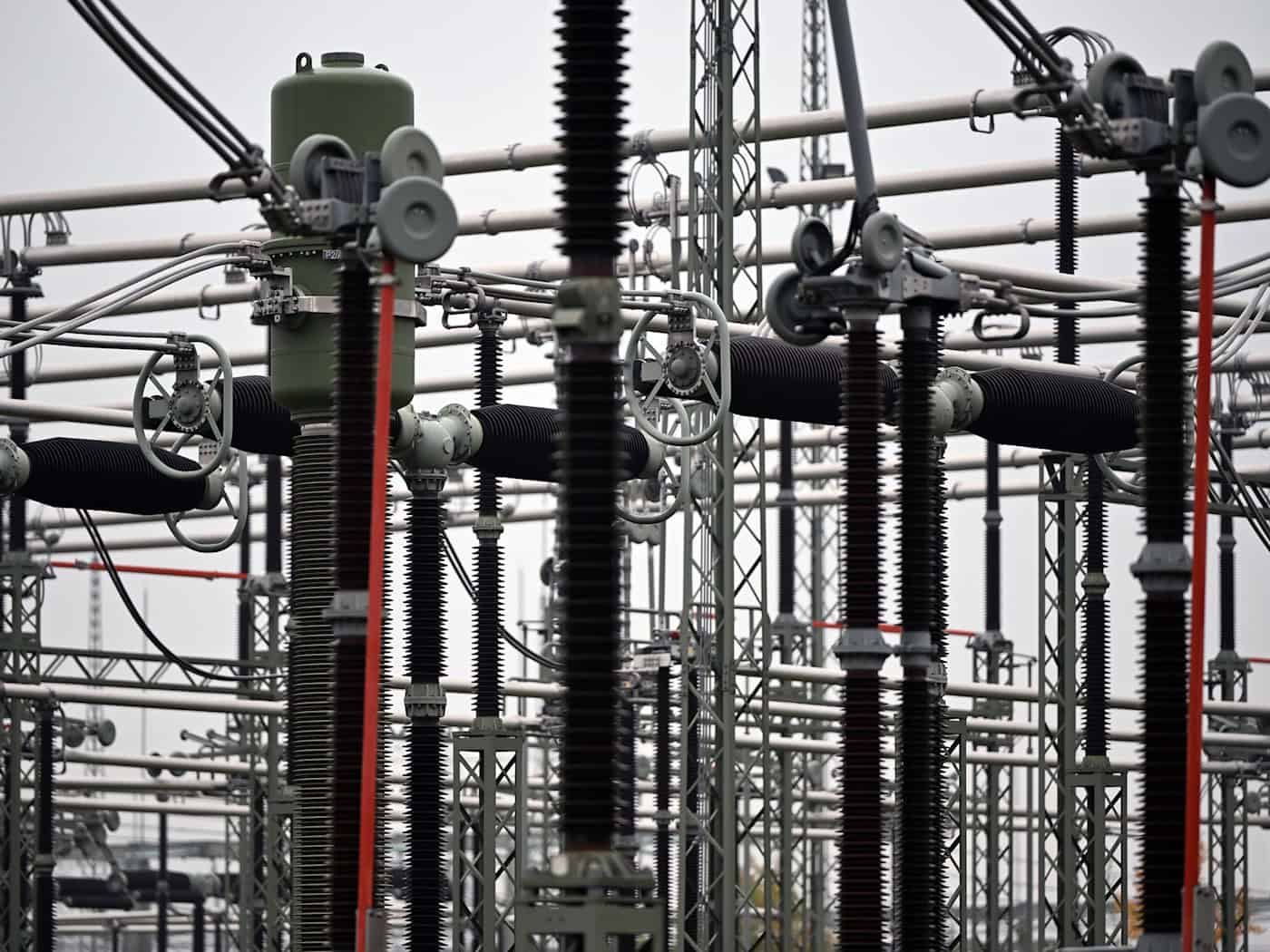
The tense economic situation led to lower electricity consumption in the eastern and northern German states last year. Just under 93.3 terawatt hours (TWh) were consumed in the states of Berlin, Brandenburg, Mecklenburg-Western Pomerania, Thuringia, Saxony, Saxony-Anhalt and Hamburg in 2025, according to the transmission system operator 50Hertz. This was 0.7 TWh less than in the previous year. One terawatt hour corresponds to one billion kilowatt hours. In addition to the weak economy, it is also evident that the number of electric cars and heat pumps is only increasing slowly. "Electricity consumption is still not increasing dynamically. But we will see an increase, there is no doubt about that," said 50Hertz CEO Stefan Kapferer with a view to the long-term development. According to 50Hertz, around three quarters of the electricity consumed came from renewable sources such as wind and solar. Electricity generation from wind energy and photovoltaic systems in the 50Hertz grid area amounted to 69 TWh. PV generation increased significantly from 17.2 TWh in 2024 to almost 20 TWh last year. Wind energy, on the other hand, decreased slightly from 41.6 terawatt hours to 39. Kapferer emphasized that 2025 was a weak wind year, especially in the first quarter. However, electricity generation from onshore wind is particularly important for the energy transition and is significantly larger than a comparable amount of solar capacity. Connecting new grid projects such as data centers, large-scale battery storage and ground-mounted PV systems remains a difficult issue for 50Hertz. The transmission system operator has so far issued 90 connection commitments for such projects, which are due to start by 2030. Currently, there are further applications for 140 battery storage systems with a total capacity of almost 53 gigawatts, 17 data centers (9.4 GW) and two electrolysers (0.7 GW). In order to avoid congestion when awarding connections, from 1 April, commitments will be awarded according to the degree of maturity of the individual projects and no longer according to the principle of the fastest applicant. "This adjustment was urgently needed - if we had stayed with the old procedure, all available grid connections would have been blocked within a very short time, even beyond 2030," said 50Hertz CEO Kapferer. Copyright 2026, dpa (www.dpa.de). All rights reserved75 percent of electricity consumption came from renewables
Dozens of applications for connecting new grid projects


