

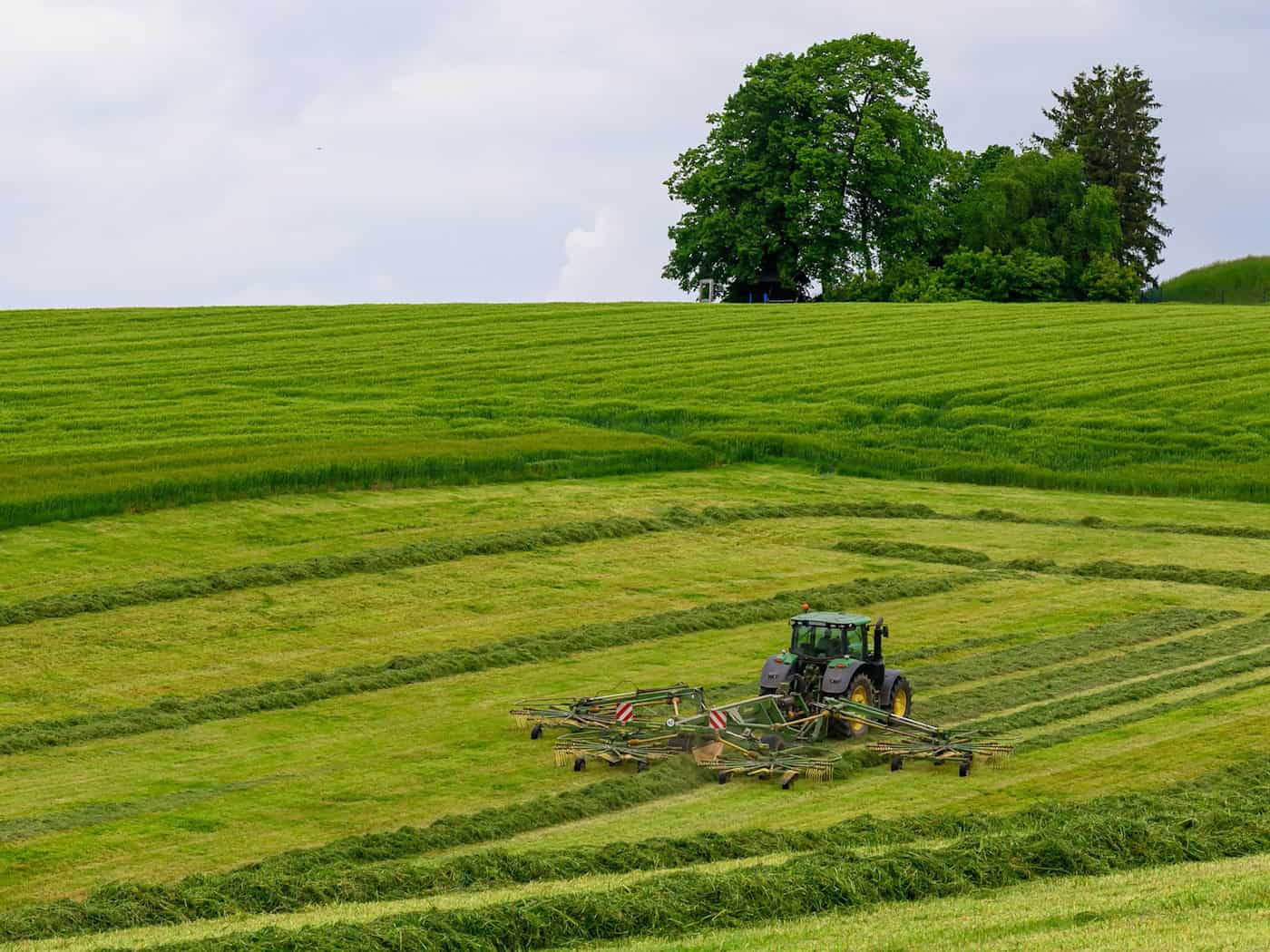
Rain and mild temperatures have ensured good growth in Saxony's meadows and fields in recent weeks. It is not only the cereals that have developed well in many places, said Andreas Jahnel, arable farming expert at the state farmers' association, to the German Press Agency. The weather had also given freshly sown summer crops such as maize and beet a good start. The farmers still have a good month until the start of the grain harvest in Saxony. "It looks like a fairly normal harvest at the moment," said Jahnel. However, the exact outcome depends on the weather conditions. A longer phase with higher temperatures above 20 degrees is now needed so that the grain can ripen well. It also needs to be dry, especially towards the harvest. The start is usually made at the end of June with the winter barley in northern Saxony. In other regions, the combine harvesters roll onto the fields a little later. According to the State Statistical Office, more than 700,000 hectares of arable land are cultivated in Saxony. More than half of this is cultivated with cereals for grain production. The most important crop for local farmers is winter wheat (183,100 hectares), followed by winter rapeseed (104,900), winter barley (86,300) and silage maize (79,500). In addition, there are more than 192,000 hectares of meadows and pastures. Grassland plays an important role as a source of animal feed. In many places, the first cut has been brought in over the past few days. The grass is mostly ensiled, for example as fodder for dairy cows. The first cut plays a special role because the grass is still particularly rich in nutrients in spring, explained Jahnel. However, farmers are not satisfied with the results in all regions: in northern Saxony in particular, the growth was not as lush due to a lack of moisture in spring. Copyright 2026, dpa (www.dpa.de). All rights reservedMainly cereals and rapeseed in Saxony's fields


