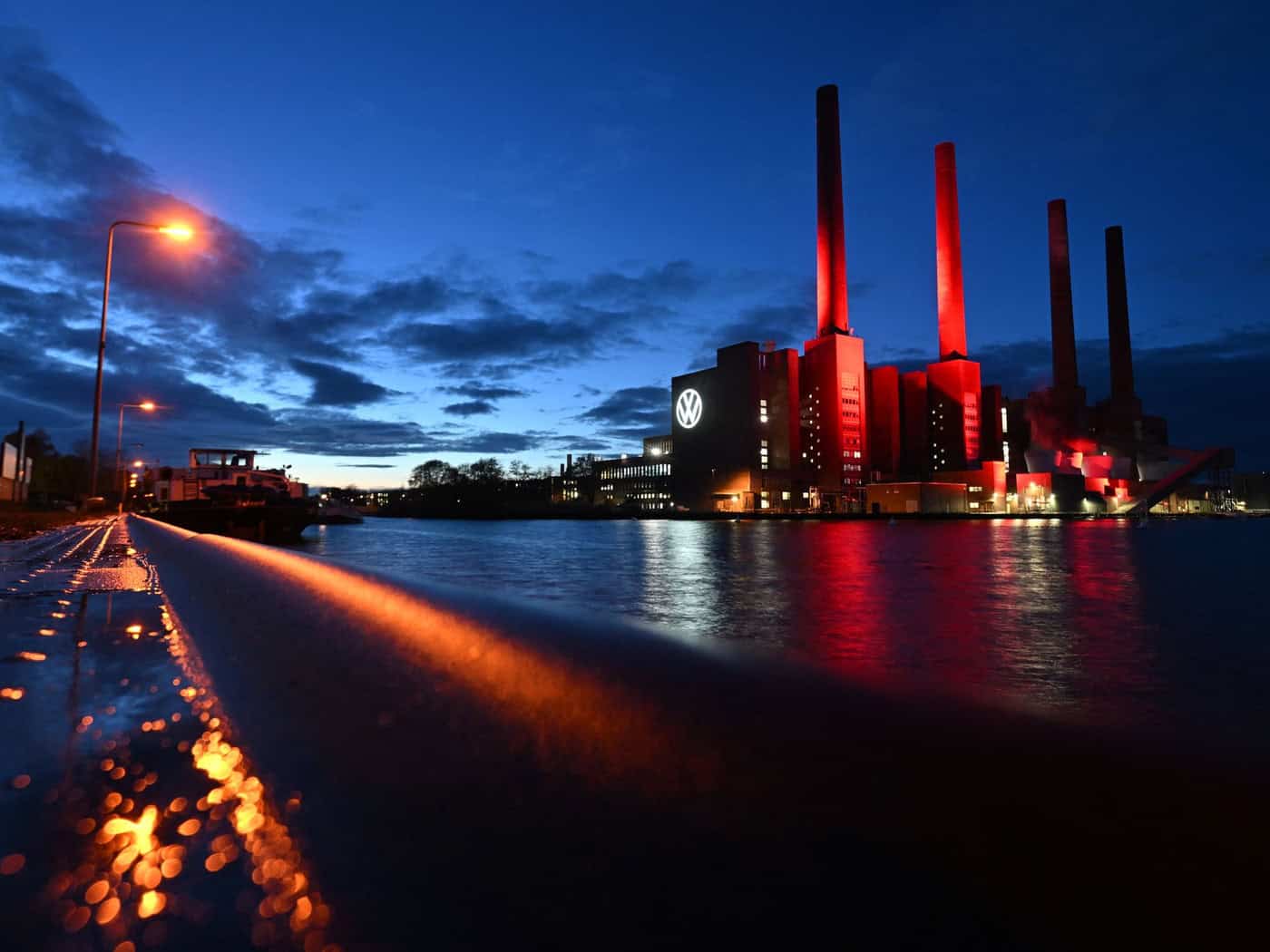
For some 120,000 VW employees, collective bargaining negotiations begin tomorrow—negotiations that are more like a defensive battle. The automaker is demanding significant cuts. The two sides are locked in a stalemate, and a heated winter looms. How did it come to this? A look back at the past few months explains it: A compromise was reached only after warning strikes and a week-long marathon of negotiations. It calls for the elimination of 35,000 VW jobs in Germany by 2030. In addition, bonuses and allowances were cut, and wage increases were put on hold. According to IG Metall regional director Thorsten Gröger, the employee contributions will save 1.5 billion euros annually. In return, VW agreed to avoid layoffs for operational reasons and plant closures—and also pledged investments and new products for its German locations. VW reports its 2025 financial results: Profit plummeted by about 44 percent—from 12.4 billion euros the previous year to 6.9 billion euros. Revenue fell slightly to just under 322 billion euros. A total of 8.98 million vehicles across all Group brands were delivered (down 0.5 percent). CEO Oliver Blume announces plans to restructure VW. In light of the rapidly changing world, the company is working on a transformation plan for the period up to 2030, he said. This also involves further cost reductions. “Manager Magazin” reports that up to 100,000 jobs are to be cut worldwide across the group—roughly twice as many as previously planned. Four plants in Germany could even close entirely. VW only confirms that it is working on the future plan. The Executive Board presents a “comprehensive package of measures” to the supervisory board members but subsequently provides no details on possible plant closures or job cuts. The meeting ends without a clear outcome. It later becomes known that the plans failed due to resistance from employees and the state government. The meeting is accompanied by protests. Works council chair Daniela Cavallo expressed her anger, stating that the treatment of the workforce could not be more disrespectful. Blume lets an ultimatum to explain himself pass. The VW CEO makes his first concrete statement on the intranet. Without a change in labor costs, a “theoretical projection” would indicate that approximately 50,000 jobs worldwide would have to be cut. He also confirms that there are currently no competitive production plans for Emden, Hanover, Zwickau, and Neckarsulm (Audi) in the 2030s. However: “Smart solutions are always better than closing a plant.” In an internal interview, Blume describes the situation as “more than critical.” He states that the operating return of 3.8 percent is not sufficient to finance new technologies, products, and locations in the long term. The employees feel the information provided is insufficient. They summon VW managers to the plants. In Wolfsburg, a series of nine extraordinary works meetings begins. After a long struggle, the Supervisory Board votes in favor of the “Future Plan 2030.” It is described as the “most far-reaching transformation program” in the company’s history. The plan includes cost savings in the double-digit billions. The elimination of approximately 50,000 jobs is also expected to contribute to this. No decisions on plant closures were made at this time. The Executive Board is to present a concept for the production network in Europe by mid-2027. The decision comes a day earlier than expected. An escalation has been averted for now. Prior to the meeting, there was also speculation that the Executive Board—should the supervisory board not approve—might leave the decision to the shareholders. The union cites a clause in the 2024 collective bargaining agreement. In a so-called review meeting, the union wants to clarify whether VW is honoring its previous commitments despite the stricter cost-cutting plans. Due to a billion-euro write-down on Porsche, weak business in China, and costs associated with the corporate restructuring, VW is lowering its forecast for fiscal year 2026. The automaker now expects that no more than one percent of revenue will remain as operating profit. VW brand chief Thomas Schäfer wants to accelerate the pace of cost-cutting. “We have absolutely no time to lose,” he said. He had hoped that the measures agreed upon in 2024 would be sufficient. But looking the other way doesn’t solve any problems. Cavallo prepares employees for the fact that they will encounter “cost-cutting frenzy” at every turn. The signs point to a storm. In the upcoming collective bargaining round, IG Metall is demanding, among other things, a five percent pay raise for VW employees. The union cites rising living costs as the reason. The last pay raise was in May 2024. During the review meeting, VW terminated ten collective bargaining agreements—and with them, nearly all provisions of the company-wide collective agreement. These agreements govern, among other things, working hours, vacation time, and allowances. Job security remains unaffected. IG Metall calls this a “nasty foul.” Labor costs in Germany are about twice as high as in other European countries where VW operates, Blume told the website “The Pioneer.” According to him, there are several ways to reduce them, including an increase in weekly working hours without wage compensation. IG Metall demands that VW rescind the termination of the collective bargaining agreements by the end of the month—and threatens industrial action. For the first time, VW reveals how many more jobs are to be cut at its core brand: around 12,000 by 2030. Earnings after taxes in the third quarter stood at minus 5.82 billion euros. This was primarily due to one-time items. Revenue and deliveries also declined. By the end of September, the group had delivered just over 6 million vehicles to customers (down 9.0 percent). The situation is even worse for the core brand. The situation is particularly precarious in China, with a decline of just over 30 percent. Volkswagen is halting a project to modernize production in Wolfsburg, citing the strained economic situation as the reason. Cavallo sees this as a “flagrant breach” of the 2024 collective bargaining agreement. That agreement called for the production facilities at the main plant to be retooled, in part to prepare for the all-electric Golf. The so-called “Gamechanger” project was intended to develop state-of-the-art manufacturing technologies for this purpose. According to the VW CEO, “intensive discussions” are currently underway. Employees are expected to have clarity “by summer at the very latest.” VW submits its demands for the collective bargaining negotiations to the union. In addition to zero wage increases in 2027 and 2028, the current 35-hour workweek is to be “adjusted as needed to match operational capacity” without compensation. Finally, VW management enters the talks demanding cuts to additional payments and allowances. Employees are calling it a “catalog of horrors.” Gröger stated: “The VW Executive Board is stabbing its employees in the back.” Copyright 2026, dpa (www.dpa.de). All rights reservedWhat happened before: The 2024 collective bargaining agreement
March 10, 2026: Profit Plunge
June 26: Details emerge
July 9: Supervisory Board in dispute
July 13: Blume Cites Figures
August 21: “The situation is more than critical”
August 25: Executive Board Must Step Up
September 3: Supervisory Board Reaches Consensus
September 11: IG Metall pushes for talks
September 18: Profit Warning
September 21: Staff Meeting
September 22: Demand for a Pay Raise
September 30: Collective Bargaining Agreements Terminated
October 1: Blume brings longer working hours into the discussion
October 23: Second review meeting
October 29: Loss in the Billions
November 11: Future Project Scrapped
November 18: Quick Solutions for Plants?
November 19: The company’s demands