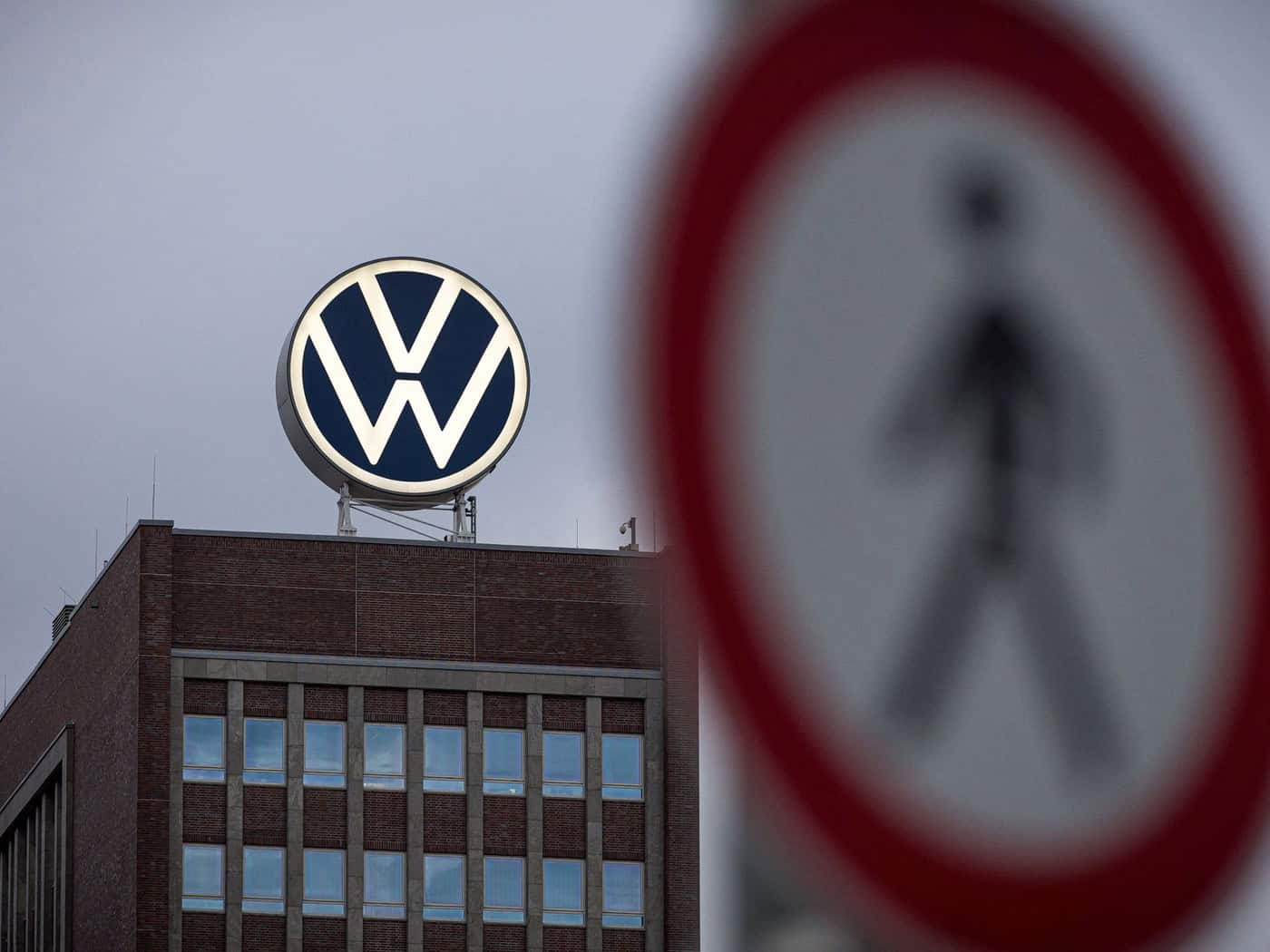
Collective bargaining negotiations begin today amid a struggle over significantly tougher cost-cutting measures at Volkswagen. The company and IG Metall plan to meet shortly before noon in Emden, East Frisia. The start of negotiations will be accompanied by protests: The union has called for a demonstration and rally (10:00 a.m.). Speakers are expected to include IG Metall district director and chief negotiator Thorsten Gröger, as well as VW works council chair Daniela Cavallo. The collective bargaining round is off to a rocky start: Europe’s largest automaker is grappling with high costs in its core brand and therefore intends to implement cost-cutting measures. To this end, the company terminated ten collective bargaining agreements in whole or in part at the end of September—effectively scrapping nearly all provisions of its in-house collective bargaining agreement. According to the employees, this agreement applies to more than 120,000 workers at the Braunschweig, Chemnitz, Dresden, Emden, Hanover, Kassel, Salzgitter, Wolfsburg, and Zwickau locations. The list of demands includes zero wage increases in 2027 and 2028, as well as cuts to additional payments and allowances. However, there is much more on the negotiating table than just pay: For example, Volkswagen is also demanding that the current 35-hour workweek be “adjusted as needed to operational capacity” without compensation. According to VW co-negotiator Kerstin Scholz, these regulations are not being called into question lightly. But the overall conditions have deteriorated significantly. For example, tariffs, a shrinking Chinese market, and intensifying competition in Europe are weighing on the company. In light of economic developments, the measures agreed upon in 2024 are no longer sufficient on their own. According to IG Metall, VW saves approximately 1.5 billion euros annually thanks to the employee contributions agreed upon at that time. The Wolfsburg-based company had slipped deep into the red in the third quarter. The cuts are intended to make VW more competitive and are part of the “Future Plan 2030,” which aims to get the entire group back on track. This plan also calls for the elimination of approximately 12,000 VW jobs in Germany—in addition to the previously agreed-upon reduction of 35,000 positions by 2030. The cuts are to be carried out in a socially responsible manner; VW management is not wavering on its commitment to job security. However, the terms must be negotiated. But the positions already appear entrenched before negotiations have even begun. Employees criticized the demands as a “Catalog of Horrors.” The VW Executive Board is “stabbing its employees in the back,” said chief negotiator Gröger in response to the list. The demands are thus significantly more extensive than those for 2024. “No one should delude themselves: Volkswagen is facing a crucial test, the full extent of which the employer side apparently still does not realize.” IG Metall actually wants to secure a five percent pay increase for VW employees. It cited inflation, among other factors, as the reason for this. Given the current positions, Gröger recently stated that he did not expect an agreement to be reached this year. “This won’t be a storm in a teacup that blows over by the end of the year. It will be a tough, bitter, and exhausting conflict that will leave deep scars on the company.” The talks are scheduled to resume on December 15 in Zwickau. No further dates have been set yet. What is already certain: The no-strike clause ends on December 31, after which warning strikes are possible. According to works council chairwoman Cavallo, who is representing IG Metall at the negotiating table, the employees are very angry. The executive board wants to take the hard line. We’re ready for that. Copyright 2026, dpa (www.dpa.de). All rights reservedWhat Volkswagen Aims to Achieve
A “Catalog of Horrors” for Employees