

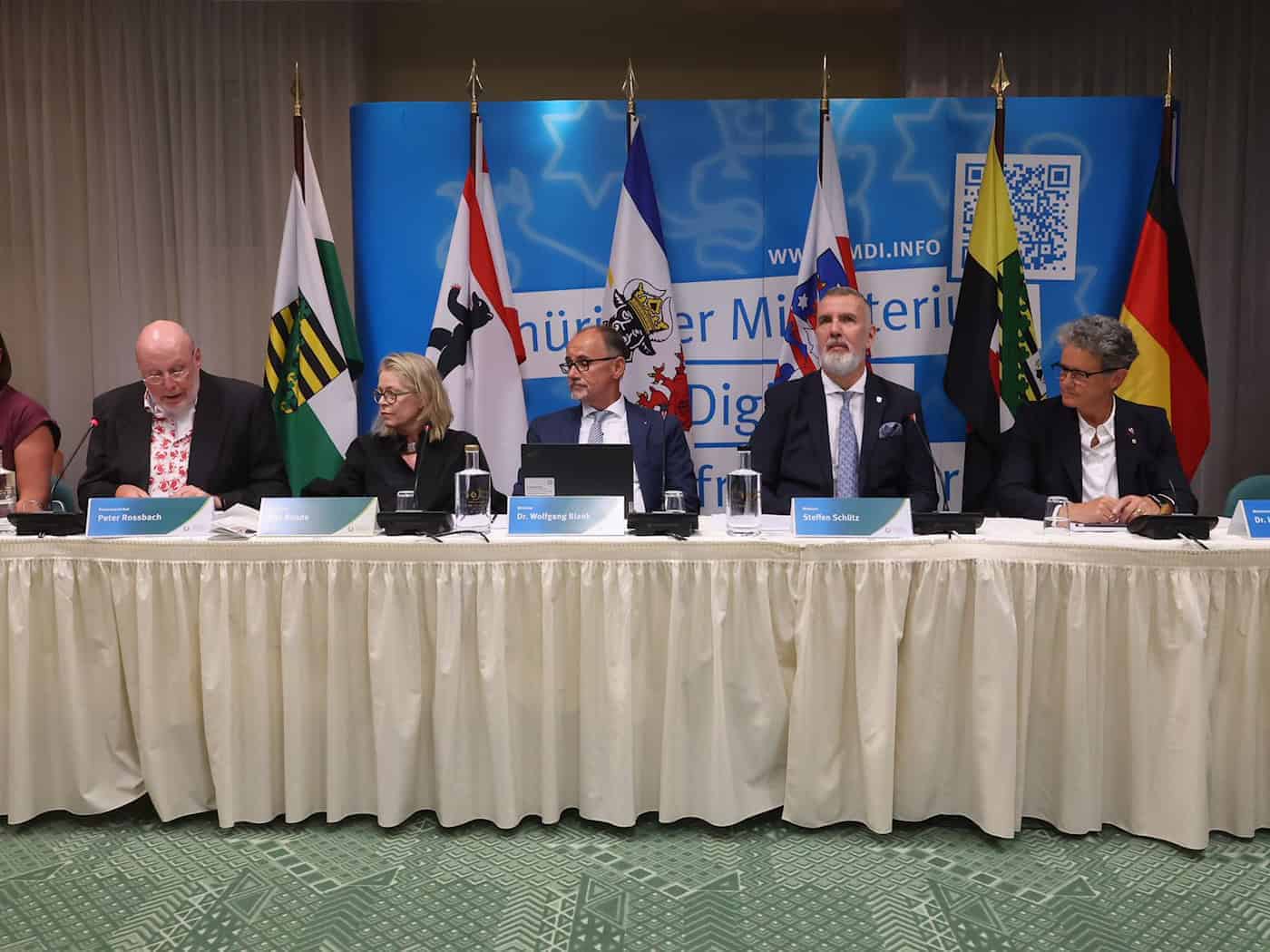
Reimported Simson mopeds will be allowed to chug along at 60 on German roads in the future. After a fresh review of the legal situation, the federal government has decided that re-imports will also be covered by the special regulation for motorcycles built in the GDR, provided they were put into service by February 28, 1992, and their roadworthiness is confirmed. This was announced by Christian Hirte, Parliamentary State Secretary at the Federal Ministry of Transport, following a working meeting of East German transportation ministers in Gera. He recommended that the relevant states treat these vehicles equally. “From the federal government’s perspective, the way is clear for the 60 km/h speed limit to apply to both original and reimported Simson motorcycles,” said Hirte. Vehicles built during the GDR era with names such as Schwalbe, Star, Sperber, or S50/51 can travel at 60 km/h because a special provision in the German Unification Treaty allows for this. This applies to two-stroke mopeds that were already registered in the GDR. For Simson mopeds repatriated from abroad, it had previously been disputed whether they also fell under this special status. Like other mopeds, they were previously limited to a speed of 45 kilometers per hour. The federal government’s recent decision will ensure equal legal treatment for thousands of owners, officials said. Tens of thousands of Simson mopeds are still on the road, especially in eastern Germany. Many young people, particularly in rural areas, ride these two-stroke mopeds. They are also popular because of their design. The Eastern German transportation ministers agreed in Gera on joint positions to present to the federal government. Among other things, they called for the sustainable safeguarding and financing of both regional and long-distance rail service across the region. Particularly in the large, rural states of eastern Germany, it is crucial to prevent entire regions from becoming isolated. Saxony-Anhalt’s Transportation Minister, Lydia Hüskens (FDP), notes, for example, that the expansion of rail lines has a one-sided focus on major cities and metropolitan areas. However, she noted that the eastern German states are predominantly rural. The specific interests of these states must therefore be given appropriate consideration in future infrastructure planning, and the necessary funding must be made available. The ministers called on the railway operator to provide more reliable commitments and agreements. Wolfgang Blank, the independent Infrastructure Minister of Mecklenburg-Western Pomerania, said that increased competition in long-distance rail service must not result in Mecklenburg-Western Pomerania losing long-distance stops or in local rail service—especially in rural areas—being curtailed. The federal government must now take action: Regionalization funding must be increased, and a reform of track access charges must finally provide planning certainty for several years. Berlin’s Senator for Transportation, Ute Bonde (CDU), pointed out that the Berlin rail hub—which is already heavily congested—will be burdened even further by new competitors such as Italo and Flixtrain. When it comes to autonomous mobility, the eastern German states intend to pool their research, development, and practical expertise in an “Innovation Alliance for Autonomous Driving.” Together, they aim to drive the transition from pilot projects to regular operations. “Our goal is to ensure that people in rural areas remain well connected and that new technologies reach the places where they provide the greatest benefit,” emphasized Thuringia’s Infrastructure Minister Steffen Schütz (BSW). Copyright 2026, dpa (www.dpa.de). All rights reservedLegal equality for thousands of owners
Joint Demand by Eastern German States


