

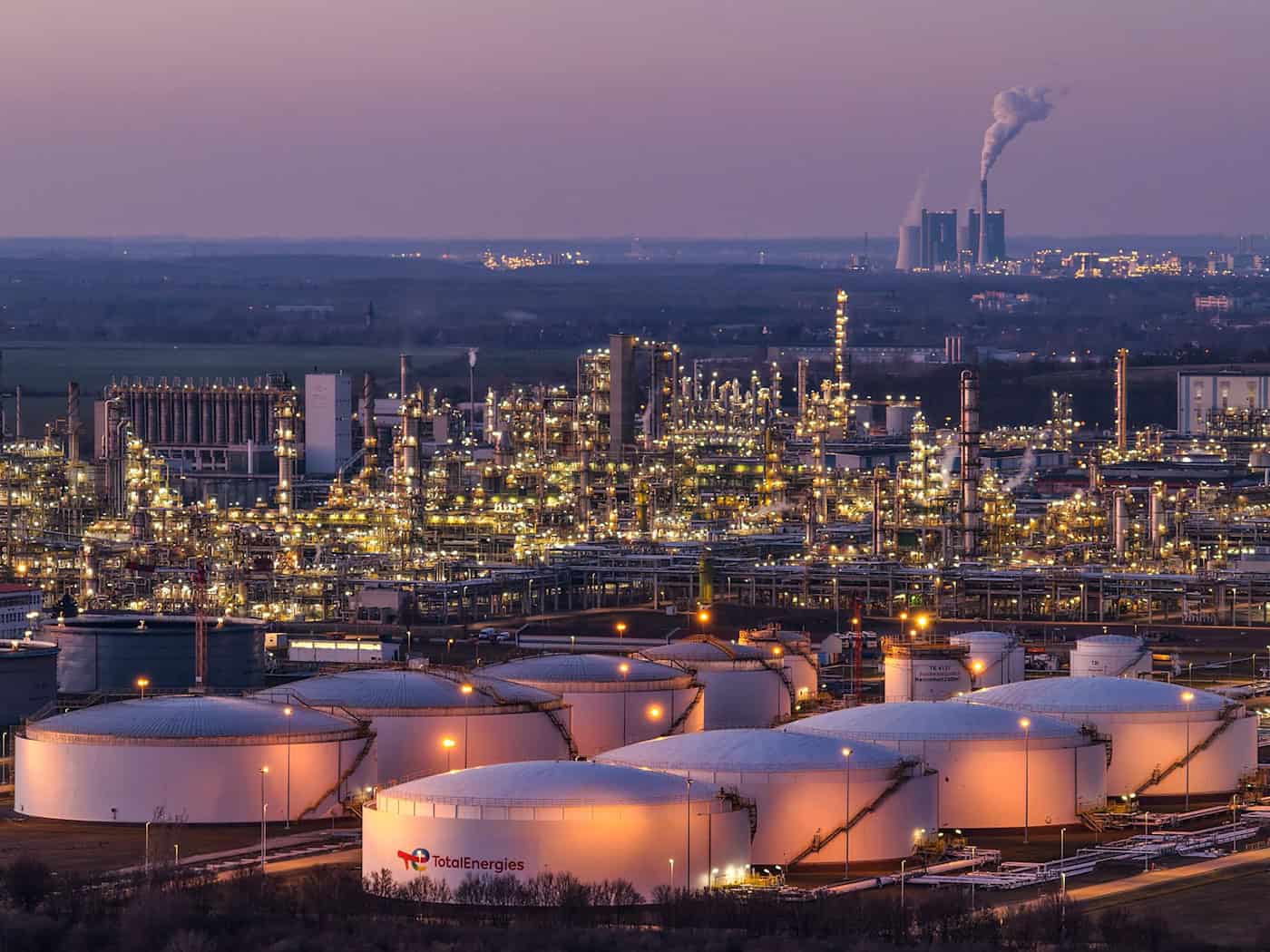
The chemical industry is one of the most important branches of industry in eastern Germany - and is also under severe pressure, especially at large locations such as Leuna and Bitterfeld-Wolfen. The industry is particularly important in Saxony-Anhalt: according to the Ministry of Economic Affairs, its share of total manufacturing turnover in the first half of 2025 was just under 20 percent. At the same time, the economic situation has recently deteriorated significantly. Dampened demand, high energy prices, international competition and overcapacity are putting companies under pressure. The insolvency of the chemical company Domo in Leuna and the closure of the US company Dow Chemical's plants in Böhlen and Schkopau are just two examples of the ongoing crisis in the industry. New approaches and solutions are needed to keep the German chemical industry afloat, believes Peter Seeberger, Scientific Director of the Center for the Transformation of Chemistry (CTC). Around 60 employees of the chemistry research center are currently working in Leipzig to transform the chemical industry into a resource-conserving circular economy and develop new materials. By 2038, 1,000 people are to be employed at the two planned sites in Merseburg and Delitzsch. The federal government is funding the CTC with 1.1 billion euros. "The transformation will come," Seeberger is certain. "The question is, will it come now and here or will it come in ten years in China and then everything will be closed here?" In order to remain competitive, processes in the industry need to be restructured "so that they can manage with less energy and with closed cycles - otherwise production will move away". The CTC is currently researching, for example, the recovery of rare earths from electronic waste, substitutes for harmful "eternity chemicals" or alternatives for solvents currently used in industry. The researchers have set themselves ambitious goals for the future: they want to realize the concept of a completely recyclable car and develop an autonomous, data-driven and largely automated laboratory. However, this will not happen quickly. The transformation of the chemical industry is a "generational task", while the current crisis threatens to paralyze the process. This is because the CTC needs cooperation and exchange with industry partners for its research work. The expert believes that the immediate task is therefore to maintain the industry - also with the help of politics - for example through the planned state-subsidized, lower industrial electricity price for energy-intensive companies. However, innovative ideas from research can and should already produce start-ups that can compete on the market. An initial project group at the large-scale chemical research center has already produced the start-up Aevoloop, which has since moved from Constance to Leipzig in the chemical triangle. The company develops patent-protected plastics with built-in chemical predetermined breaking points that can be completely recycled without any loss of quality and can even be biodegraded in some cases - an approach that aims to turn plastic waste that is difficult to recycle into new, high-performance materials for packaging, films or technical components. The company now has 29 employees and has acquired around nine million euros in investments, according to the CTC boss. The start-up Cynio, a spin-off from the TU Bergakademie Freiberg in Saxony, has settled in Bitterfeld-Wolfen. The company was awarded the Saxony-Anhalt Business Prize in the "Start-up" category on Wednesday. It produces isocyanates - chemical building blocks that are used for coatings, for example. The highly toxic gas phosgene is usually used for this. Instead, Cynio uses a process with carbon dioxide, which is produced in industry anyway and can be reused. According to co-founder Michéle Tille, the start-up focuses on smaller quantities and special applications that large chemical companies often do not serve. This means that rare or previously unavailable isocyanates can also be produced. In the view of the industry, such developments are not an isolated case. "Young companies are driving forward key issues for the future of the industry," says Nora Schmidt-Kesseler, Managing Director of the Northeast Chemicals Associations. Start-ups are working on the use of CO2, recycling processes or new materials, for example, and are providing important impetus for the transformation - "from the laboratory to industrial scale". At the same time, chemical parks are crucial for such start-ups. "This is where modern infrastructure, specialized laboratory space and experienced partners come together - from development to production," says Schmidt-Kesseler. Without these prerequisites, many projects would hardly be feasible. However, the economic reality remains difficult. Especially in the current situation, the willingness to invest in new processes is limited, reports Cynio co-founder Tille. Although more sustainable processes are of interest to many customers, the decisive factor is ultimately the price - higher costs are currently hardly accepted. At the same time, start-ups are facing a fundamental problem: they first have to invest in order to grow - but often only receive capital if they have already scaled up. Despite this, many founders are consciously focusing on eastern Germany as a location. Cynio also wants to produce and grow in Bitterfeld-Wolfen in the long term. "We believe that Europe not only needs patents, but also manufacturing companies," says Tille. For the future, the challenge now is also to attract "absolute top people" for the task of changing the chemical industry, says expert Seeberger from the CTC Chemical Research Center. A joint professorship for organic chemistry with the University of Leipzig is intended to accelerate the transfer from science to industry. An international "Transforming Chemistry Summit" is set to bring the best minds in global research to Leipzig for two days in September. The hope: that small innovations will lead to larger industrial solutions in the long term - and that the chemical industry in eastern Germany can maintain its place in the transformation. Copyright 2026, dpa (www.dpa.de). All rights reservedIndustry in crisis
Research focuses on change
Start-ups as beacons of hope
Impetus for the industry
High hurdles for new processes
Change as a generational task


