

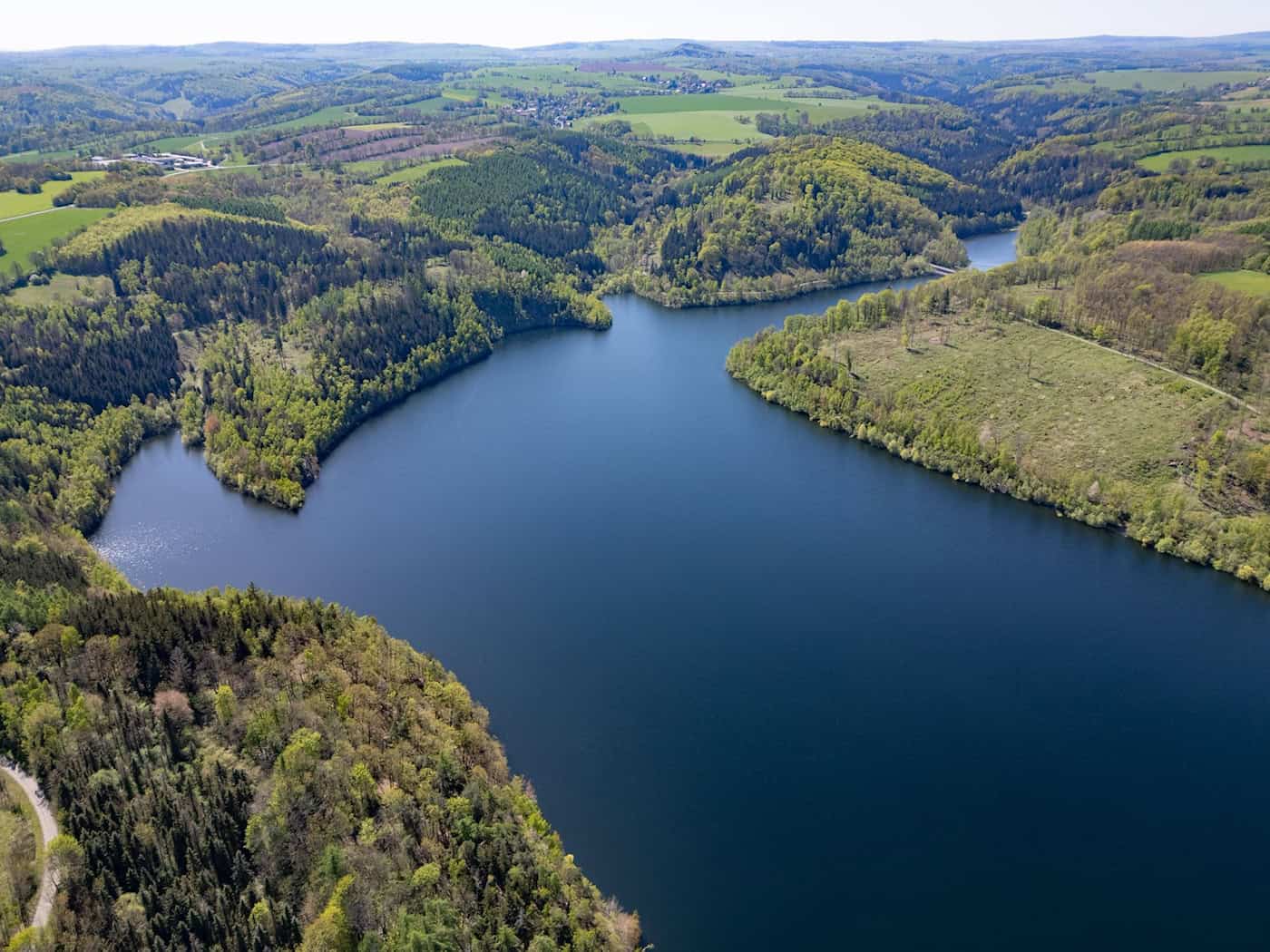
The drought is taking a toll on Saxony’s reservoirs. Although the drinking water reservoirs are filled to an average of 81.6 percent, there are significant regional differences, the State Reservoir Administration (LTV) reported in response to an inquiry. In the Vogtland and the Western Ore Mountains, the drinking water reservoirs are sufficiently full—between 86 and 95 percent. In the Central Ore Mountains and the Eastern Ore Mountains, however, the effects of the current drought are evident. The inflows to the reservoirs, which have been well below average for months—in July only about one-third (32 percent) of the long-term averages for this month —have led to significantly lower reservoir levels and a more strained situation, officials said. “Currently, the water level in the Klingenberg/Lehnmühle reservoir system is only 53 percent of the target level.” Targeted management measures are being implemented to counter this—such as coordinated management across the system. Some reservoirs in Saxony are interconnected. Water from well-filled reservoirs can be diverted to those “in need.” “Reservoirs are built to be able to compensate for even prolonged dry spells. A dry year is generally not a problem, but dry spells lasting several years require appropriate measures,” LTV spokesperson Katrin Schöne told the German Press Agency. To this end, they are working closely with regional water supply companies. The Saxony State Dam Administration is responsible for 87 water control structures—56 dams, 25 flood retention basins, and six water reservoirs. In addition, there is one polder. Twenty-five dams are reserved for drinking water. The administration is responsible for managing approximately 3,000 kilometers of first-order watercourses (larger rivers) and the Elbe River, as well as about 300 kilometers of border waters with the Czech Republic, approximately 750 kilometers of flood protection structures, raw water transfer systems for industrial and drinking water, and more than 500 water management facilities such as weirs, pumping stations, and water intake facilities. Copyright 2026, dpa (www.dpa.de). All rights reservedOnly one-third of the usual inflows for July
Some reservoirs are interconnected and can balance water levels


