

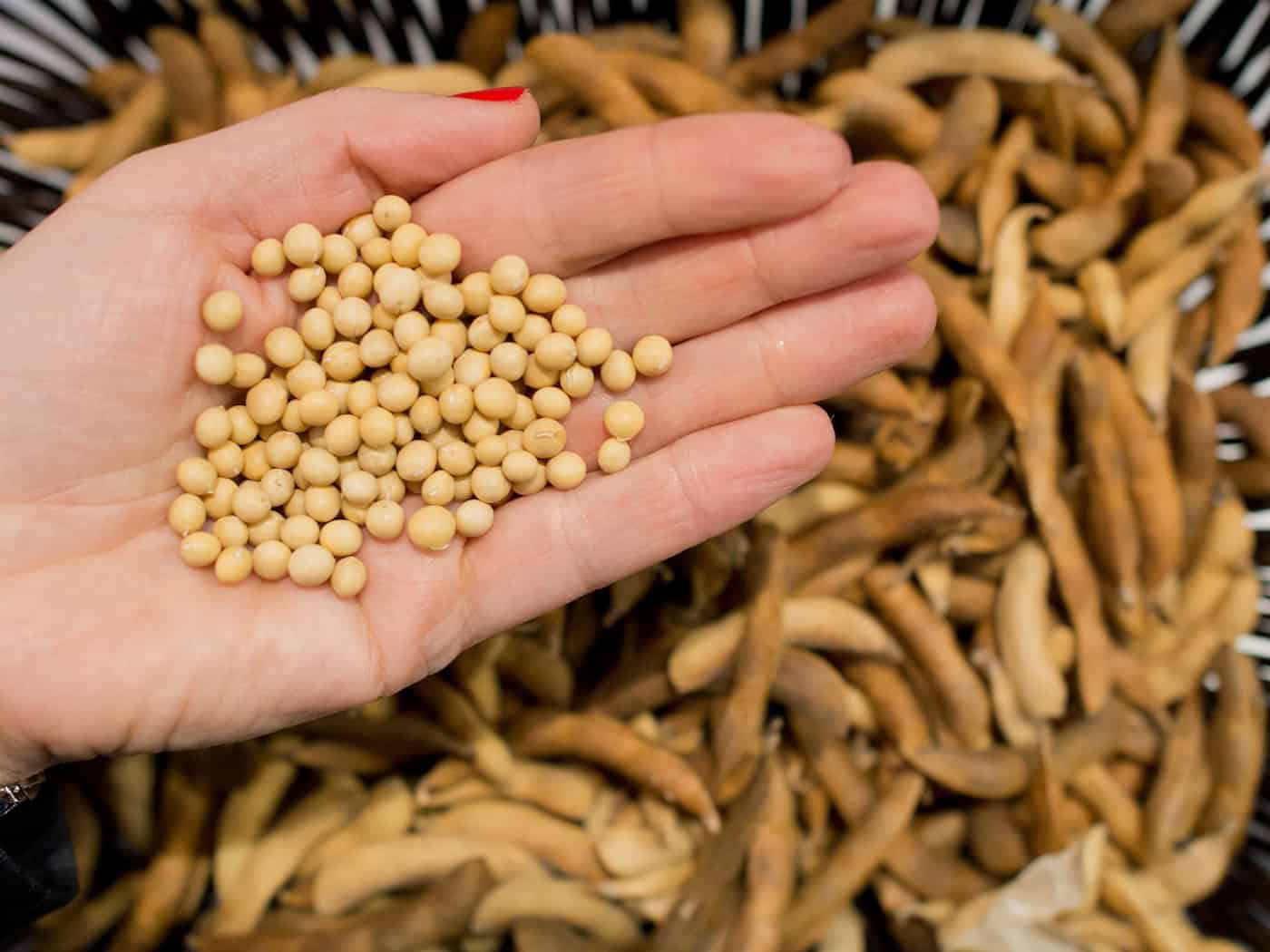
Longer heat waves and severe droughts—farmers in Saxony are facing increasingly challenging weather conditions as a result of the climate crisis. They are looking for a crop that is more resilient than native crops. More and more farmers are turning to soybeans. “It’s one of the winners of climate change. This crop has a bright future,” says Torsten Krawczyk, president of the Saxon State Farmers’ Association. According to the association, the area under cultivation in Saxony has increased by 40 percent to 2,600 hectares compared to 2025. However, soybeans are still a niche product. “They’re not a miracle crop and still need water at the right time, but they’re heat-tolerant,” said Stefan Hesse, a farmer from Malschwitz in Upper Lusatia. His farm specializes in arable farming and produces grains, oilseeds, legumes, and potatoes. Hesse has been growing soybeans on about 20 hectares for seven years—and is satisfied. Soybean cultivation accounts for about ten percent of his farm’s output, explains the 43-year-old. One advantage of this legume is that it blooms and matures later than peas or canola. “Spring droughts, as have often been the case in recent years, don’t affect it as much.” Soybeans don’t need much water until July, and by then there’s usually more rainfall on average. “So for me, it’s a good way to spread the risk across several crops. One of the three crops will ensure a good yield,” said Hesse. Furthermore, according to him, soybean prices are stable and, due to their significantly higher protein content, are about twice as high as those for peas. More and more farms are turning to soybeans and sunflowers because of their high drought tolerance and resilience to heat stress, explained agricultural business consultant Frederik Vielhauer. Other crops that could gain importance in the wake of climate change include fiber hemp, sorghum, as well as chickpeas and lupins. Quinoa and amaranth are also considered crops that could become more attractive in the future under warmer and drier conditions. Legumes, in symbiosis with specific nodule-forming bacteria, fix nitrogen through their roots—which reduces the need for mineral nitrogen fertilizer. Successor crops such as wheat also benefit from the nitrogen remaining in the soil. According to farmer Hesse, the challenge in growing soybeans is that, as a non-native crop, they require these beneficial bacteria. These must be sprayed on the soil before sowing, the 43-year-old explained. 130.800 metric tons of soybeans were harvested by German farmers in 2025 on a cultivated area of 43,300 hectares, according to the Federal Information Center for Agriculture (BZL). That is three times as much as in 2016. The largest soybean producer in Europe is Italy, with a cultivation area of approximately 309,000 hectares, followed by Serbia (207,000 hectares), France (150,000 hectares), and Romania (130,000 hectares). Soybeans are marketed as a source of protein for livestock in the form of soybean meal. According to the Federal Information Center for Agriculture, Germany currently covers only about three percent of its domestic demand; the vast majority is imported. Worldwide, only about seven percent of soybean production goes directly into food processing, according to the report. In Germany, this share is slightly higher. Soy products such as tofu, soy beverages, or meat substitutes available in retail stores therefore often come from Germany or other European countries. Copyright 2026, dpa (www.dpa.de). All rights reservedSoybeans are heat-tolerant and withstand spring droughts
Other legumes are gaining importance
Germany still has ground to make up compared to the rest of Europe


