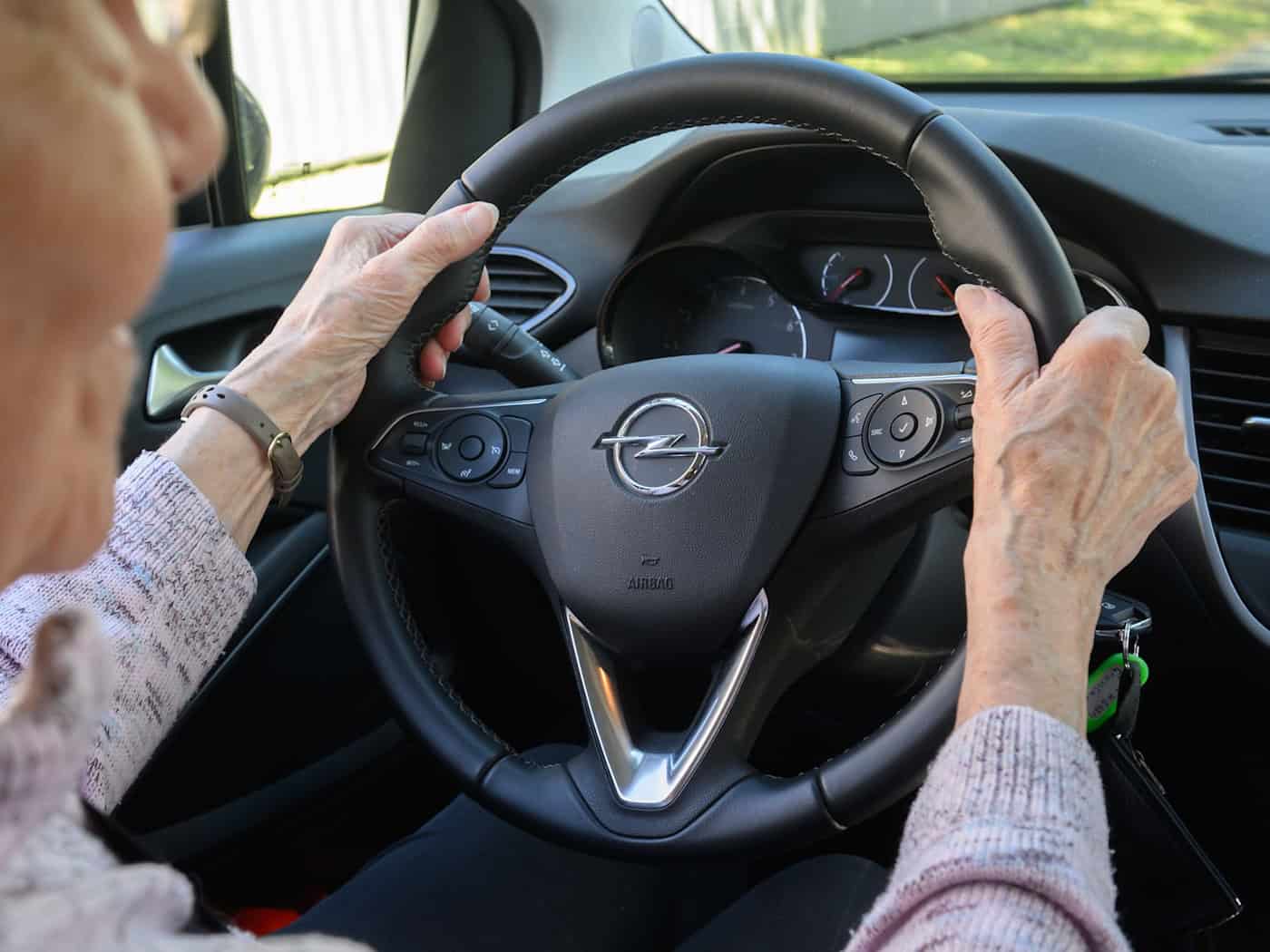
After two serious accidents in Saxony and Thuringia, in which senior citizens were presumably the main culprits, a debate has once again flared up about the driving ability of older people. Last week, an 84-year-old woman drove into a crèche group in Niesky (Saxony), injuring an educator and a girl. Earlier this month, an 88-year-old woman ran over two people while reversing in a parking lot, killing a 75-year-old man and his 71-year-old wife. This is often triggered by serious accidents in which older drivers are suspected to have made mistakes - which regularly leads to calls for more controls. At the heart of the debate is the question of whether and how the driving ability of older drivers should be regularly checked. The discussion ranges from voluntary practical checks to mandatory feedback drives. No, there is no such obligation in Germany - and it is not planned. The whole debate is not new. The EU Commission had already initiated a reform of traffic regulations in 2023, and the media subsequently focused on aspects relating to the driving ability of senior citizens. Germany's transport minister at the time, Volker Wissing (then FDP), took a clear stance against mandatory fitness to drive tests due to possible age discrimination. In the end, the EU also decided against regular renewal of driving licenses for older drivers. However, the fitness to drive of senior citizens is a recurring theme, especially among insurers. This depends heavily on how the statistics are interpreted. In recent decades, the proportion of people over the age of 65 involved in accidents has risen significantly. In Saxony, for example, according to data from the State Statistical Office, this figure rose from 5.89 percent in 1995 to 17.81 percent last year. At the same time, however, the proportion of older people in the population as a whole also increased. The largest group of accident victims last year were people aged between 25 and 44: 28.7 percent. According to the Federal Statistical Office, older people are less likely to be involved in car accidents than younger people as a proportion of the total population. The ADAC also points this out. The increase observed over the years in drivers aged 75 and over being recorded as the main cause of fatal accidents has two reasons: Firstly, the number of people with a driving license at this age has increased, and secondly, their share of the total population is growing. According to the TÜV association, 25 percent of drivers were aged 65 and over in 2023, compared to just 17 percent in 2015. Younger and older drivers in particular are the main culprits in accidents, according to data from the Federal Statistical Office. In 2024, in more than two thirds of cases (68.4%) in which senior citizens were involved in accidents with personal injury, they were also blamed as the main cause of the crash. The picture was very similar for 18 to 24-year-old drivers involved in accidents. In the 25 to 64 age group, the proportion of drivers who were primarily responsible was significantly lower at 52.3 percent. Regional statistics are not available for all federal states. In Thuringia, the proportion of accidents caused by people over 65 was even higher than in Germany as a whole. Of the 12,613 road accidents in 2024 in which road users aged 65 and over were involved, more than 70 percent of the accidents were caused by them. For over-75s, the proportion was even higher at more than 75 percent. According to accident statistics, the same causes are repeatedly cited for road accidents caused by road users aged 65 and over: Failure to give way, excessive speed, errors when turning, insufficient safety distances and incorrect behavior towards pedestrians. Interest groups have very different views on such mandatory measures. The ADAC rejects mandatory driving ability tests above a certain age. One of the reasons given for this is that ageing processes vary greatly from person to person and that health status and driving experience are more decisive. Furthermore, tests are only snapshots and can create a false sense of security. The Tüv association proposes a step-by-step model: initially so-called voluntary feedback drives, and from the age of 75, the association believes that feedback drives should become regular and mandatory. The State Seniors' Council of Thuringia is critical of mandatory inspections based on age due to the risk of discrimination. It is in favor of voluntary offers. In its view, however, it can discuss whether checks should be mandatory if medically indicated. Senior citizens' associations point out that mobility is a decisive factor in participation in everyday life. However, it is also emphasized that certain illnesses such as dementia can clearly go hand in hand with an inability to drive. There are no mandatory driving fitness tests based on age alone in Germany. However, medical-psychological examinations (MPU) can be ordered after a driver's license has been revoked, for example due to violent or drug-related offences or too many points in Flensburg. However, they are also rejected by associations such as the ADAC or Tüv because they are only a snapshot and could lead to a false sense of security. Health checks are voluntary and are recommended by the ADAC, for example, when it comes to eyesight. Senior citizens' associations also advocate good cooperation between senior citizens and doctors. So-called feedback drives can be booked by senior citizens at a driving school, for example - they are not a test in the traditional sense, but a drive with observation and subsequent feedback, which is intended to help people assess their own driving skills more realistically. When it comes to warning signs, senior citizens' representatives refer primarily to the interplay of declining abilities, not just a single problem such as eyesight. The State Seniors' Council of Thuringia cites limitations in vision, reaction speed and cognitive processing speed in particular as risk factors; hearing is also relevant because older people are also road users as pedestrians or cyclists. Depending on the region, independent experts are available for voluntary feedback drives, and refresher courses and driver safety training are also offered, for example by the ADAC, the TÜV or driving schools. Because senior citizens are not only involved in traffic as car drivers, but also as cyclists and are particularly at risk in the event of accidents, special offers are also being made at regional level. In Saxony-Anhalt, several adult education centers, among others, will be launching corresponding courses from April. Copyright 2026, dpa (www.dpa.de). All rights reservedWhat is the debate about?
So, as an older driver, will I soon have to take another fitness to drive test?
Are older people really involved in accidents more often?
Are older people more often to blame for accidents?
What are the main causes of accidents involving senior citizens?
What are the arguments for or against mandatory inspections?
What are the differences between a driving fitness test, health check and feedback drives?
What warning signs in everyday life indicate that I need support?
What help is available?