

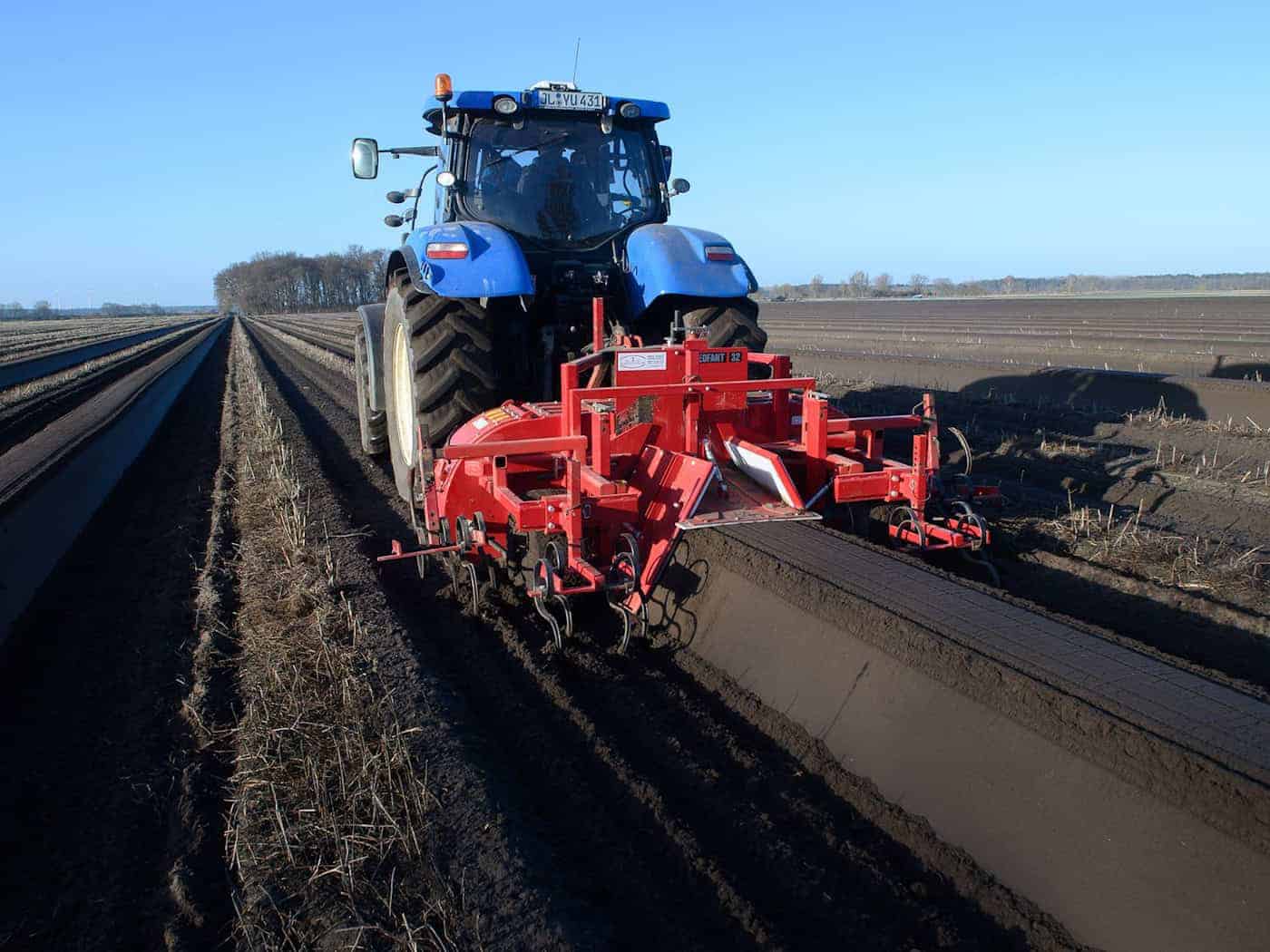
Fertilizers are becoming more expensive, the regulations stricter - and at the same time, nitrate in the groundwater remains a problem in many places. For farmers in Saxony and Saxony-Anhalt, a conflict is coming to a head: fertilize less for the environment and water - or fertilize enough for yield and income? In the midst of this debate, the Agra agricultural trade fair in Leipzig is running until Sunday - a meeting place for the industry, politics and science. Among other things, the focus there is on new technology, more efficient fertilization and the future of agriculture. But the central question extends far beyond the exhibition halls: Can agriculture simultaneously use less fertilizer, survive economically - and become less dependent on global crises? The initial situation is contradictory. On the one hand, nitrogen is essential for high yields. On the other hand, some of it ends up in the groundwater. "On average, more nitrogen is fertilized than is removed by the plants," says soil researcher Hans-Jörg Vogel from the Helmholtz Centre for Environmental Research (UFZ) in Leipzig. A look at Saxony-Anhalt shows how the soils in the east are faring: according to the State Institute for Agriculture and Horticulture, 12 out of 80 groundwater bodies there are in a poor chemical state due to nitrate pollution. A quarter of the measuring points show elevated values, around a fifth are above the limit value of 50 milligrams per liter. The measured values have not shown a clear decline for years. This is also due to the fact that changes in the use of fertilizers often only show up in the groundwater after a delay. "The nitrate that is measured in groundwater today can be ten years or more old," explains Vogel. For environmental associations, the situation is clear: in Saxony, around 185,000 hectares - around a fifth of agricultural land - are considered to be nitrate-polluted. The main cause is excessive nitrogen inputs from agriculture, according to the Nature and Biodiversity Conservation Union (Nabu). The consequences are serious: over-fertilized waters, declining biodiversity and rising costs for drinking water treatment. Farmers, on the other hand, are faced with a dilemma. Less fertilizer often means lower yields. In particularly polluted areas, individual crops suffer "significant economic losses", according to the Saxon Ministry of Agriculture. "In order to achieve an economically acceptable result, a little more nitrogen must be fertilized than the plant needs," explains UFZ researcher Vogel. The agriculture ministers of the federal states are also calling for changes to fertilizer legislation and questioning the existing "red areas". The calculation is not entirely clear. Measurements show that additional nitrogen inputs from the air can be higher than assumed. In some cases, it is therefore possible to "reduce fertilization somewhat without really reducing yields significantly", says Vogel. If too little fertilizer is applied, there is a risk of humus depletion and thus a long-term deterioration in soil fertility. Catch crops can retain excess nitrogen in the soil. "They keep this nitrogen in the system and it is not washed out," emphasizes Vogel. Sustainable cultivation needs to be promoted more so that environmentally friendly farming pays off. However, the researcher sees a fundamental problem: "There is too much focus on purely mineral fertilization." Instead, more closed nutrient cycles are needed - such as organic fertilizers. The situation is also being exacerbated by geopolitical developments. The conflict in the Middle East is putting a strain on supply chains and driving up energy prices - crucial for the production of fertilizers. This is becoming a risk for many farms. Rising costs meet low producer prices. EU Agriculture Commissioner Christophe Hansen is concerned: he is worried that farmers could cut back their production in order to save costs. If many farms were to do this, "there could be problems in the food supply". At the same time, the EU is working on measures to secure the supply of fertilizers and become less dependent on imports. A corresponding action plan is expected in the coming months. At the same time, agriculture remains dependent on mineral fertilizers. In Saxony-Anhalt, the salt and fertilizer manufacturer K+S operates a plant in Bernburg. According to the company, demand has been robust since mid-2025 and has picked up again with the start of the fertilizer season. The Federal Administrative Court recently demanded improvements to the Fertilizer Ordinance. Europe still has around 150 production sites for fertilizers, said Hansen. However, prices and availability are increasingly determined by the global market. The pressure on farms is growing. They need to fertilize less and remain profitable at the same time. A lot will be discussed about this at Agra in Leipzig over the coming days - in specialist forums and on panels. Solutions are needed, there are no simple answers. Whether the balancing act succeeds, however, will not be decided at the trade fair - but in the fields. Copyright 2026, dpa (www.dpa.de). All rights reservedSoils with a long memory
Fertilization as a point of contention
Fertilize less - but how?
Prices, crises - and new dependencies
An open outcome


