

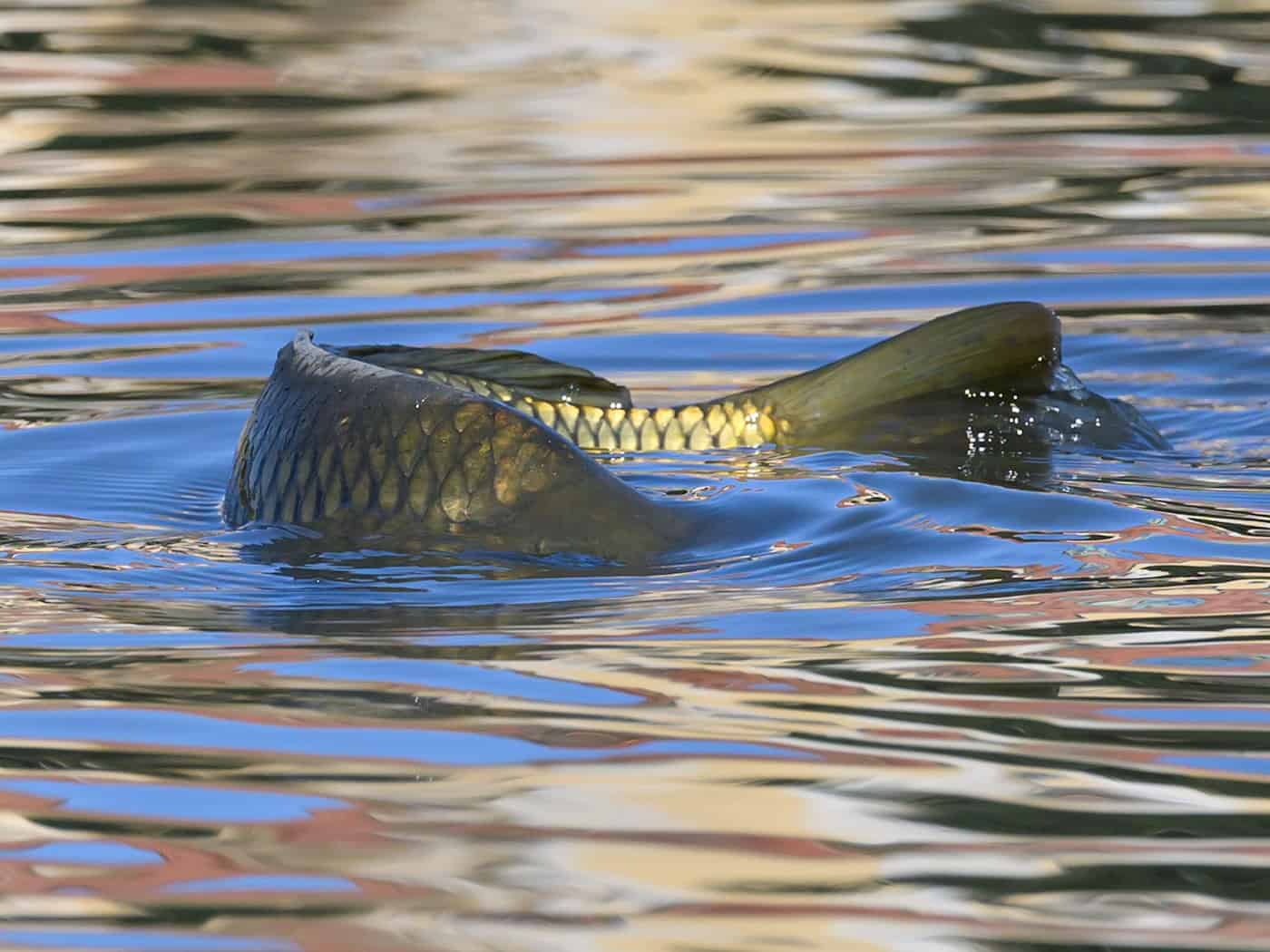
Fish farms in Saxony are suffering significantly from the heat and drought. “It’s never been as bad as it is now,” said Kevin Kretschmar, executive director of the State Fisheries Association, summarizing feedback from individual operations. In many places, the fish ponds are at only half their normal water level; in some places, they have dried up completely. So far, losses amount to several metric tons of carp. According to Kretschmar, fish farm operators are trying to prevent the worst by adding oxygen and conducting emergency harvesting. However, the options for doing so are limited because there is a shortage of water everywhere. This is a particular problem in Northern Saxony, Central Saxony, and Eastern Saxony. There, many fish have fallen victim to the drought because they could no longer be harvested. The fish are primarily being moved to winter ponds, which are usually deeper, Kretschmar said. However, capacity is limited there as well. Pumps and aeration systems are being used in an attempt to make life more bearable for the fish. The problem, however, is that water can no longer hold oxygen at a certain temperature. Some ponds have water temperatures around 30 degrees. According to the managing director, the fish enter a kind of stress mode due to the heat and lack of oxygen. “They reduce their food intake or stop eating altogether. This, in turn, causes their growth to stagnate,” said Kretschmar. In addition to yield losses due to fish mortality, there is also a loss resulting from stunted growth. According to Kretschmar, the fish in their ponds have less and less space. As a result, they crowd together in an increasingly confined area and are thus more vulnerable to predators such as cormorants, herons, and otters. The predators are catching far more fish than they actually need to. “When there’s a water shortage, a lot of things come together for a pond owner.” The situation is still somewhat better for farms in the low mountain ranges that have a water inflow. However, the situation is dramatic in the so-called “Himmelsteiche” (rain-fed ponds), which are fed solely by precipitation and depend on groundwater. “We had hoped for a proper snowmelt this winter. But it didn’t happen, so we started the year already facing a deficit,” said Kretschmar. Although precipitation levels are better than in the drought year of 2018, However, the groundwater deficit is compounding the problems. This will have a significant impact on the fall harvest. While the availability of edible carp is assured, supply will decrease, said Kretschmar. The hope for pond farmers is to at least achieve better prices. Copyright 2026, dpa (www.dpa.de). All rights reservedEmergency harvesting aims to prevent the worst
In some ponds, the water temperature is around 30 degrees
Fish Have Less and Less Space
Pond farmers hope to achieve better prices in the fall


