

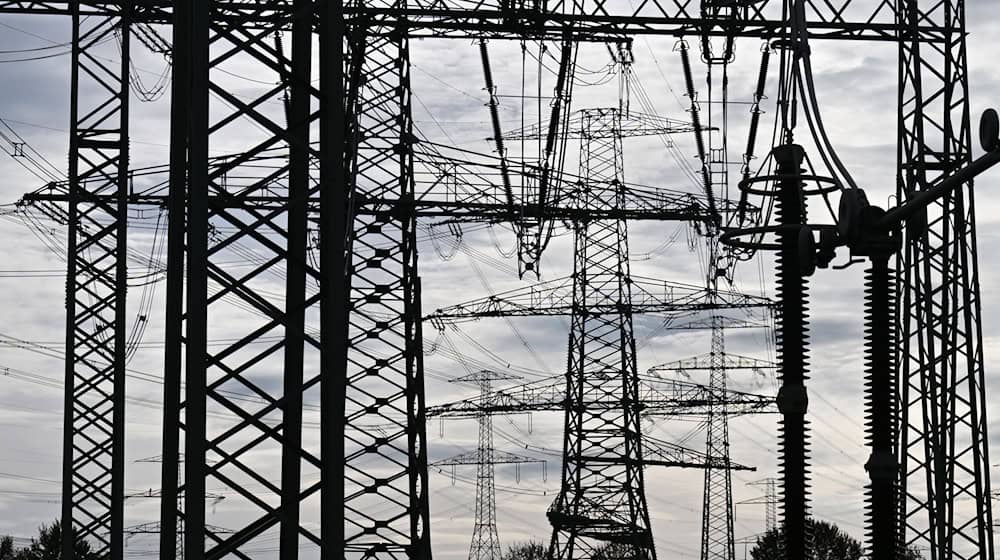
With investments of around 235 million euros, grid operator 50Hertz has built a new power line through Thuringia, Saxony-Anhalt and Saxony. This will replace a significantly less efficient existing line. The new 380 kV overhead line will increase transmission capacity by up to 40 percent, said Stefan Kapferer, CEO of 50Hertz, at the commissioning ceremony in Vieselbach near Erfurt. The grid reinforcement was necessary in order to be able to safely and efficiently provide all consumers in Germany with the increasing amounts of electricity generated from renewable energies in the north and east. "We need to integrate more electricity from renewables into the grid and, of course, we also need to transport this electricity over longer distances more frequently overall," said Kapferer. At the moment, 50Hertz is simultaneously building around 900 kilometers of additional grid infrastructure. This is the company's largest number of parallel construction projects. According to the grid operator, it plans to invest well over 20 billion euros in overhead lines, submarine and land cables, substations, digitalization and other technologies by 2028. The 105-kilometre extra-high-voltage line between the Pulgar substation near Leipzig and the Vieselbach substation near Erfurt was built over a two-and-a-half-year construction period and, according to Kapferer, was built more cheaply than originally planned. This project was initially expected to cost 260 million euros. The new line mainly follows the existing power line, the dismantling of which is due to be completed shortly. Thuringia's Minister President Mario Voigt (CDU) said that the Free State had become a central energy hub in Germany due to its location. "It is unacceptable that we are a connecting state and are often the ones who pay the most expensive surcharges for grid fees." Voigt said that this could not be right. This must be discussed throughout Germany. For another important grid project - the long-disputed Suedlink power line - the first work has started following the approval in southern Thuringia. Suedlink is one of the most important projects of the energy transition. When it is completed, probably at the end of 2028, underground cables with a transmission capacity of four gigawatts will transport wind power from the north to the south of Germany. The 700-kilometre underground route begins near Brunsbüttel in Schleswig-Holstein and runs through the middle of Germany to Bergrheinfeld near Schweinfurt in Lower Franconia. With the section between southern Thuringia and Franconia, the joint route project of the two transmission system operators TransnetBW and Tennet is under construction in a total of six federal states. Copyright 2025, dpa (www.dpa.de). All rights reservedMore power lines for the energy transition
Thuringia as an electricity hub


