

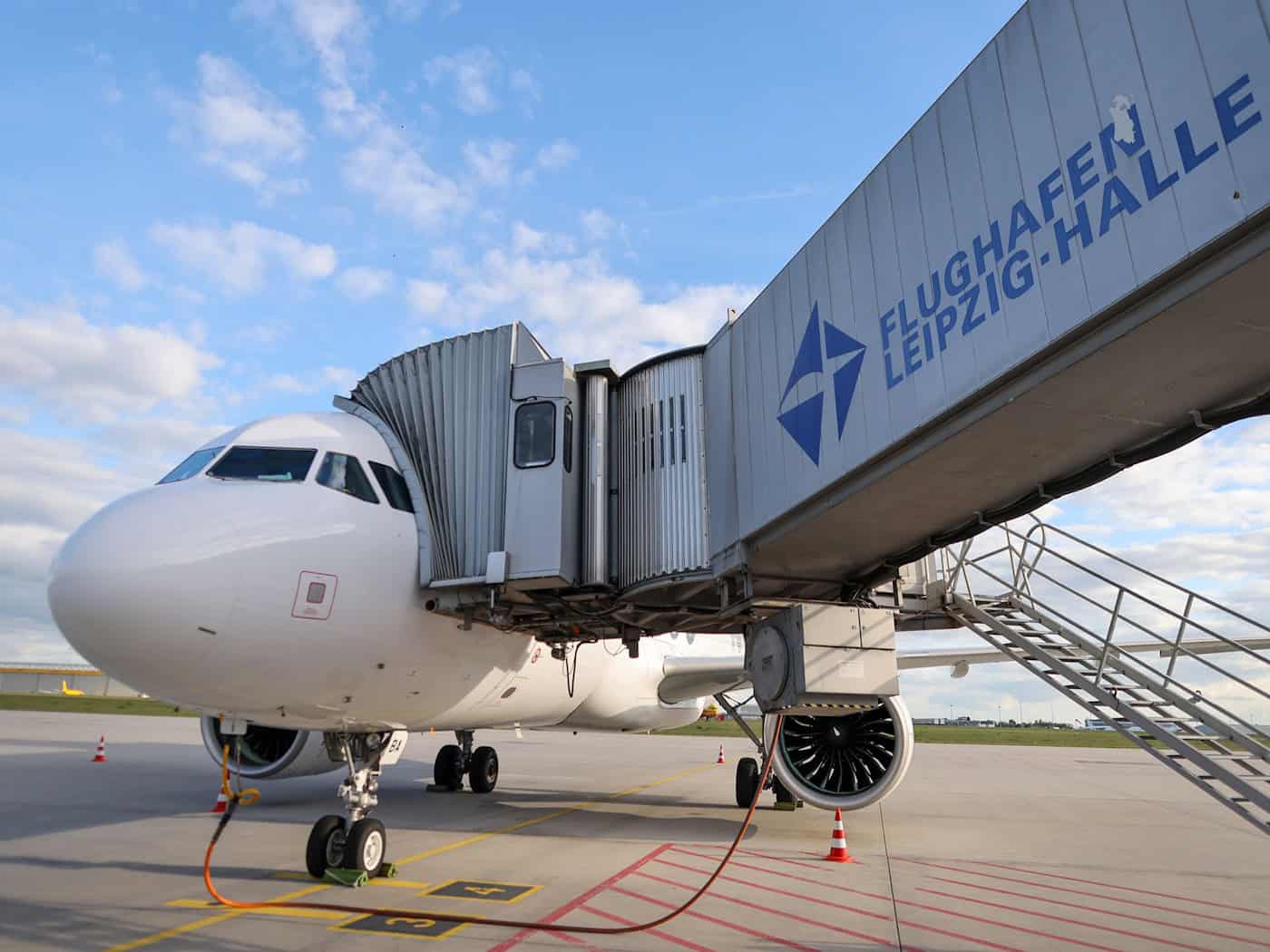
After years of high losses, Leipzig/Halle and Dresden Airports have achieved an economic turnaround. As announced by Mitteldeutsche Flughafen AG (MFAG), the company made a profit for the first time in the 2025 financial year. The bottom line was a surplus of 10.5 million euros - after a loss of 53.5 million euros in the previous year. But is the upturn sustainable even without government support? Revenue increased by 8.2 percent to 201.5 million euros, despite fewer people traveling through the airports. Earnings before interest, taxes, depreciation and amortization (EBITDA) improved significantly from 6.5 to 27.1 million euros. MFAG CEO Götz Ahmelmann pointed to progress in current business: "Our EBITDA margin is 13.5 percent and shows that the operational measures we have taken are taking effect." And this despite a persistently challenging market environment. State reimbursements for security tasks also contributed to the positive result. These are customary in the industry and stabilized the company, explained Ahmelmann. "However, MFAG's operating performance from its own resources remains crucial for the restructuring." The two states of Saxony and Saxony-Anhalt are currently still supporting the airports financially, but intend to gradually phase out their subsidies by 2030. "The turnaround has thus been initiated, but is not yet complete," said Ahmelmann. Aviation expert Hartmut Fricke from the Technical University of Dresden does not see a one-off special effect in the figures, but does not expect stable development. Air freight in particular is heavily dependent on the general economic situation and remains susceptible to fluctuations. Freight development is a "delicate plant", said Fricke. He expects "further volatile development with no further extreme trend in one direction". Smaller locations in particular have structural problems. Dresden, for example, continues to suffer "from the enormous reluctance of airlines to operate from regional airports", said Fricke. Many airlines are concentrating more on larger airports. In his view, regional airports will hardly be able to survive without state support in the future. "That is why there will also have to be a clear commitment from politicians to financial support in the coming years." Economic operation without subsidies is not realistic. "The infrastructure is too expensive for that, just like rail and seaports," said Fricke. Copyright 2026, dpa (www.dpa.de). All rights reservedRevenue grows despite fewer passengers
State support remains an important factor
Expert does not expect stable development
Unable to survive without subsidies


