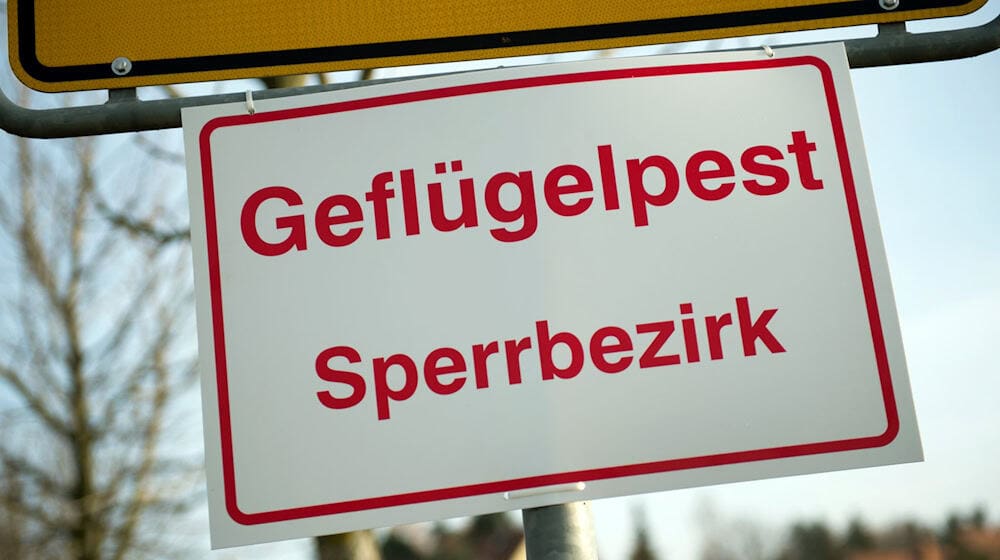
The bird flu virus has been keeping poultry farmers on tenterhooks for months. New outbreaks are still occurring - most recently in eastern Saxony in the district of Görlitz. In Saxony, the current avian influenza season is the most severe since records began, according to the Ministry of Health. In the Free State alone, over 500,000 animals have fallen victim to the disease so far. Across Germany, the figure is in the millions. Christian Riedel, Chairman of the Saxon Poultry Industry Association, expects a period of seven to eight months until an affected farm can work as before. This is how long it takes to raise young hens until they can lay eggs of a sufficient size. Until then, Riedel believes there could still be shortages. "There will be eggs, just not always in the desired size or the desired farming method," estimates the expert. However, he does not expect prices to rise any further. Increased feed prices, higher labor costs and now additional costs due to the necessary offspring have already led to price increases. Animal farmers who have had to cull their flocks due to bird flu are receiving help from the animal disease fund. It is not yet clear how high the compensation payments will be, the Tierseuchenkasse announced in response to a dpa inquiry. So far, payments amounting to around 675,000 euros have been made for two outbreaks last year. A complete balance sheet for the past year will follow in April. At the end of last year, the German government increased the maximum amount per animal from 50 to 110 euros with retroactive effect from October 1. Since the H5N1 virus first appeared around 20 years ago, there have only been a few years without outbreaks, and then every year from 2020 onwards, Martin Beer, Vice President of the Friedrich Loeffler Institute, told the German Press Agency. "The virus will not disappear, it will come back in waves," said the specialist veterinarian for virology. It cannot even be ruled out that this will soon be the case: "We only know that after an early first wave it usually calms down a little and then a second wave can come again. So we even have to expect that we will have more outbreaks again." The virus is now permanently present in wild birds, for example in wild ducks. For Saxony's Health Minister Petra Köpping (SPD), one thing is clear: in future, more vaccinations against bird flu are needed "as a complementary instrument to better protect livestock and effectively limit outbreaks". Although vaccination is permitted in principle, it is not used across the board - due to costly control obligations and because companies fear possible trade restrictions when exporting their goods. Vaccination will become more important in the future for ethical reasons alone, estimates Martin Beer from the FLI. The question arises, "up to what point is it still ethically tenable to kill large numbers of animals that we might be able to protect?" says the expert. In addition, the desire for greater animal welfare and the associated increase in free-range farming also means a higher risk of infection through contact with wild birds. A massive vaccination program in France for larger duck flocks has shown that large-scale vaccination against H5N1 is possible. At the same time, it has been shown that the controls and tests currently required are hardly feasible and affordable across the board. At the moment, it has to be officially confirmed on a regular basis that vaccinated animals are actually healthy. "Numerous samples have to be taken, which a laboratory has to examine at close intervals. And we're not talking about ten chickens, but possibly a farm with two million." This is why there are talks at EU level to simplify the regulations and only test animals in vaccinated flocks that actually appear sick or have died. Targeted vaccination would help, but it would not replace the other measures against the spread of pathogens, according to FLI expert Beer. This also means that it would not be able to prevent the killing of animals in the event of an outbreak. However, the three-year vaccination campaign in France has shown that vaccination can significantly reduce outbreaks. Germany's neighbors also have "individual outbreaks, but no longer hundreds like before", said Beer. At present, the pathogen spreads quickly in large housing facilities with several thousand animals. At the same time, completely enclosed housing such as chicken fattening facilities are better protected against infection than is the case, for example, with small farmers whose animals roam freely, according to FLI expert Beer. "What needs to be discussed is how close poultry farming still makes sense? We have regions in Germany where there is a poultry house every two or three hundred meters." This leads to high-risk regions and makes it very difficult to protect against infection. We should therefore also talk "about the forms of animal husbandry in terms of overall densities", believes Beer. Copyright 2026, dpa (www.dpa.de). All rights reservedHow long will it take for stocks to be replenished and prices to recover?
How effective are compensation and state aid?
Is the bird flu season over?
What lessons must be learned from the outbreak?
Would vaccination prevent animals from being killed?
What role do husbandry conditions play in outbreaks of animal diseases such as bird flu?