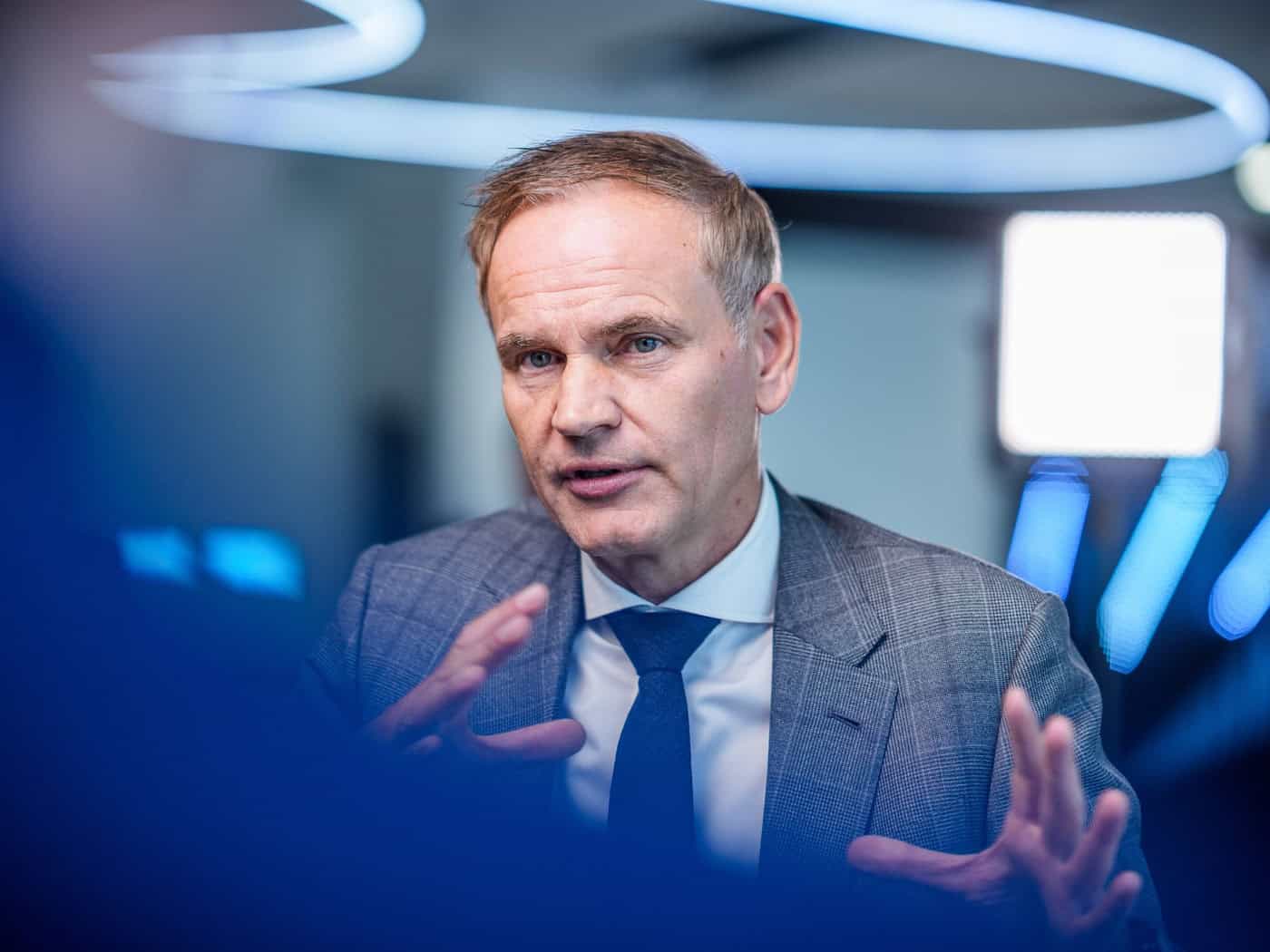
VW CEO Oliver Blume would like to see faster solutions for the four plants in Germany that are at risk. “We are currently engaged in intensive discussions there,” the executive told NDR. A timeframe of six to twelve months has been set to find a solution. The more than 40,000 employees in Hanover, Emden, Zwickau, and Neckarsulm should have clarity “by summer at the very latest.” His ambition is to get this done faster: “For me, every month we can get a head start counts toward giving the team there a sense of direction.” VW and Audi are in the process of developing solutions, Blume said. He is contributing his personal expertise. “Every creative suggestion we come up with there counts right now.” Blume has built his career in this field. Before becoming VW CEO, he served, among other roles, as Chief Production Officer at Porsche and was later also responsible for the Wolfsburg-based group’s production. As for whether defense production—similar to that in Osnabrück—could be considered for the four locations, the matter is being examined “with an open mind at the moment.” The company has a wide range of options and is now taking a very close look at the structures of each plant and the composition of its workforce. “And then we’ll make very specific decisions for each plant about what we’ll do there,” said Blume. The Group Executive Board currently sees no competitive future use for the VW plants in Emden, Hanover, and Zwickau, as well as the Audi site in Neckarsulm, beyond the years 2031 through 2034. The Supervisory Board had most recently tasked Volkswagen’s management with presenting a concept for a competitive European production structure by the end of June 2027. According to the automaker, it currently has an overcapacity of 500,000 vehicles in Europe. For the four threatened plants, “alternative uses are being examined in parallel and as a supplement,” the company stated in early September following a landmark meeting of VW’s supervisory board. Blume had emphasized on several occasions in recent months that he prefers “intelligent solutions” to plant closures. It is highly likely that the future of the plants will also be a topic in the VW collective bargaining round. IG Metall is demanding a five percent pay increase, while the automaker wants to negotiate the elimination of an additional 12,000 jobs and cost reductions. The talks will begin next Tuesday in Emden. The VW CEO did not offer an estimate of how long the negotiations might last. “Exactly when the outcome will be reached is not within my power,” said Blume. That depends on “how ambitiously the bargaining parties approach the negotiations.” He also left open the question of how severely potential warning strikes might affect VW: “It’s common in such collective bargaining negotiations—as we’ve seen in the past—for there to be differing positions. There will be some tough bargaining.” Personally, he is confident that a positive outcome for Germany as a business location will result. Copyright 2026, dpa (www.dpa.de). All rights reservedFuture of the Plants Uncertain
Collective bargaining negotiations are coming up