

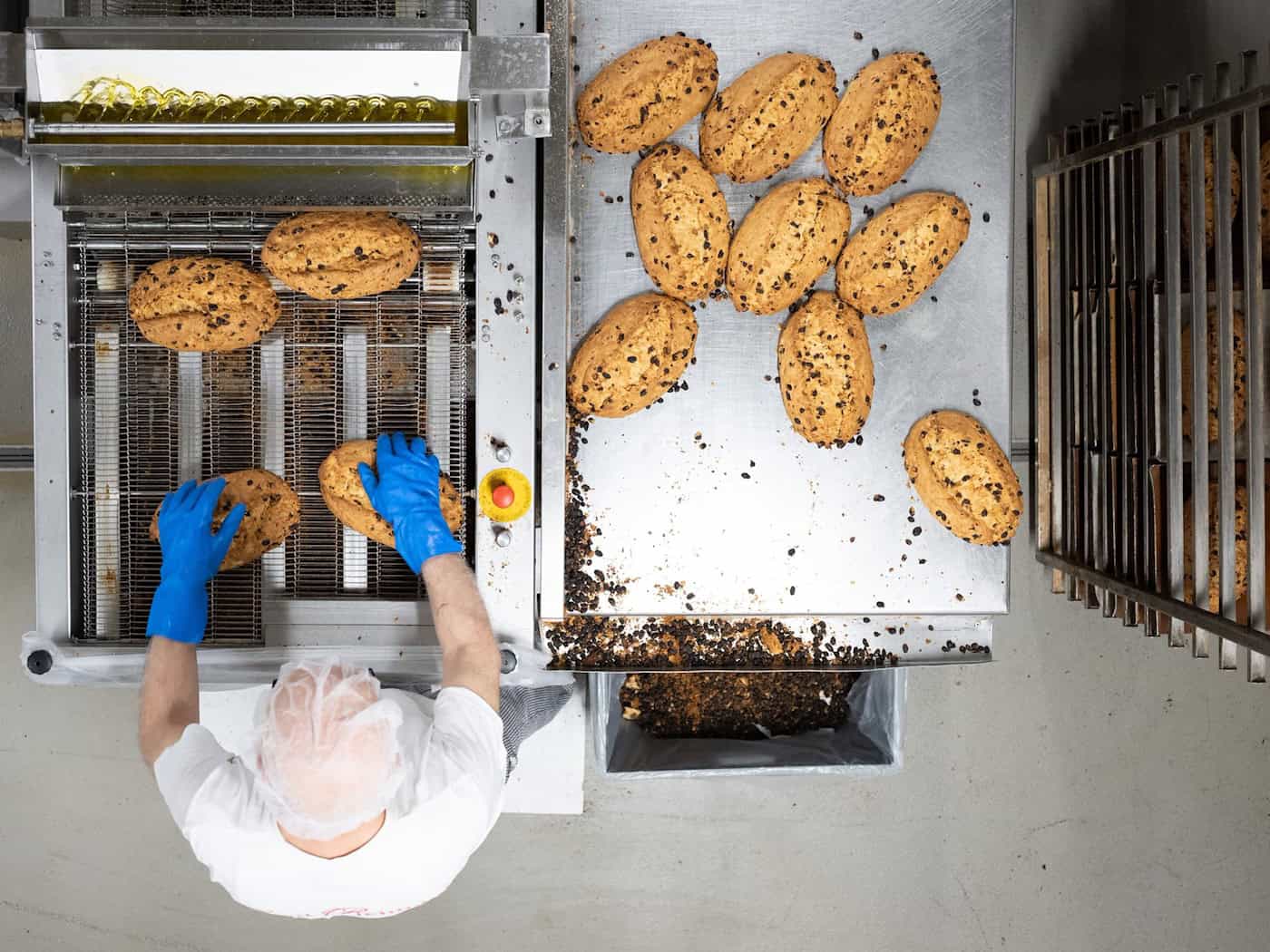
Take a bite of a stollen and suddenly a stone crunches between your teeth—to prevent this, the large Saxon bakery Emil Reimann has been using artificial intelligence (AI) for the past year. It analyzes X-ray images of the finished baked goods and helps detect even the tiniest impurities and foreign objects, as Nadine Sorkalla, the bakery’s quality management representative, explains. The technology plays a key role at the end of the packaging process. “This is the final step involving the product, which determines whether it goes to the consumer or stays here at the company,” explains Sorkalla. According to Sorkalla, foreign objects such as small stone fragments cannot be completely avoided. She notes that in traditional baked goods like stollen, gingerbread, or Baumkuchen, they can find their way into the products through ingredients sourced from international supply chains. The bakery relies on regional products as much as possible, but not everything is grown locally—for example, sultanas, almonds, or spices. Monitoring for foreign objects is particularly important when it comes to natural raw materials. There have been problems in the past, for example, with sultanas from Iran, which is why the company switched suppliers. With the help of AI, anomalies in the finished product can be significantly minimized, says Sorkalla. “But you can’t just turn this technology on and expect it to work—it has to be trained.” Then it can also detect contaminants that suppliers or manufacturers previously overlooked. The Dresden Stollen poses a particular challenge for the AI. “This is not a homogeneous product. You have almonds on your tongue, you have fruit on your tongue, you have sultanas, and a wide variety of textures,” explains Sorkalla. The AI must be able to reliably distinguish between what should remain in the product and what should not—such as stones, stems, and seed remnants. “We’ve now refined this step by step.” With success—for several weeks now, the bakery has been using a second machine equipped with this software. Despite all the technology, however, craftsmanship cannot be replaced, Sorkalla emphasizes. “Here, we weigh, inspect, fill, shape, cut, package, and check everything again and again.” The machines certainly assist in these processes, but they cannot replace the keen eye and sense of responsibility of experienced master bakers. The long-established company Emil Reimann has operated its bakery in Dresden since 2003 and employs about 50 permanent staff and 150 seasonal workers there. The bakery was founded in 1910 as the “Sächsische Brotfabrik-Union” in Chemnitz. During the GDR era, the company was expropriated and transformed into the “VEB Großbäckerei Union.” Today, it has branches mainly in Saxony and Baden-Württemberg. The large-scale bakery also operates a few locations in Thuringia and Bavaria. Stollen production has been underway since April 1. Each season, around three million stollen leave the ovens and are shipped throughout Germany, as well as to international markets such as the U.S., Japan, and Eastern Europe. Copyright 2026, dpa (www.dpa.de). All rights reservedAI checks at the end of production
The Stollen: A Special Challenge for the Software
No Substitute for Craftsmanship


