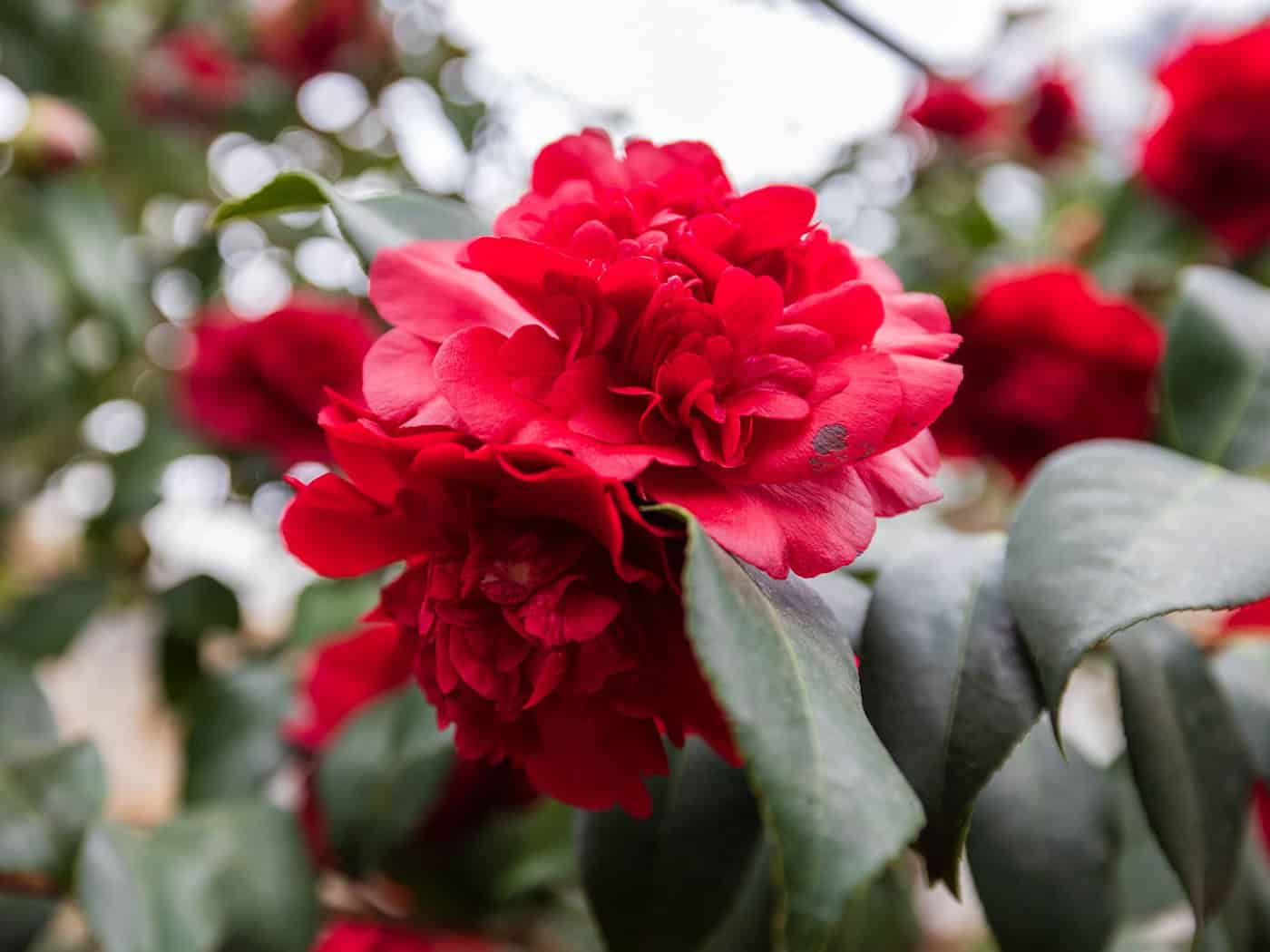
Saxony is combining Open Monument Day with a tribute to dedication to historic preservation. This year, the Free State’s Children’s and Youth Heritage Award goes to the Arthur-Kießling High School in Königsbrück. The students had dedicated themselves to a very special cultural monument—three camellia trees, approximately 200 years old, in the greenhouse of Königsbrück Castle. They are considered the oldest cluster of camellia trees in Europe north of the Alps. According to Regina Kraushaar, Minister of State for Infrastructure and Regional Development, the example from Königsbrück impressively demonstrates that historic preservation has many facets. The young people had researched the history of the camellias and organized guided tours for, among others, people with visual impairments. “This is exactly what we honor with the Saxon Children’s and Youth Heritage Award: young people who, through volunteer work, engage creatively and sustainably with historic preservation and set an example for others,” Kraushaar emphasized. In the case of the camellias, a collection of protected plants has become a living piece of cultural heritage. Saxony’s State Conservator Alf Furkert spoke about the significance of camellias for Saxony. The region can look back on a tradition of camellia cultivation spanning more than 250 years. Saxony is home to some of Germany’s oldest and most significant camellia collections—for example, in the Pillnitz Palace Park, in Roßwein, at Zuschendorf Palace, and in Königsbrück. “Camellias were long considered a precious privilege of the nobility and the upper middle class. The fact that their cultivation and trade gained such global significance is due in no small part to the Saxon gardening dynasty centered around Jacob Friedrich Seidel,” emphasized Furkert, who is also head of the State Office for the Preservation of Historical Monuments. The Saxon Children’s and Youth Heritage Award has been presented annually since 2012 at the opening of Open Monument Day. The award honors the commitment of students participating in the Saxon state program “Pegasus—Schools Adopt Monuments.” It is accompanied by a prize consisting of both a gift and a cash award. This year’s Open Monument Day is themed “NetzWERKE: Monuments & Infrastructure.” It highlights historic sites and structures that connect people and have shaped social life—such as mills, mining facilities, schools, utility buildings, transportation routes, and other technical monuments. At the same time, it draws attention to the networks of people who work together to preserve these sites. In Saxony, nearly 700 historic sites were open to the public on Sunday; nationwide, the total was around 6,500. Many of these are not accessible—or only accessible to a limited extent—in everyday life. Activities included guided tours, exhibitions, and demonstrations. Open Monument Day takes place every year on the second Sunday in September and is coordinated nationwide by the German Foundation for Monument Protection. The main event for Saxony took place at the Goldener Löwe in Hainichen. In the Mittelsachsen district alone, about 50 sites were open to the public. These included the Alte Försterei Naundorf (Bobritzsch-Hilbersdorf), the Bachmühle mill in the Steina district of Hartha, the historic ore washing plant in Halsbrücke, the water tower in Freiberg, and the train station in the Amerika district of Penig. The district awarded its own heritage awards. Copyright 2026, dpa (www.dpa.de). All rights reservedHistoric preservation has many facets
Saxony has a long tradition of camellia cultivation
This year’s focus: historic sites that bring people together
Nearly 700 historic sites open in Saxony
Main event at the Goldener Löwe in Hainichen