

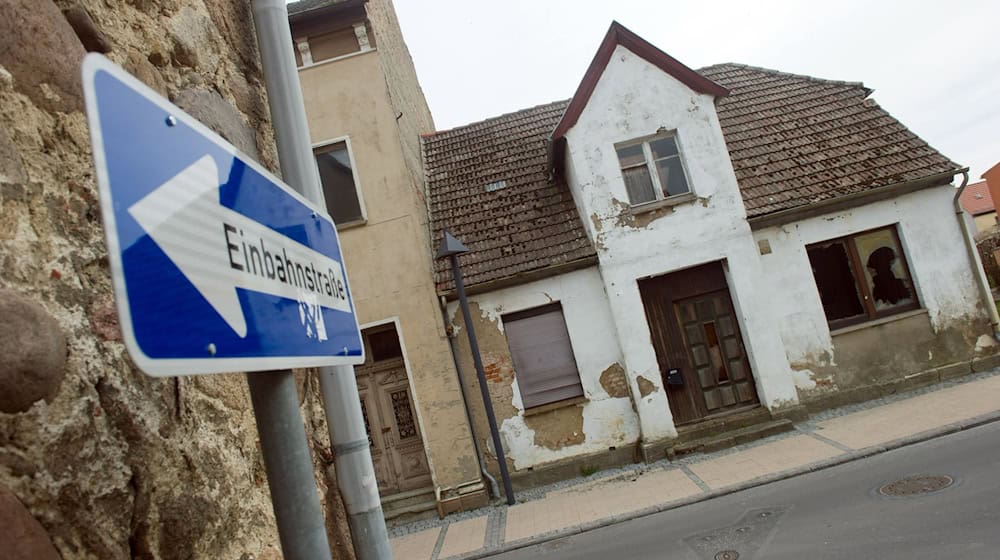
The exodus of young people from the eastern German states continues. Last year, more 18 to 29-year-olds moved from there to the West than vice versa - a net total of 7,100 people, according to the Federal Statistical Office in Wiesbaden on the Day of German Unity (October 3). Berlin was not included in the calculations. "This means that East Germany's continuous migration loss compared to the West in this age group since 1991 will continue in 2023," it said. This is also likely to be due to emigration for study or vocational training. According to the data, a net total of 727,000 18 to 29-year-olds have migrated from the eastern German states to the west since 1991. The decades-long development also contributes to the fact that the proportion of people of working age in the east is lower. According to the 2022 census, 57.5% of the population in the eastern German states (excluding Berlin) were aged between 18 and 64. In contrast, the proportion in the western German states was 61.6 percent. The lowest proportion of people of working age was in Saxony at around 57%, while the highest proportion was in Berlin at around 64%. In addition, the ten districts with the lowest proportion of 18 to 64-year-olds are all in the east. Dessau-Roßlau brings up the rear (53.4 percent). Over all age groups, migration movements between East and West have been much more balanced over the past ten years. According to the data, last year, for the first time since 2016, more people migrated from the eastern German states to the western German states than vice versa. However, this migration loss was comparatively low at 3,000 people in total. Previously, there had been a slightly positive internal migration balance in the eastern German states as a whole from 2017 onwards - after decades of strong outward migration in some cases. However, the differences between the federal states are also striking: "While Brandenburg, Mecklenburg-Western Pomerania and Saxony have recorded positive net internal migration in recent years, Thuringia and Saxony-Anhalt have been consistently affected by net outward migration to the western German states since 1991," it said. The statisticians also looked at net immigration from abroad. The highest figures per 10,000 inhabitants were recorded in the city states of Bremen (140 people), Berlin (131) and Hamburg (116). Brandenburg had the lowest net immigration from abroad with 63 people per 10,000 inhabitants, followed by Bavaria (69) and North Rhine-Westphalia (70). According to the 2023 microcensus, 27.6% of the population in the western German states (excluding Berlin) had a history of immigration. In the eastern German states (excluding Berlin), the proportion was less than half as high at 9.7 percent. In Berlin, the proportion of people with a history of immigration was 33.6 percent. Copyright 2024, dpa (www.dpa.de). All rights reservedFewer people of working age in the east (excluding Berlin)
Net immigration from abroad per capita lowest in Brandenburg


