

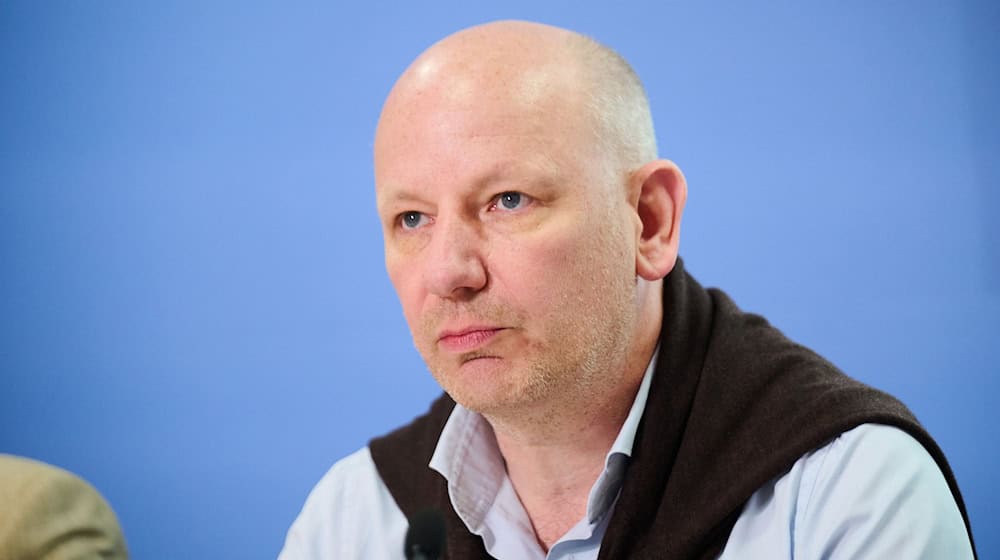
The Leipzig-based psychologist and social researcher Oliver Decker attributes the AfD's current high approval ratings in eastern Germany to resentment among the population. "The AfD is currently benefiting greatly from resentment. These are very pronounced in the population. There is resentment, a feeling of being treated unfairly," said the professor in an interview with Deutsche Presse-Agentur. This phenomenon has been observed for some time now. At the moment, it is decisive for the election. According to Decker, the other parties do not have too much influence on this. The opportunities to tilt the mood are limited. Voters make their decisions based on what is most important to them at the moment. In the past, this used to be education policy, the environment or economic policy. The wind will probably only change when issues emerge that are more relevant to voters than resentment. "For example, when a natural disaster requires skills that the AfD definitely does not have." According to Decker - Director of the Else-Frenkel-Brunswik Institute for Democracy Research at the University of Leipzig - the current situation for the CDU in Saxony is confusing. The party landscape has become increasingly differentiated. Even before the European elections, it had become clear in surveys that there were a whole series of small parties that did not make it over the five percent hurdle, but still had a significant share of the vote overall and were therefore drawing votes away. According to the usual counting procedure, this could mean that a party could win a majority of parliamentary seats even with 40 percent. According to Oliver Decker, however, it is currently impossible to say whether the CDU result in the European elections will be repeated in the state elections on September 1 with a gap of ten percentage points to the AfD. However, it is likely that the Afein will achieve a better result than the CDU. However, this need not be a great misfortune for the CDU. "We don't have the right of the strongest party to form a government. It only takes place after a negotiation process." It is quite conceivable that the Greens and the SPD will clear the five percent hurdle and be available again as potential coalition partners. Decker still sees a question mark behind the Sahra Wagenknecht (BSW) alliance. The refusal of CDU federal leader Friedrich Merz to cooperate with the BSW has left the eastern German CDU state leaders shaking their heads. However, it is understandable that they are currently taking a distanced view of this party. "Some things are still unclear, including the personnel situation. Can we even assume that the BSW is capable of governing?" asked the academic. After September 1, it will be a question of which democratic parties form a government. "It is not a good idea to rule out a party from the outset, even if it does not yet show any clear contours." Decker does not believe that the AfD would disenchant itself in the event of government participation. "We are dealing with a party that makes it very clear in all of its statements that, although it is aiming for democratic legitimacy, it is by no means a democratic party. I wouldn't bet on the AfD simply giving up power in a subsequent election without any problems. You can see that with many right-wing populist movements." Many AfD exponents would probably also rather talk about electoral fraud than giving up power again. In the meantime, however, the AfD has the opportunity to destroy a lot. "It is not a party with a strong will to shape things and says itself that it wants to clean up. Destroying something is much easier than building something," said Decker. It would take many years for the AfD to rebuild destroyed structures once it was in government. Copyright 2024, dpa (www.dpa.de). All rights reserved


