Graduation Ceremony for Winemakers: Saxony’s Next Generation Is Staying in the State
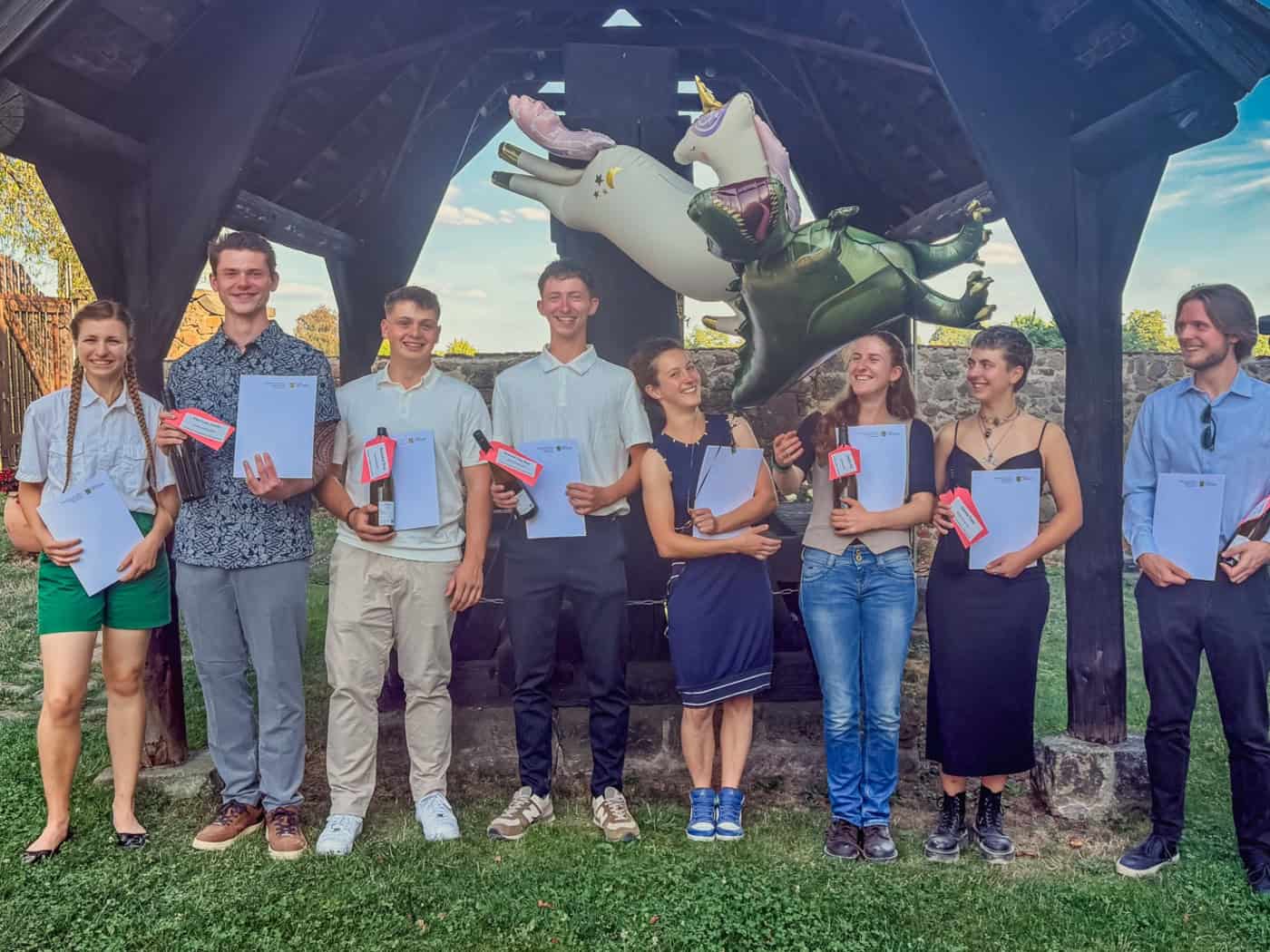
A big day for four female winemakers and four male winemakers from six Saxon wineries: in the ballroom at Hoflößnitz, they have now received their certificates at the end of their three-year training—and as a bonus to mark the completion of their apprenticeship, a bottle of Goldriesling, Saxony’s unique wine. All eight female winemakers (I am deliberately using only the feminine form in this article as a counterpoint to one of the speeches, which referred only to “winemakers,” but their male colleagues are, of course, included)—that is, all eight female winemakers—will remain in Saxony after completing their training, and all eight already have permanent positions.
Felix Hößelbarth, host of Hoflößnitz and chairman of the Saxon Winegrowers’ Association, aptly addressed the issue of Saxon roots in his welcoming speech: “I’m delighted that so many apprentices are staying in the region this year—more than we’ve had in a long time,” he said, immediately following this positive note with another important point: “On the other hand, I think you’re still young, so take advantage of this chance to go somewhere else! Viticulture exists almost everywhere in the world—see how they do it there, and learn from them. But it’s also important that you eventually come back to Saxony and bring all the know-how you’ve absorbed back home with you to contribute to the benefit of Saxon viticulture…”
Christian Kröling, Head of the Fruit, Vegetable, and Viticulture Division at the Saxon State Office for the Environment, Agriculture, and Geology, had brought along plenty of Goldriesling: one from the 1992 vintage (“The wine is probably undrinkable if we open it. But it’s rare and hard to come by.”) and, for each of the newly certified female winemakers, a bottle of 2025 Goldriesling from the Pillnitz Royal Vineyard. All of the newly certified female winemakers had lent a hand themselves during their training to produce this wine. That’s why each one received a very personal bottle—with her own name on the label.
“Yes, it was a good vintage,” said Karin Schmidt, who is responsible for green careers in the district, summarizing the results—and she wasn’t referring to the wine in the bottle (although that was also quite decent, both in quantity and quality), but to the graduating class. She announced a remarkably good grade point average of 2.49. At the end of the event, Felix Hößelbarth once again spoke at the official graduation ceremony and induction into the winemakers’ guild—from that moment on, with their certificates in hand, they were officially winemakers:
- Nele Keller (Karl Friedrich Aust Winery)
- Josephine Wolf (Weinmanufaktur am Mariaberg)
- Wendel Alex Rost (Höflößnitz Winery)
- Max Luis Lerche (Schloss Proschwitz Winery)
- Salvina Danó and Thassilo Uhlig (Saxon State Winery Schloss Wackerbarth)
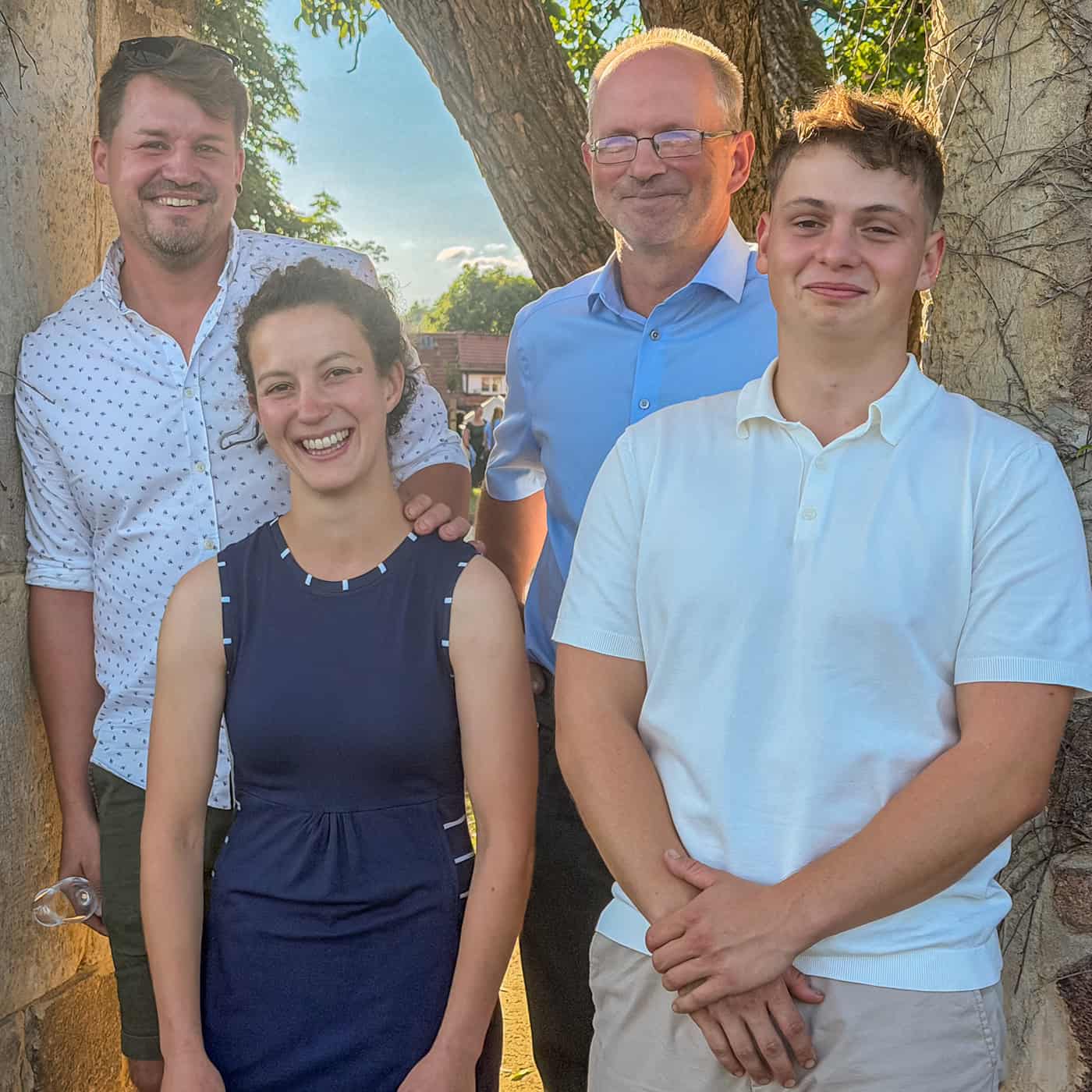
- Lotte Mann (who, with a grade point average of 1.44, is also the top student in her class) and Maximilian Streck (Weingut Schuh)