


Five Manuscripts for Eternity
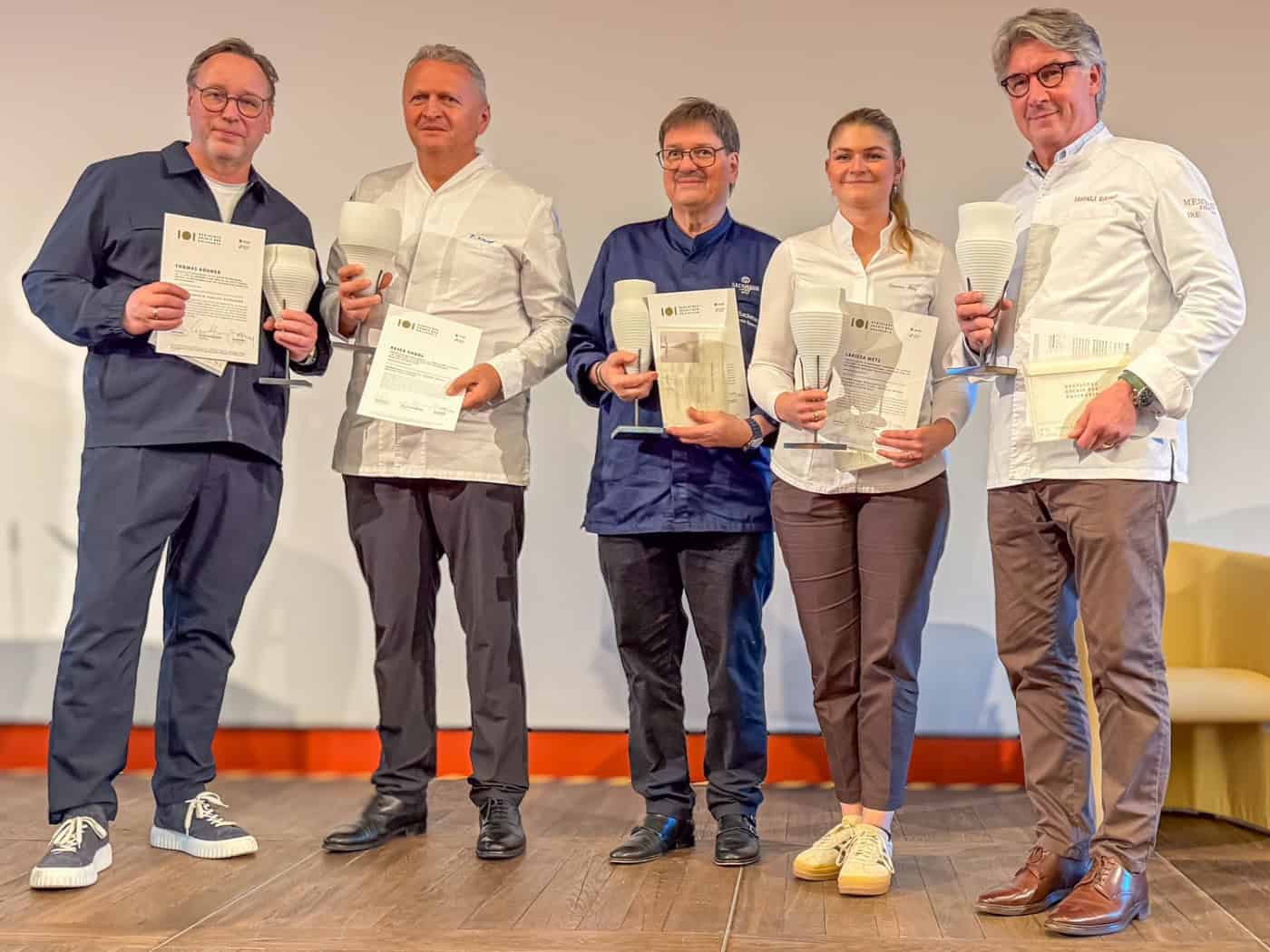
A dish disappears as soon as it’s eaten. What remains, at best, is the memory of a special flavor—and these days, usually a photo as well, and perhaps even a recipe. But how can a culinary creation be documented in such a way that future generations can understand what actually made up a dish? The Technical University of Dresden and the Saxon State and University Library (SLUB) have been addressing this question for several years through the German Culinary Archive. Five additional flavor documentations from the world of international haute cuisine have now been added to the archive in Dresden. For the first time, a woman—pastry chef Larissa Metz—is among the honorees.
The series, launched in 2023, now comprises 20 documented works of contemporary culinary art and pastry making. This year’s selection ranges from classic French haute cuisine to creative interpretations of German regional cuisine and sophisticated game dishes, as well as internationally influenced creative cuisine and a dessert composition that combines classic elements with unusual flavors.
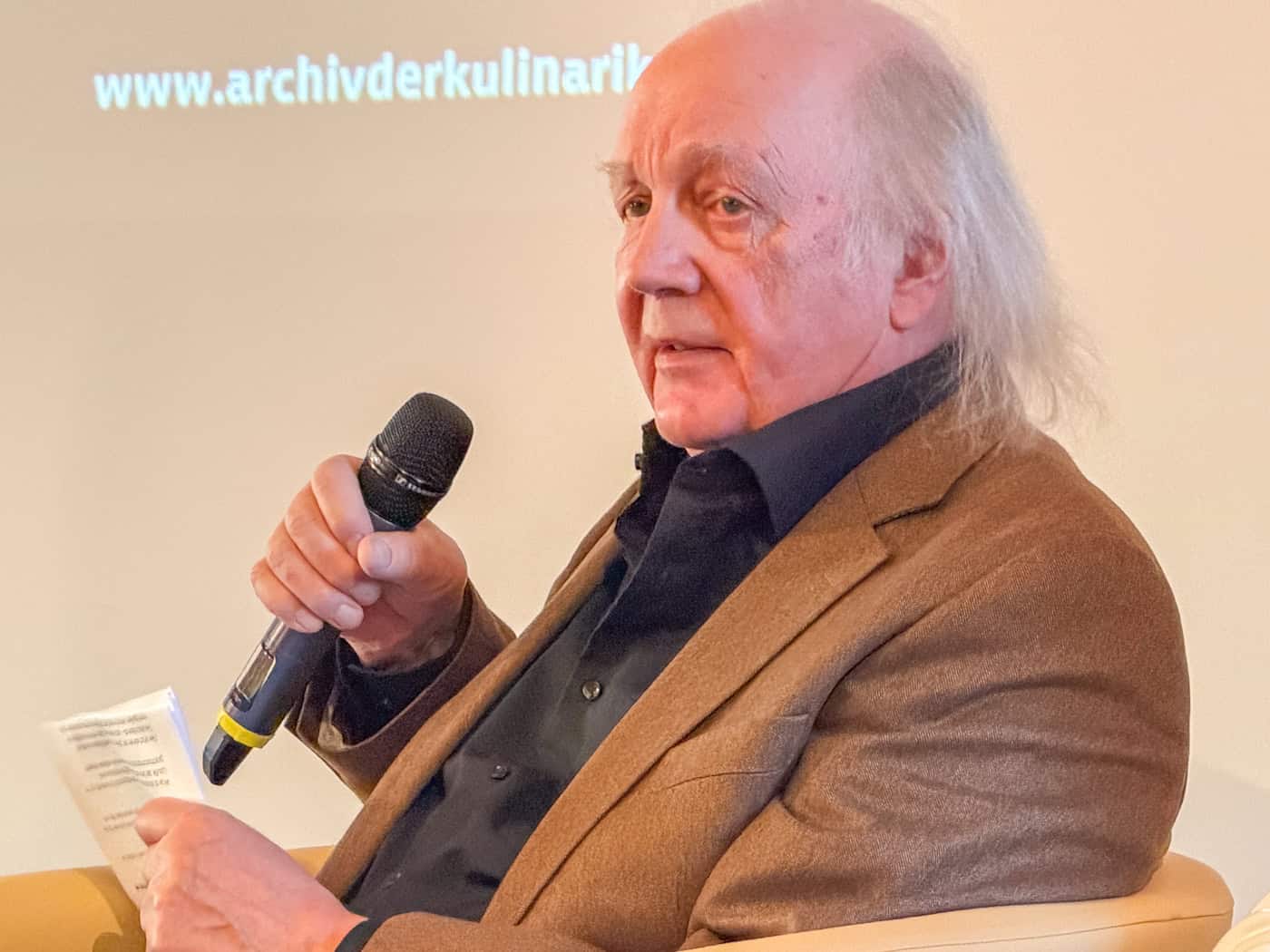
These documentaries go far beyond a mere collection of recipes. Gastrosophist and restaurant critic Jürgen Dollase analyzed the dishes, documented their preparation and plating step by step, compiled tasting notes, and compared the creations with examples from national and international cookbooks. In-depth interviews with the chefs and the pastry chef complement the documentation. The aim is not only to preserve ingredients and techniques but also to make the sensory perception, the flavor relationships, and the individual considerations behind a dish comprehensible.
For SLUB Director General Katrin Stump, this represents a significant expansion of culinary memory. She noted that the documentation serves as an outstanding resource for research into German cuisine of the late 20th and early 21st centuries. TUD Rector Ursula M. Staudinger highlighted the interdisciplinary dimension of the project: Food directly connects people, but at the same time offers points of reference for research in the humanities, natural sciences, engineering, and social sciences. The cookbooks thus become historical sources that preserve far more than just their recipes.
Culinary Memory Grows
The five new cookbooks will not only be made available digitally but will also be preserved in the archive in specially designed cases. Berlin-based designer Stefanie Hering has created vessel-shaped statuettes for this purpose that are reminiscent of ancient amphorae and storage jars. They thus refer both to the culinary aspect of the project and to the preservation of written traditions.
In addition to cookbooks and trade journals, the German Culinary Archive collects estates, menus, photographs, handwritten notes, and other records of food and culinary culture. The taste documentation supplements these collections with a unique form of tradition: it attempts to capture the fleeting experience of a dish in language that is as precise as possible.
The new works are freely accessible to researchers and the public. In this way, haute cuisine is viewed not merely as a contemporary gastronomic experience, but as part of a cultural history whose artisanal, creative, and sensory achievements should remain comprehensible in the future as well.
The five new taste documentation projects demonstrate just how varied the paths to culinary excellence can be.
Harald Rüssel: Game Cuisine—From the Animal to the Last Bite
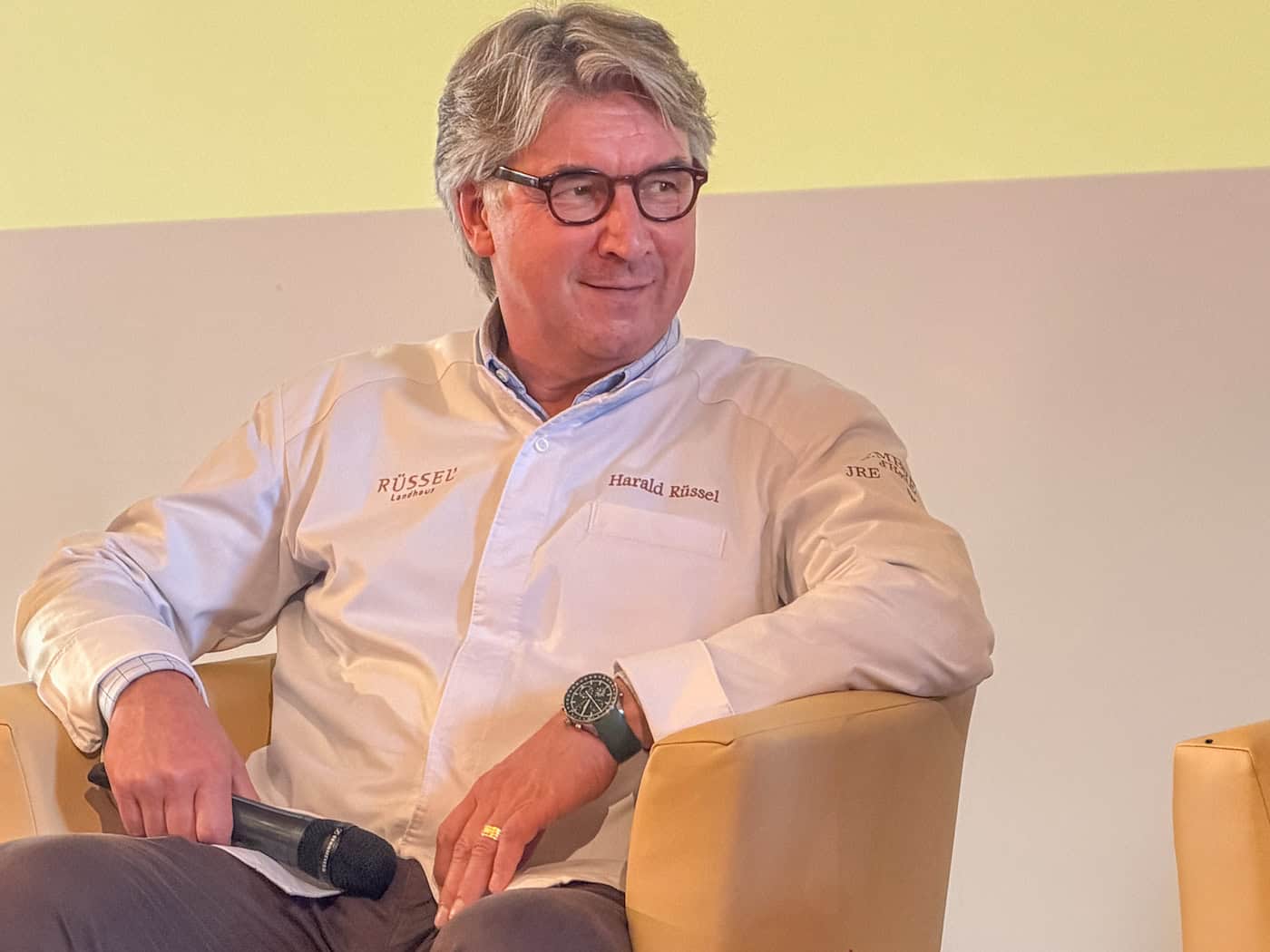
Harald Rüssel is a chef and hunter. This combination shapes the cuisine at his country house in St. Urban in Naurath/Wald on the Moselle. In 1992, he opened the restaurant together with his wife, and just one year later it was awarded a Michelin star. His training and career path took him, among other places, to the three-star restaurant La Bonne Auberge in Antibes and to Dieter L. Kaufmann’s restaurant Die Traube in Grevenbroich.
For Rüssel, hunting his own game is not a romantic sideshow, but a consequence of his understanding of product quality. He wants to know when an animal is shot, how old it is, and what condition the meat is in. As a hunter, he is less interested in the trophy than in making the best possible use of the animal. His explicit goal is to use as much of the animal as possible: in addition to the loin and leg, this includes the shoulder, shank, and offal. Liver, kidneys, and heart are products that have largely disappeared from dining habits in today’s gastronomy.
For the documentary, a saddle of venison was selected and paired with a complex array of accompaniments: crue de cacao, spruce smoke, braised cabbage rolls, shank jus, layered apple cake, elderberry gel, rutabaga purée, and pickled beech mushrooms. The creation is complemented by the so-called “Kleines Jägerrecht.” In this dish, Rüssel combines the classic preparation of game with a nuanced flavor profile. His exploration of the animal extends to the question of how its diet is reflected in its flavor. Even the minerality of a game broth can reveal what the animal has eaten.
Thomas Bühner: His Own Path to Three Stars
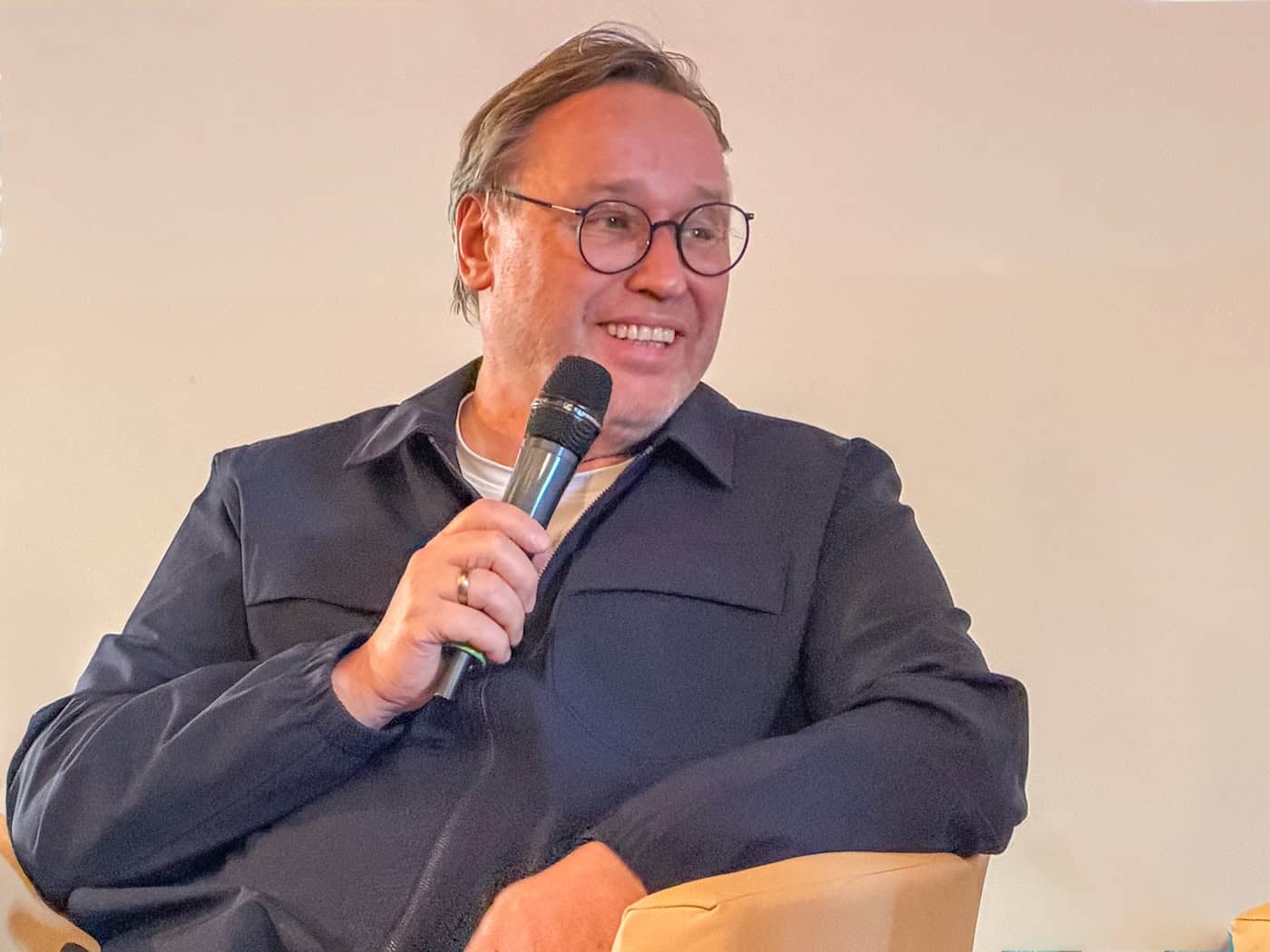
Thomas Bühner is one of the most influential chefs in German haute cuisine. For many years, he ran the restaurant La Vie in Osnabrück, which was awarded three Michelin stars under his leadership. When the owner closed the restaurant, it marked the end of a successful era for Bühner—but at the same time, the beginning of a new professional freedom.
In an interview with Jürgen Dollase, he describes how he fulfilled a long-cherished dream: to travel the world, meet producers, and work as a guest chef in a wide variety of countries. These engagements took him from South America to North Africa and on to Asia. He describes these experiences as immensely enriching. In 2025, he opened La Vie by Thomas Bühner in Düsseldorf as the concept creator and owner; the restaurant was awarded a Michelin star as early as June of that same year.
His career was by no means a straight path. After finishing school, he made a rather pragmatic decision to become a chef. His apprenticeship was marked by long hours and challenging kitchen dynamics. Bühner speaks openly about setbacks and experiences with an authoritarian management style. Yet it was precisely these situations that repeatedly spurred him on to find his own path. His unusual career path—he worked primarily in the vegetable section throughout his career and was never a sous chef—also shaped his perspective on the kitchen: A good chef must, above all, observe and draw the right conclusions from those observations.
Dollase praises the individuality of this development. A dish featuring otoro tuna, cod, and saffron stock was documented. It exemplifies Bühner’s independent creativity, which stems from culinary craftsmanship, international inspiration, and a deep engagement with ingredients. His philosophy extends beyond haute cuisine: there are no inherently bad ingredients, only poor preparation. Regional cuisine, too, deserves to be treated with the highest standards of craftsmanship.
Jörg Sackmann: Regional Tradition and Creative Ingredient-Driven Cuisine
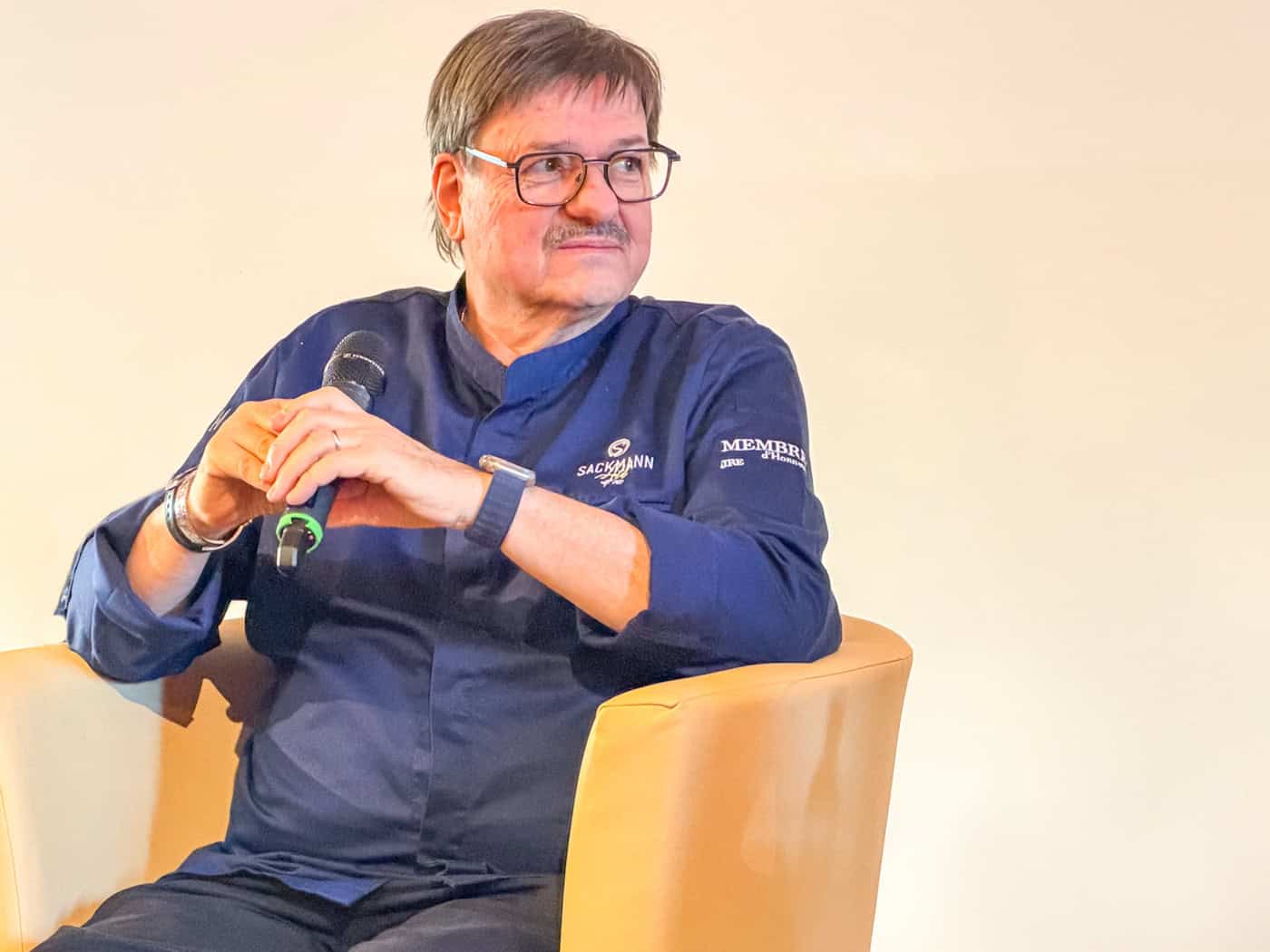
Jörg Sackmann comes from a family of hoteliers in Baiersbronn. Originally, he had quite different ideas about his professional future and had even considered a career in hotel management. But even during his culinary apprenticeship, it became clear that he was more interested in the kitchen. As early as his second year of apprenticeship, his path led him to the Schwarzwaldstube, at that time one of the defining establishments of German haute cuisine. This was followed by stints with Eckart Witzigmann and Harald Wohlfahrt, among others.
In 1993, Sackmann opened his gourmet restaurant, Schlossberg, in his family’s hotel. Since then, he has developed a culinary style that combines classic haute cuisine with regional ingredients. His background in a family of restaurateurs plays a role in this, though he does not wish to commit to a nostalgic return to traditional cuisine. Rather, what matters most to him are the ingredients, the season, and the possibilities that arise from an in-depth exploration of those ingredients.
In his conversation with Dollase, his curiosity about ingredients and their various preparation methods becomes particularly evident. Sackmann often develops dishes by exploring individual ingredients and flavors. This is how his numerous variations on black salsify and pork came to be. Creativity here is less a matter of spectacular effects than an in-depth exploration of the food in question.
Three variations on the theme of tripe were documented for the German Culinary Archive. A product that is initially unfamiliar to many guests becomes a delicacy in its own right in Sackmann’s hands. He works with different textures, combining tripe, for example, with crispy elements and blood sausage, or deliberately incorporating mild acidity and spices. For him, close observation of the ingredients is crucial: Depending on their age, structure, and texture, different cooking times may be required. His cuisine demonstrates that traditional products need not be at odds with modern haute cuisine.
Larissa Metz: Pâtisserie—Between Craft and Art
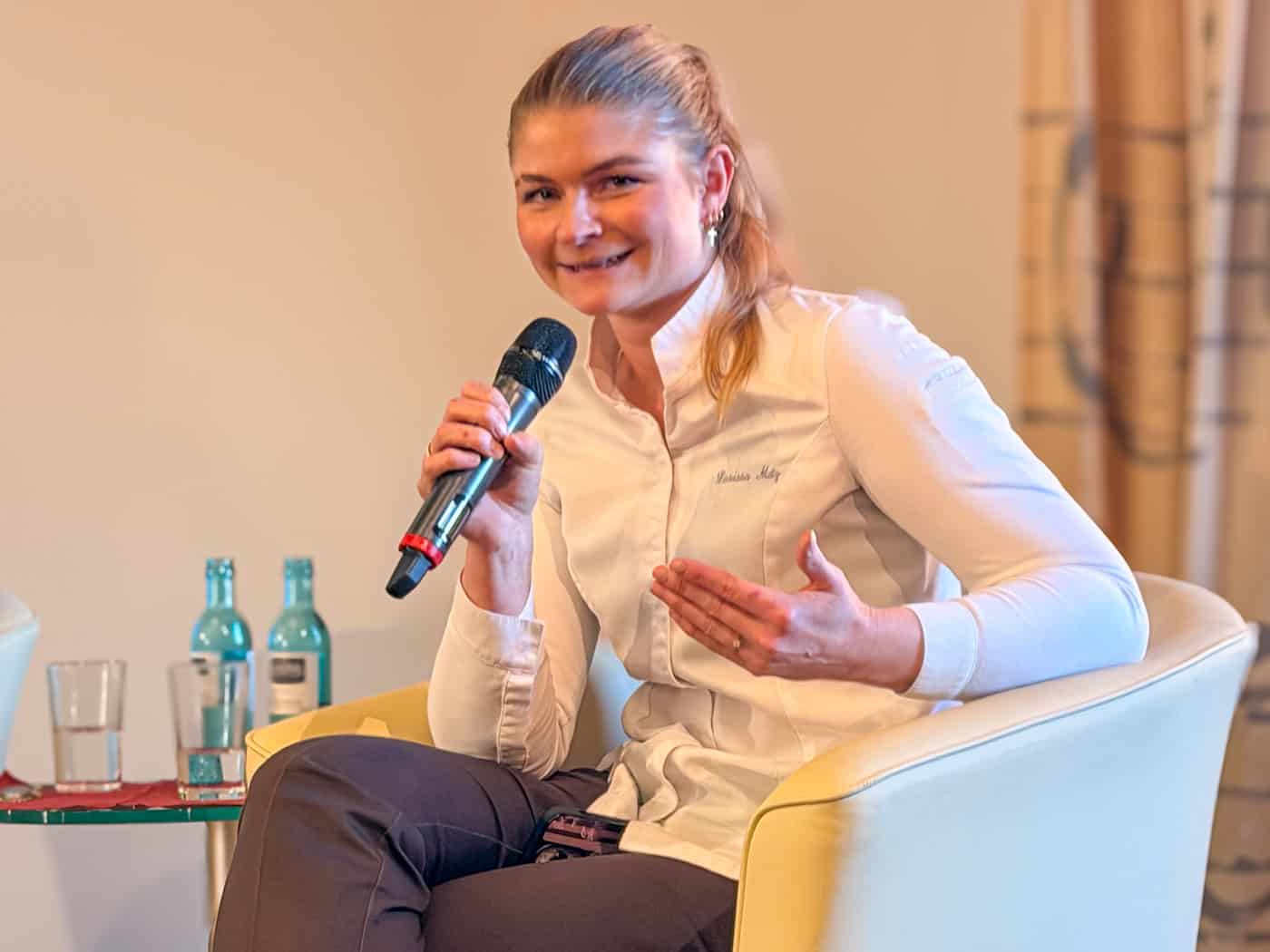
Larissa Metz is the first female pastry chef to be featured in the “Taste” documentary series. The head pastry chef at the two-star restaurant Vendôme at the Grandhotel Schloss Bensberg in Bergisch Gladbach is known for a style of dessert-making that combines classic craftsmanship with unusual flavor combinations.
Metz made her way to pâtisserie via confectionery. In a conversation with Dollase, she emphasizes how important the fundamentals of the craft are to her. While technical developments have significantly expanded the scope of work in modern pâtisserie, they cannot replace an understanding of the craft. First, one must master the fundamentals in order to build upon them and apply new techniques effectively.
Her interest in art and art history also shapes her work. The combination of design and edible elements is what originally led her to her profession. However, the visual concept of a dessert does not necessarily come first. Often, the form develops from a product idea or a flavor combination. When the design takes on a life of its own and no longer works in terms of flavor, Metz deliberately returns to the starting point.
The award-winning creation combines beurre blanc-bergamot ice cream with Williams Christ pears, Imperial caviar, and jasmine flower infusion. Metz’s starting point was the idea of transferring the depth of flavor found in a sauce to dessert cuisine. Beurre blanc, otherwise a classic accompaniment to fish, is transformed into ice cream. Bergamot adds freshness, while the caviar brings another dimension of flavor and texture. The result straddles the line between classic pâtisserie and avant-garde flavors. Jürgen Dollase sees this as an exemplary contemporary dessert creation that explores new flavors without losing its classical roots.
In 2025, Metz was named Pastry Chef of the Year by Feinschmecker and FAS. In 2026, she received the CHEF Award. With its inclusion in the German Culinary Archive, the pâtisserie now also occupies a prominent place among the documented culinary masterpieces.
Peter Knogl: Classic Haute Cuisine with a Distinctive Style
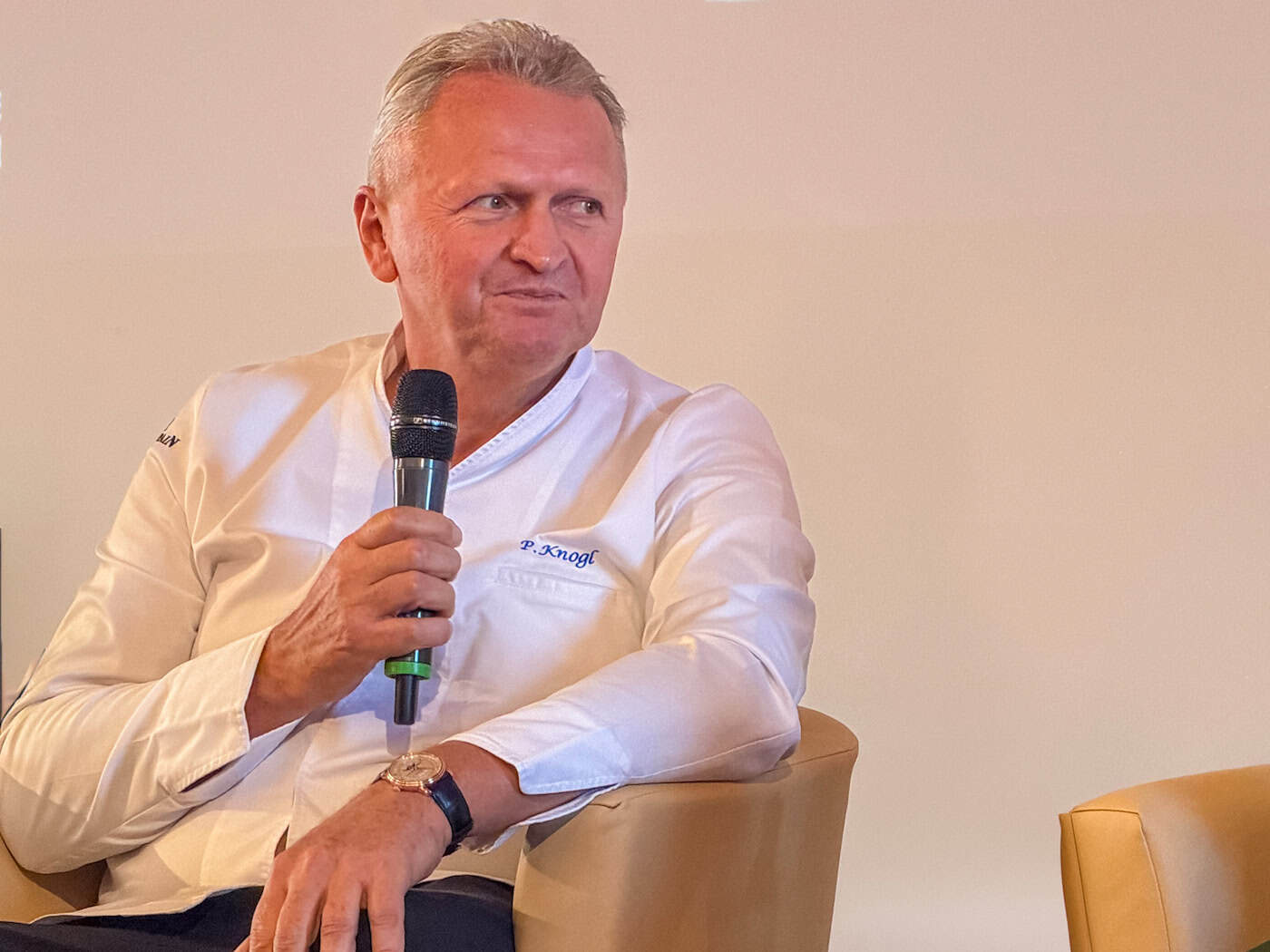
Peter Knogl has been managing the Cheval Blanc restaurant at the Grandhotel Les Trois Rois in Basel since 2007. Under his leadership, the restaurant has become one of the most internationally renowned destinations for classic haute cuisine. Three Michelin stars and 19 points in Gault Millau attest to the consistent quality of his cuisine. In addition, Knogl was listed as the world’s best chef in the international ranking La Liste.
He takes such accolades in his stride. In an interview with Jürgen Dollase, he explains that while he acknowledges them, they do not change his daily work. He continues to cook the food that he himself considers good. Knogl’s cuisine is characterized by a classic French foundation, which he combines with Mediterranean and Asian influences. It is particularly important to him that the ingredients remain recognizable on the plate. A multitude of components and visual effects is not his goal. What matters most is that the guest recognizes the flavor of the ingredient and remembers the dish.
This approach is also evident in the featured dish: pan-seared veal sweetbreads with baby spinach, capers, and lemon. Knogl is working on a contemporary evolution of classic cuisine without abandoning its fundamental principles. In an interview, he describes a method for preparing veal sweetbreads in which the ingredient is first treated with cream and then cooked very gently. The sauce also plays a central role. It is intended to bring the flavors together and bring them to their peak.
Knogl sees himself as a chef who tastes his dishes himself and does not delegate the crucial quality control. His cuisine is the result of consistent craftsmanship and a clear vision of flavor. Jürgen Dollase considers this documented creation to be one of the outstanding classic compositions of recent years.

