


Bastian Hamdorf: The Most Labor-Intensive Way to Grow Grapes
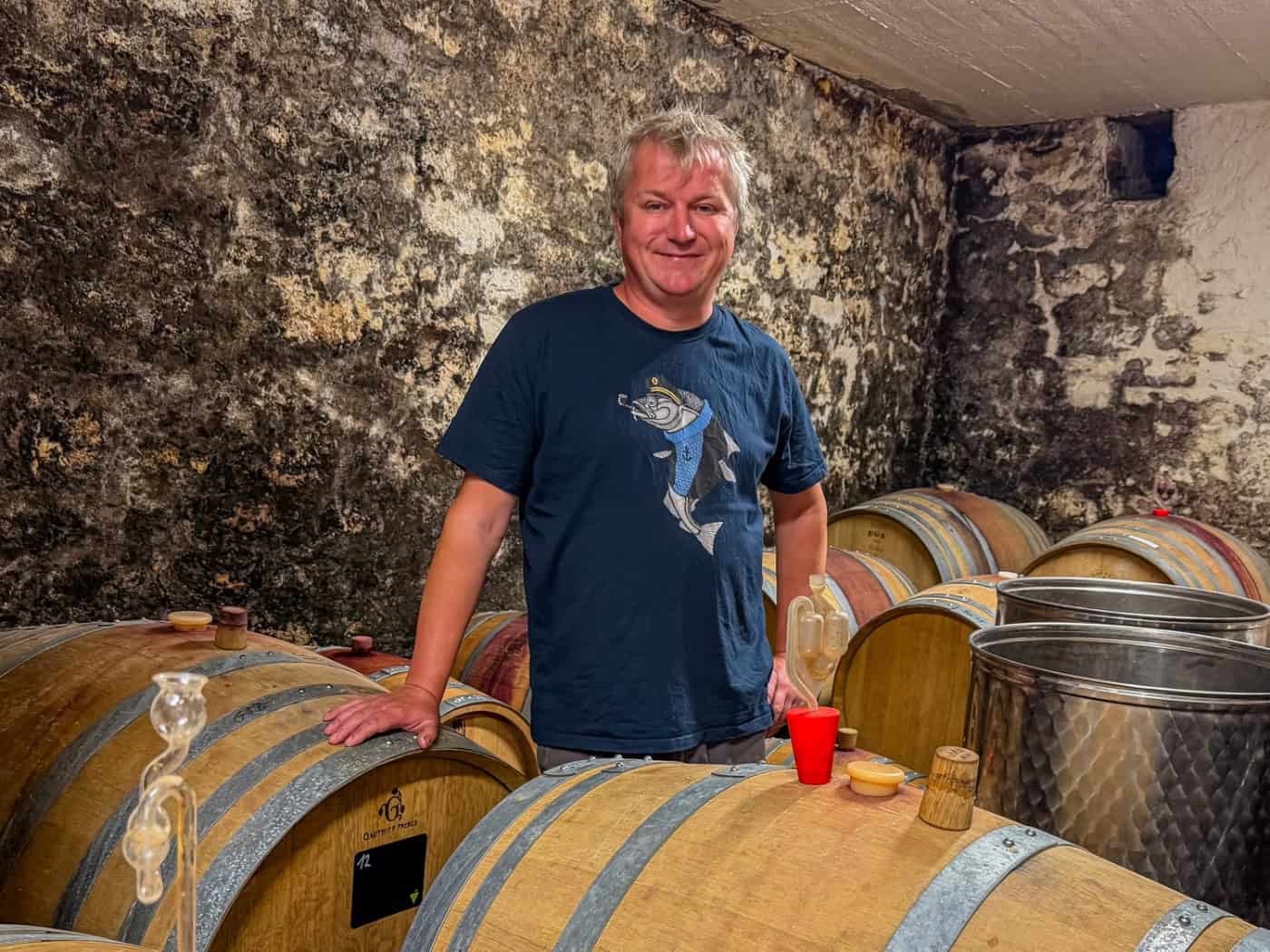
It’s only two hectares—but on steep slopes laid out in terraces, with some plots accessible only on foot. So Bastian Hamdorf doesn’t need a tractor when he goes to his vineyards—a fact that was too much for two inspectors from the Department of Agriculture to wrap their heads around: they wanted to see the TÜV inspection stamps on his tractors (yes, plural!). Bastian Hamdorf, a first-generation winemaker in Klingenberg, Upper Franconia, and blessed with a very dry Nordic sense of humor, can only laugh it off. He knows, after all, how much work goes into the plots on Klingenberg’s Schlossberg and Großheubach’s Bioschofsberg: two thousand hours per hectare. It’s a lot of effort, but the result is precisely that: good wine that’s allowed to age undisturbed and still goes into the glass in pristine condition even years later.
Bastian Hamdorf was born in North Frisia and lived on the island of Föhr for 13 years and one day. It was by no means a foregone conclusion that he would one day become a winemaker in Klingenberg. But his father was a chef, and for a while, Bastian toyed with the idea of following in his footsteps when choosing a career. But that didn’t pan out, even though cooking is one of his hobbies—provided the small winery, with just under two hectares of vineyards on the steep terraced slopes of Churfranken, where Hamdorf consistently focuses on manual labor, organic viticulture, and wines with aging potential, allows him the time for it.
His journey to becoming a winemaker began in 2004 with an internship at the Gutzler Winery in Rheinhessen. This was followed by stints in southeastern Styria and New Zealand before Hamdorf studied viticulture in Geisenheim from 2005 to 2009. A practical semester in the Wachau region with FX Pichler led to an offer to take a permanent position there immediately after graduation. In 2012, Bastian Hamdorf moved to Churfranken, where he initially worked as a cellar master and winemaker for the Prince of Löwenstein.
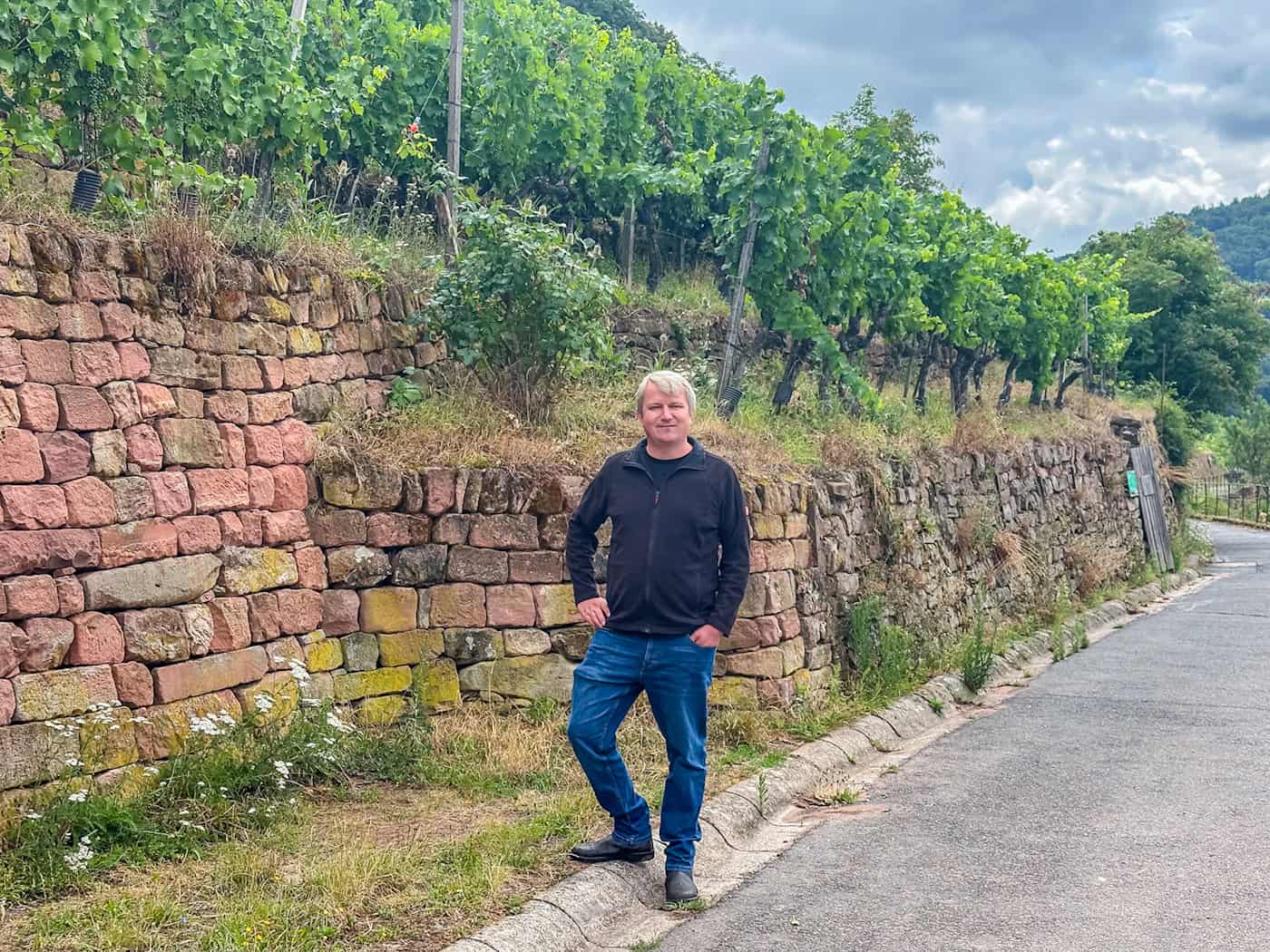
The opportunity to bring his own ideas to life appealed to him more and more. When the opportunity arose in 2014 to take over old terraced vineyards on the Bischofsberg in Großheubach, his own project began. What started as 500 square meters grew to about half a hectare within a few weeks. Added to this was a former winemaker’s house dating from 1890, which Hamdorf and his wife painstakingly renovated. His first vintage was produced in 2014.
Hamdorf practices organic viticulture and has gradually transitioned his winemaking to spontaneous fermentation. He added yeast only in the first few years after renovating the cellar, when he wasn’t entirely sure about the microbial flora down there. Since around 2018/19, the batches have fermented entirely without the addition of selected yeasts. The wines are intended to reflect, as unadulterated as possible, what defines the vintage and terroir. He keeps interventions and additives to a minimum; even sulfurization plays a restrained role. Instead of making the wines accessible early, he gives them time. Longer maceration periods, aging on the lees, and barrel aging are all part of his approach.
Red Sandstone and Historic Grape Varieties
Klingenberg is best known for Pinot Noir. In Hamdorf’s experience, the red, iron-rich sandstone imparts spicy, herbaceous, and earthy notes to the wines. In contrast, his white wines—including Silvaner and Riesling—come from the cooler Bischofsberg vineyard in Großheubach.
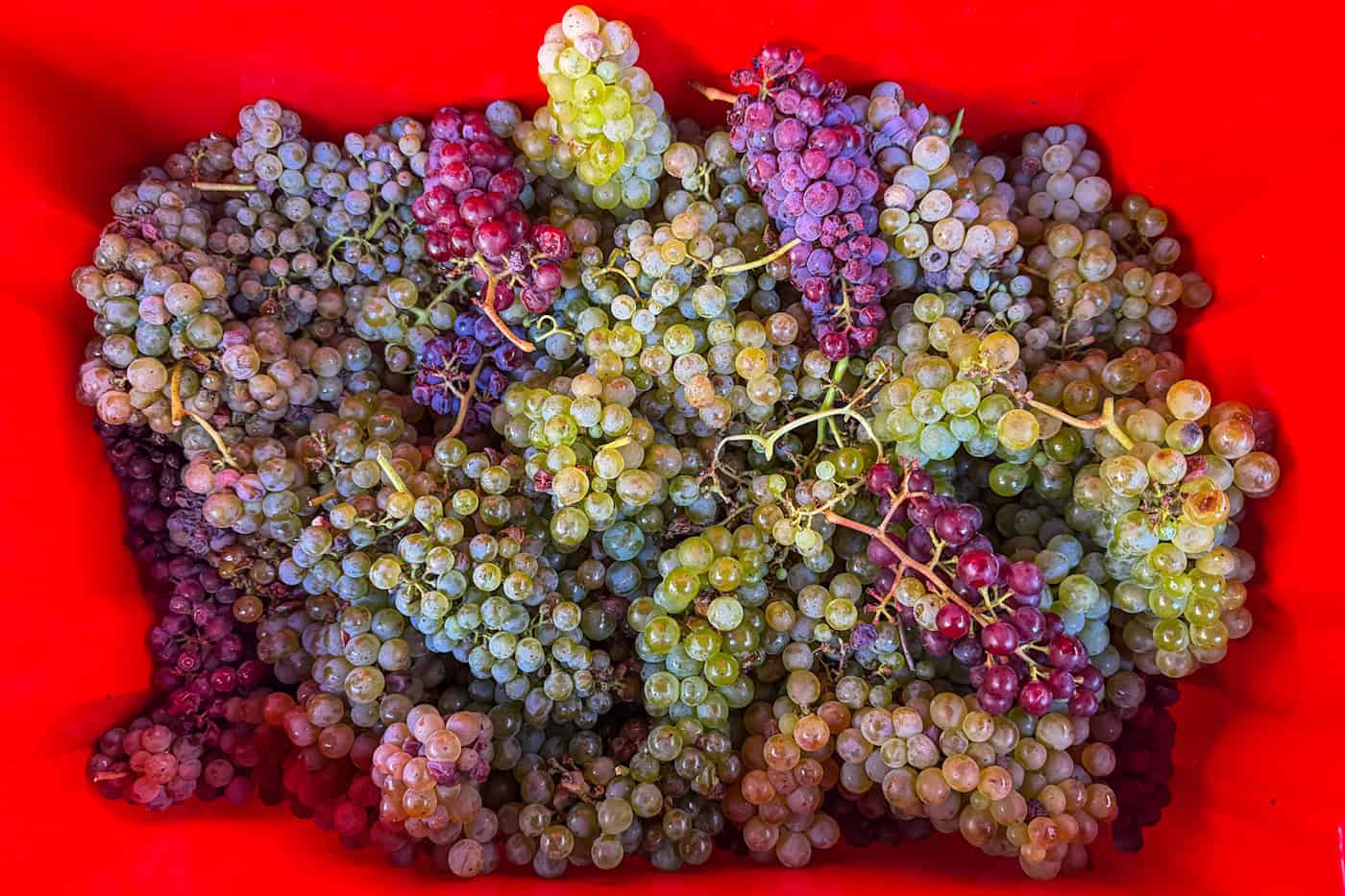
One special feature is the “Buntsandstein weiß” cuvée. To create it, Hamdorf had old vines—sourced from walls and historic vineyards—genetically analyzed. Five or six historic grape varieties were identified, propagated, and planted in 2018 as a mixed vineyard in a small plot of about 400 square meters. These include varieties such as Grüner Adelfränkisch and Räuschling, which are hardly cultivated anymore today. The blend deliberately draws on earlier viticultural practices, in which different grape varieties were grown together in the vineyard. In addition to the historical aspect, Hamdorf is also interested in the practical benefits: Different varieties can complement each other in their characteristics and react differently to diseases. And: this gives him a wine that only he can offer (as a Buntsandstein white in the estate wine line).
Hamdorf’s portfolio includes estate wines from the Buntsandstein line and single-vineyard wines, including Pinot Noir, Sylvaner (he spells it with a “y”!), Riesling, and Blaufränkisch. The wines are often released onto the market only after some time has passed. Since Bastian Hamdorf initially started this as a side business, he didn’t have to sell immediately. He continues to take advantage of this opportunity to this day: especially the wines that are often closed in their youth should be given time to develop. About 90 percent of his sales go to private customers, including through his own online store and direct sales from the farm. Annual production varies greatly: in good years, about 10,000 bottles are possible, while the long-term average is closer to 6,000 to 7,000. Two to three farm and garden festivals, as well as events in the region, supplement sales.
Listen to the podcast
Bastian Hamdorf Winery
Weingartenstrasse 5
63911 Klingenberg am Main
Tel. +49 152 53961969
weingut-bastian-hamdorf.de

