


New study shows extreme climate risks even at 2°C warming
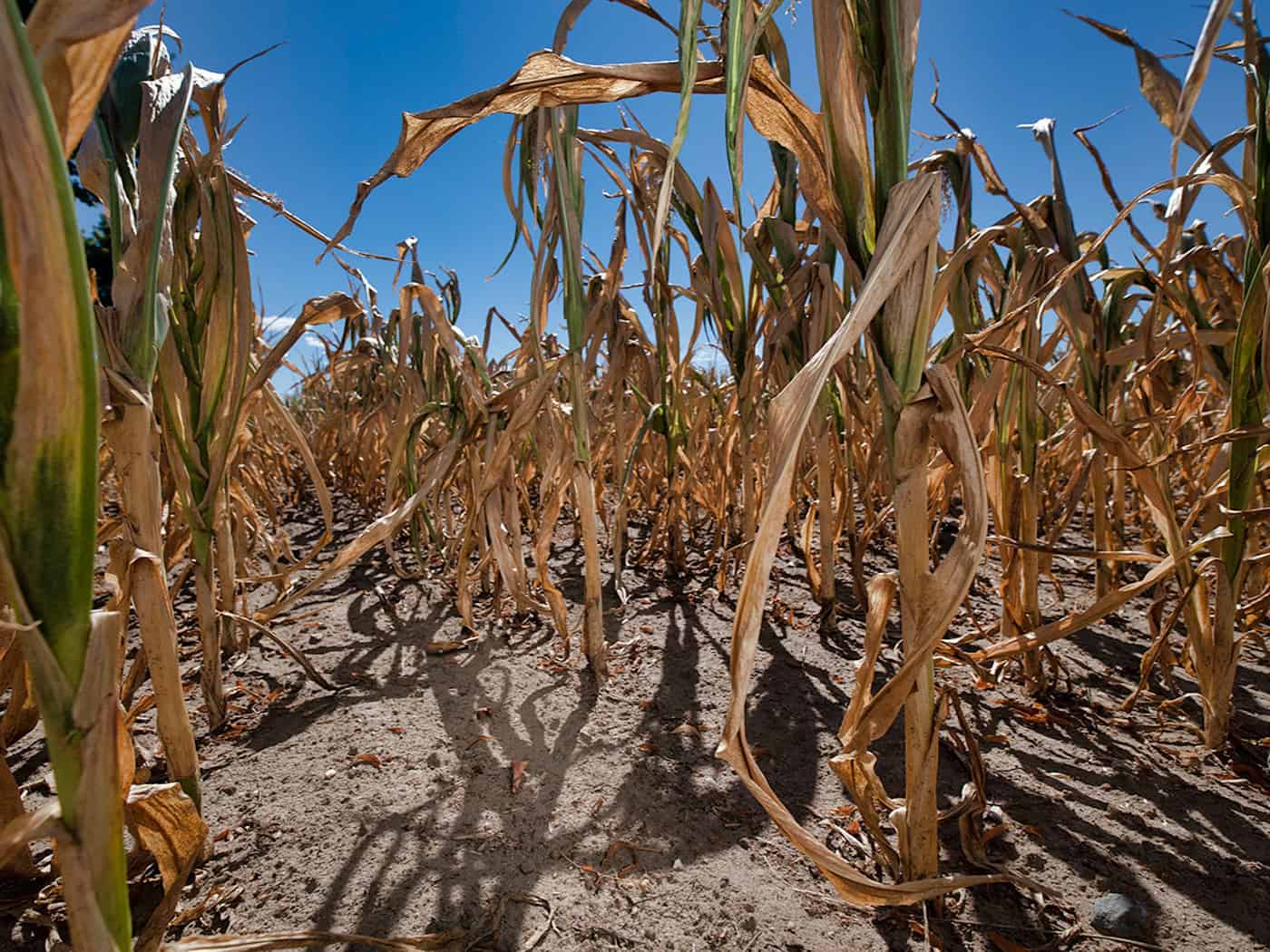
If you think 2 degrees of global warming is still manageable, you may be mistaken. Researchers at the Helmholtz Centre for Environmental Research in Leipzig, together with TU Dresden, have found that extreme climate impacts can occur even at this level of warming. The study was published in the journal Nature.
Until now, particularly severe climate impacts were mainly expected at warming levels of 3 or 4 degrees. These assessments were usually based on average results from many climate models. But this is precisely where the problem lies. Individual model projections vary widely. Some show much stronger changes at 2 degrees than others do at 4 degrees. “In terms of responsible risk assessment, we should therefore look beyond the most likely developments and also consider extreme scenarios that could have serious social or ecological consequences,” explains lead author Dr. Emanuele Bevacqua.
Droughts, fires, floods possible at just two degrees
The researchers therefore focused on areas where climate change could have particularly strong impacts, such as agriculture, forests and densely populated regions.
The key finding is striking. In major growing regions for maize, wheat, soy and rice, the frequency of droughts could either remain stable or increase by more than 50 percent at 2 degrees of warming, depending on the model. These differences are substantial and have direct implications for global food security. “10 of the 42 models analyzed produce results at 2 degrees that are significantly higher than the model average at 4 degrees of warming,” adds Bevacqua. A similar pattern emerges for heavy rainfall in cities and wildfire risk in forests. Here, too, some models show changes at 2 degrees that exceed the average projections for 3 degrees.
The limits of the models
The study reflects a broader shift in climate research. For a long time, the focus was on average outcomes. Today, it is increasingly clear that extreme events are what matter most. For society and the economy, it is not averages that matter, but concrete events such as droughts, heavy rainfall or wildfires. The new approach makes these risks more visible by focusing on particularly vulnerable regions. At the same time, it highlights the limits of current climate models. They do not provide exact predictions, but a range of possible futures. In the worst case, these could be far more severe than expected.
“Our results do not mean that a 2-degree warming would be as severe overall as a much higher level of warming,” explains co-author Prof. Dr. Jakob Zscheischler. “Rather, they show that extreme impacts in particularly vulnerable or socially important sectors can occur even at 2 degrees.” A 2-degree warming is therefore no guarantee of moderate consequences.
Original publication:
Emanuele Bevacqua, Erich Fischer, Jana Sillmann and Jakob Zscheischler. Moderate global warming does not rule out extreme global climate outcomes, Nature

