


Mushrooms are sprouting in Saxony's forests—but not everywhere
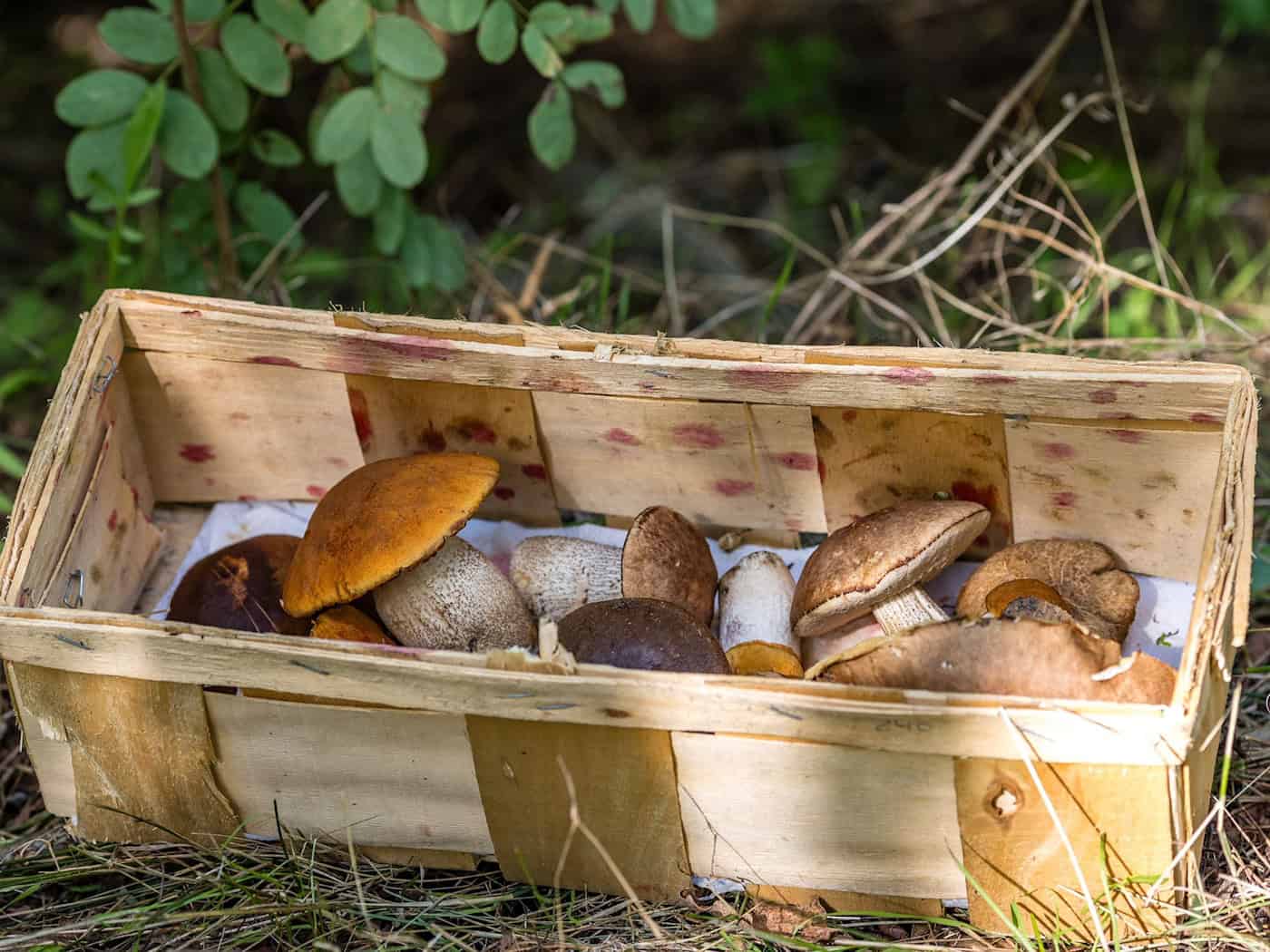
For mushroom hunters, a trip to the forests of Saxony this weekend could be well worth it. “The mushrooms are sprouting,” says Steffen Schmidt, a mushroom expert and operator of a mushroom school in the Vogtland region, with delight. This is especially true in areas that have received sufficient rain in recent days, such as the Vogtland and the Ore Mountains. “Right now, people are finding the classic edible mushrooms, such as porcini, the flaky-stemmed witch’s bolete, chestnut boletes, and various russulas. The pearl mushroom is also there,” says Schmidt. The situation is different in and around Chemnitz. “It’s not worth the effort here yet,” says Wolfgang Friese, a mushroom expert with the Nature and Biodiversity Conservation Union (NABU) in Saxony. It hasn’t rained enough there yet. “Weather conditions vary greatly from place to place. There are areas where it has actually rained more or less at certain times, and all the conditions have to align for the mushrooms to grow.” Anyone who collects mushrooms and wants to have their harvest checked by an expert should call one of the mushroom consultants in advance to schedule an appointment. The German Society for Mycology maintains an online contact list that allows users to find experts nationwide. “You have to keep in mind that these people are all volunteers,” says Schmidt. During the consultation, the expert doesn’t just sort through the mushrooms—they also explain them. This can sometimes take an hour; it’s not something that can be done on the spot. For the consultation, collectors should bring the entire mushroom with them and remove it from the ground—not by cutting it off with a knife, but by pulling it out with the part still in the soil. “And one more important thing: Touch it as little as possible—and especially don’t touch the stem,” Schmidt emphasizes. That’s precisely where the key identifying features are located. “If possible, hold the mushroom with your thumb and index finger at the top and bottom, or on the left and right sides of the cap.” According to the expert, the porcini and the gall bolete—or bitter bolete—are frequently confused. While the latter isn’t poisonous, it’s inedible due to its bitter, gall-like taste. Recently, a woman also brought a beautiful-foot bolete to the consultation. A neighbor had told her that all mushrooms with tubes are edible. “But that’s not true. The beautiful-foot bolete is a poisonous mushroom, and it’s definitely found here in the Vogtland-Erzgebirge region.” Time and again, people also confuse the pearl mushroom with the poisonous brown fly agaric, which has only been spreading in the Vogtland region for a few years and is unknown to many. Schmidt has a simple trick for telling them apart: “If you peel back the veil on this brown fly agaric, the cap underneath is chrome yellow—a really vivid chrome yellow. If you peel back the veil on the pearl mushroom, it’s white or very slightly reddish.” A “100 percent” distinguishing feature, according to the expert. According to experts, it remains unclear whether the hot summer and the prolonged drought will have a long-term impact on mushrooms. “No one can predict nature,” says Schmidt. When a lot of rain fell in just a few days this summer, not a single mushroom grew afterward. Now, however, things look different. Last weekend’s rain made a difference: “Right now, mushrooms are sprouting in the areas where it has rained, but you can tell that some species are missing or that a genus is missing.” Conversely, rare boletes are also being found this year. This varies greatly from region to region. Overall, according to Friese, climate change is already making itself felt. For example, autumn mushrooms have shifted to a later date. Mushroom foraging is becoming more unpredictable. “People used to say there was a spring phase, a summer phase, and a fall phase, and that was fairly reliable, but the weather has become much more changeable, and that’s having an impact.” At a mushroom exhibition in Klosterbuch last weekend, for example, 140 species of mushrooms were on display. In the past, there used to be more than 200 at the same time of year. However, according to Fieler, it is impossible to predict whether the mushroom season will be worse overall following the particularly hot and dry summer. Copyright 2026, dpa (www.dpa.de). All rights reservedSchedule a consultation in advance
These mushrooms are often confused
How Heat and Drought Are Affecting the Mushroom Season
Climate change is shifting the mushroom season

