


Electricity from wastewater: how microbes could turn waste into energy
Every time we flush the toilet or take a shower, something valuable goes down the drain: energy and nutrients. Around 359 billion cubic metres of wastewater are produced worldwide every year – four times the volume of Lake Geneva. It contains more than just dirt: organic substances and therefore chemical energy.
“It contains over 800,000 GWh of chemical energy, comparable to the annual production of 100 nuclear power plants,” says Prof. Dr. Uwe Schröder from the University of Greifswald. Together with colleagues from the Helmholtz Centre for Environmental Research (UFZ) in Leipzig, he is investigating technologies that make this energy usable. This would be particularly interesting for wastewater treatment plants, which are among the major energy consumers in municipal infrastructure. Their review article appeared in the journal Frontiers in Science.
Bacteria that generate electricity
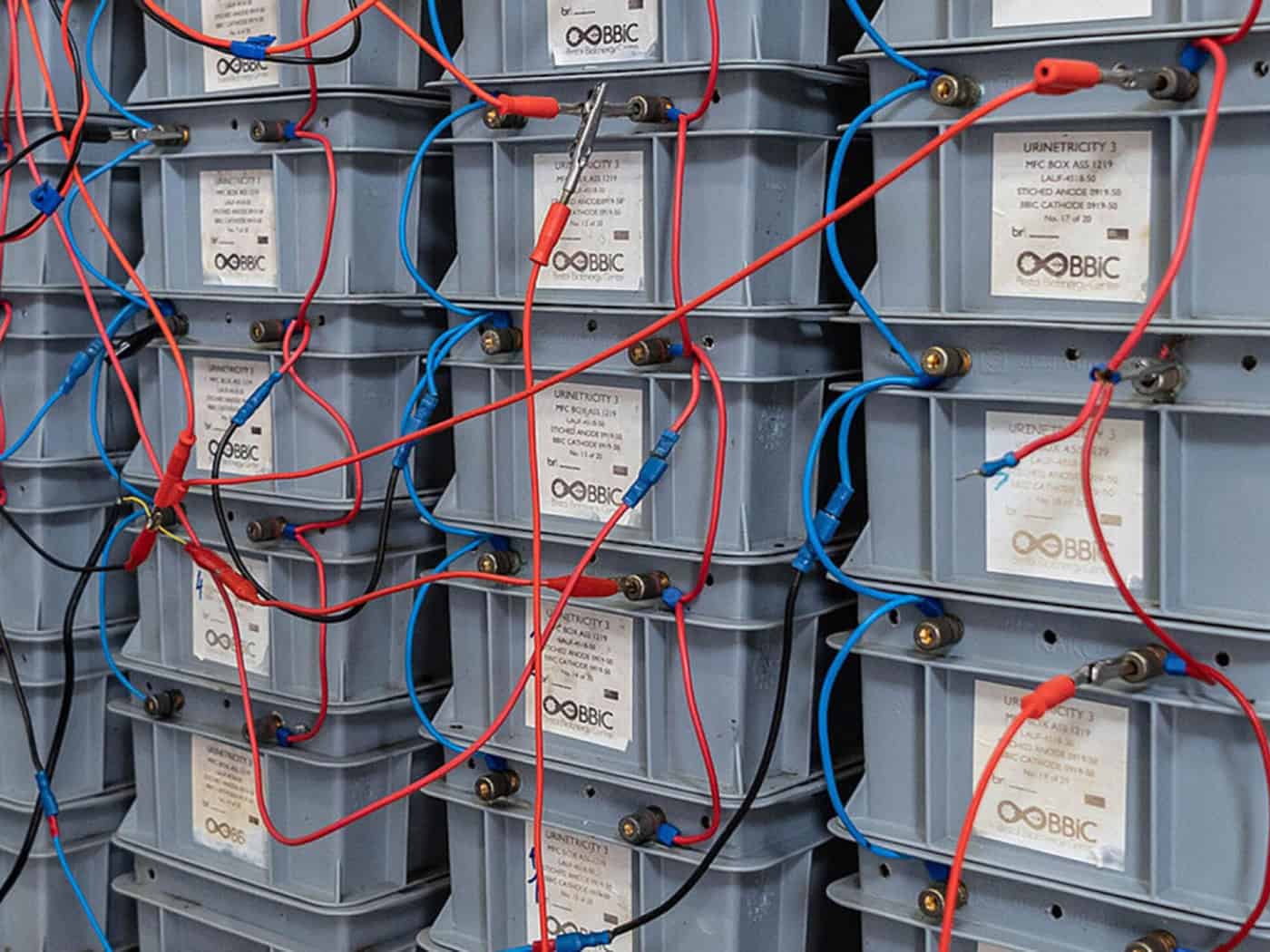
The solution could lie in microbes. Certain bacteria in wastewater can transfer electrons to electrodes and thus generate electricity. These processes are known as microbial electrochemical technologies (MET). In laboratory experiments, up to 35 percent of the energy contained in wastewater has already been converted into electricity while the water is purified at the same time. Unlike conventional wastewater treatment plants, which mainly generate energy from digester gas, electricity in this case is produced directly during the purification process.
Pilot projects show that this also works in practice. For example, a system called “Pee Power®” supplied lighting for toilets at the Glastonbury Festival in 2015 using electricity generated from urine. Studies in Uganda, Kenya and South Africa have also shown that such systems work reliably and can help provide lighting for sanitation facilities.
Recovering nutrients
In addition to energy, wastewater also contains valuable nutrients. Phosphorus and nitrogen are currently extracted using large amounts of energy, even though they are abundant in wastewater. “Up to seven percent of the global demand for phosphate and eleven percent of the demand for ammonium nitrogen could be recovered from wastewater,” says Schröder. Phosphorus is considered a critical raw material because it is indispensable for fertilisers and is only available in limited quantities. Co-author Prof. Dr. Falk Harnisch from the UFZ therefore emphasises the global potential of the technology, especially for regions with heavily polluted wastewater or inadequate infrastructure. Around 3.5 billion people worldwide have no access to safe sanitation.
The technology is still largely at the research and pilot stage. For wider use, the systems will need to become more robust, cheaper and more energy-efficient. Researchers in Greifswald and Leipzig are working on this together with international partners.
Publication:
Schröder, U., Harnisch F., Heidrich E., Ieropoulos I. A., Logan, B.E., Nath, D., Pant D., Patil, S.A., Puig S., Ren J., Rossi R., Rotaru A.-E., ter Heijne, A (2026). Waste to value: microbial electrochemical technologies for sustainable water, material and energy cycles. Frontiers in Science.

