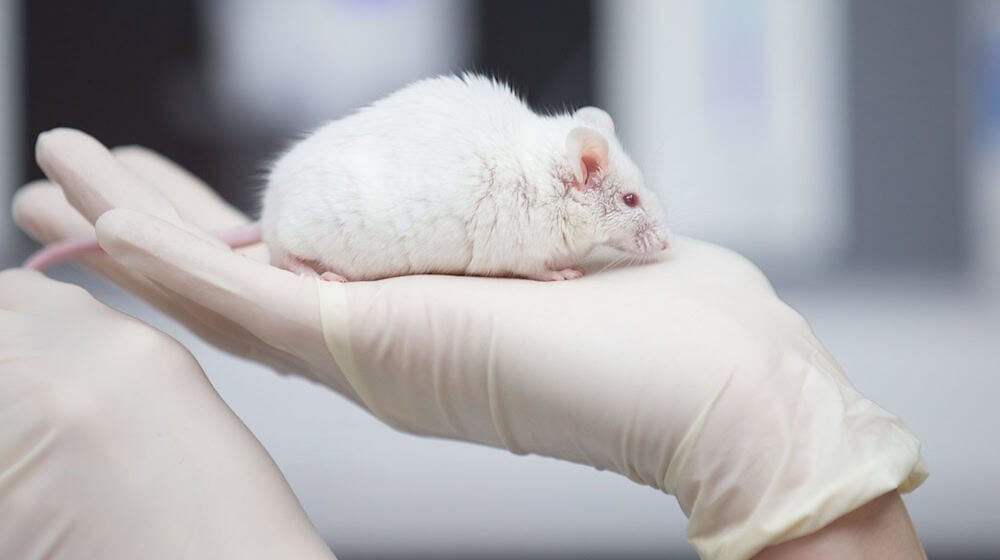
The number of laboratory animals in Saxony fell by almost 16 percent last year. A total of around 106,600 animals were used for scientific purposes in 2024, according to figures from the German Center for the Protection of Laboratory Animals. This was a good 20,000 fewer animals than in the previous year. Mice (88,000) were again the most frequently used in experiments, but the number fell by a good fifth compared to 2023. Zebrafish (11,700) followed in second place. Rats (2,000), cattle (1,400) and pigs (940) were also tested. In addition, 16 dogs were used as laboratory animals in higher education and vocational training. Around 78,000 animals were also bred for scientific purposes but not used for these purposes and then killed, for example because they did not have a desired genetic modification. Compared to 2023, there was a decrease of 31,000 killings in this area, mainly of zebrafish (2024: around 25,700 and around 57,300 in 2023). Researchers at TU Dresden used the majority of laboratory animals. According to their own figures, almost 72,000 animals were used in experiments in 2024 - around 21,000 fewer than in the previous year. According to the university, animal experiments are often necessary, particularly in the life sciences and medicine, in order to develop effective therapies or research basic principles without exposing people to risks. In Saxony, six other research institutes carried out animal experiments in 2024, according to the Saxony State Directorate: the Fraunhofer Institute for Cell Therapy and Immunology, the Helmholtz Association of German Research Centers, the State Office for Environment, Agriculture and Geology, the LUPUS Institute for Wolf Monitoring and Research in Germany, the Max Planck Institute of Molecular Cell Biology and Genetics and the University of Leipzig. Copyright 2025, dpa (www.dpa.de). All rights reservedExperiments mainly on mice and zebrafish
TU Dresden uses the most laboratory animals