

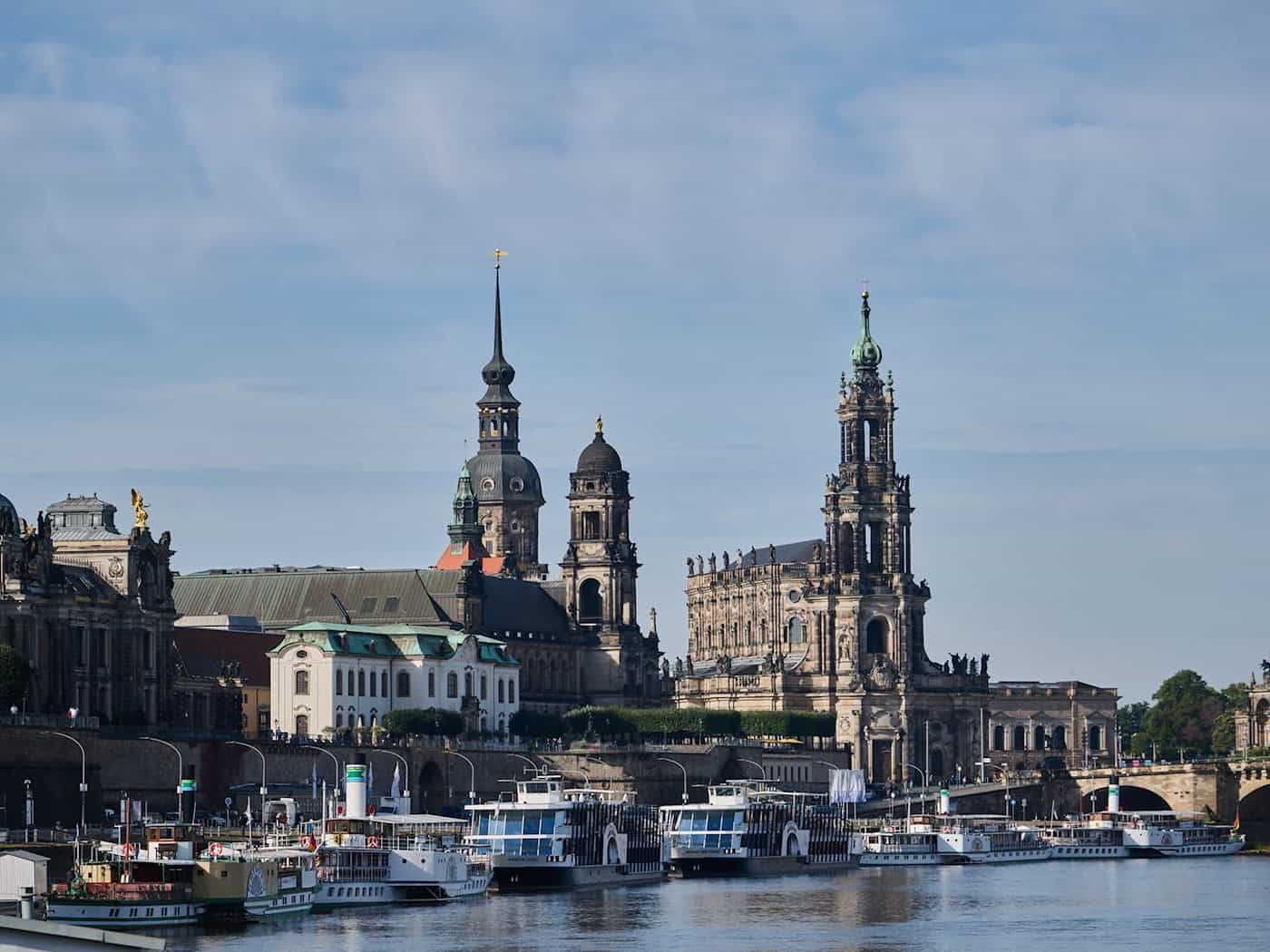
The Elbe River in Saxony and Saxony-Anhalt is once again visibly low. At several measuring stations in both states, the river’s water depth is less than 50 centimeters. Boat traffic is also facing challenges again: For example, the celebrations marking the 190th anniversary of the White Fleet in Dresden had to take place with fewer ships, among other adjustments. So what’s behind the low water levels? An overview of the most important questions and answers: According to the Federal Institute of Hydrology (BfG), the Elbe has been experiencing low water levels intermittently since May 2026. At the end of August, there was a brief respite due to increased rainfall, but low water levels returned to the Elbe throughout September. “The main driver is quite clearly a lack of rainfall,” explains Daniel Bachmann, professor of hydromechanics and flood risk management at the University of Applied Sciences in Magdeburg-Stendal. The BfG also refers to a precipitation deficit that has developed due to below-average rainfall throughout Central Europe—including the Elbe region. “We would need one, two, or three weeks of continuous rain now to replenish everything,” said Bachmann. “Given this situation, the precipitation that fell in the last week of September is not enough to have a lasting effect on the water levels and discharge of the Elbe,” the BfG stated. Unlike other rivers, the Elbe is not fed by glacial meltwater—as a result, it relies on precipitation as its natural source of water, says Bachmann. In addition, the Elbe has been supplemented with water since the 1960s by the Vltava Cascade in the Czech Republic. According to Bachmann, this supplies the Elbe with up to 40 cubic meters of water per second. The reservoirs in the Czech Republic are still full and can help the Elbe through this water management measure, he said. “We’ve never seen anything like this since we started recording water levels at the Elbe gauges,” said the expert, referring to the low water levels. Furthermore, many smaller bodies of water have already dried up completely. Bachmann expects that climate change will lead to an increase in extremes—including both high and low water levels. What’s needed, he said, is “steady rain,” as Bachmann calls it—that is, rain that is long-lasting and not too intense. After all, heavy rain can, in the worst case, lead to flooding. “We’re talking about weeks and months,” he added. Low water levels build up over months, sometimes years, and intensify repeatedly. “And it then takes months to get rid of it again,” Bachmann explained. The BfG expects the water level in the Elbe to rise again starting in the second half of October. However, the average water level is not expected to be reached in the coming weeks. Copyright 2026, dpa (www.dpa.de). All rights reservedAre the low water levels recurring—or continuous?
Why is the Elbe carrying so little water?
Why is the Elbe having a harder time than other rivers?
Is this an unusually severe low-water situation?
When will the situation ease again?


