Logo Die Sachsen News
News / Economy

Who is EPH? Why FFF is demonstrating in Dresden today

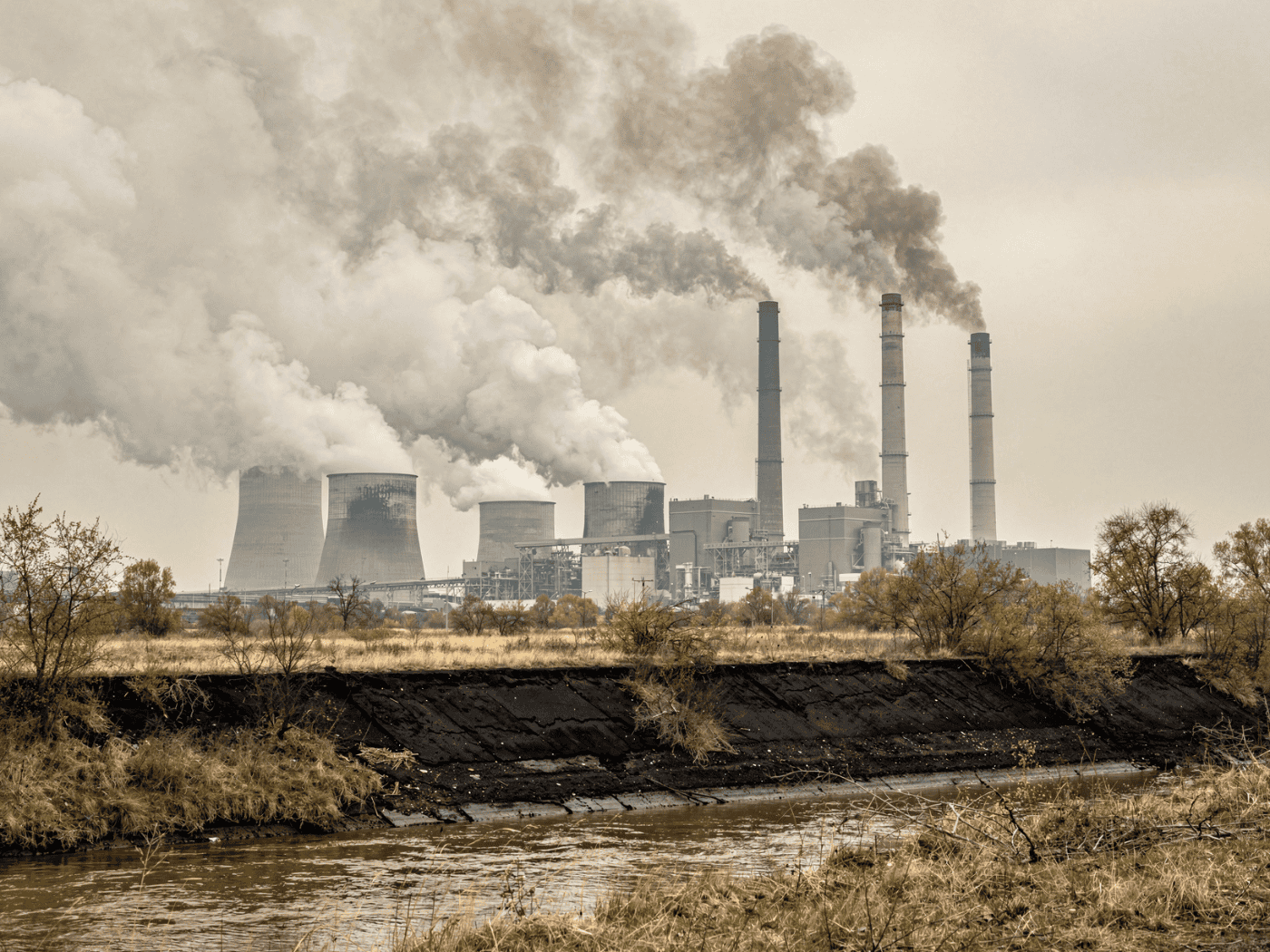
Coal-fired power station with smoking chimneys under a cloudy sky, surrounded by a dry, dusty landscape and murky water in the foreground
Coal-fired power plants like this one are among the largest single sources of greenhouse gas emissions in Europe. In Germany, the Czech group EPH controls several such plants through its subsidiaries LEAG and MIBRAG. | Image: FLUX / AI-generated image
From: Eberhard Grün
The Czech energy group EPH, together with LEAG and MIBRAG, controls large parts of the East German lignite industry - and is now planning to invest in new gas-fired power plants. Fridays for Future is taking to the streets in Dresden today as part of an international week of action that is targeting EPH and its main shareholder Daniel Křetínský across Europe for the first time.

Today, Friday, April 24, Fridays for Future Dresden will be demonstrating at Schlossplatz at 2 pm - as part of an international week of action against the Czech energy giant EPH and its main shareholder Daniel Křetínský. What is behind the company, which controls lignite in eastern Germany, and why are climate activists in six European countries taking to the streets at the same time?

A company in the shadows

Whoever talks about the German energy industry mentions RWE, Uniper or LEAG - but very few people know the parent company behind LEAG and MIBRAG. The Energetický a průmyslový holding, EPH for short, is a Czech energy and industrial group based in Prague and is one of the largest fossil fuel companies in Europe. With an installed power plant capacity of around 11 gigawatts and greenhouse gas emissions roughly equivalent to those of Finland as a whole, EPH is the second-largest fossil fuel company in Germany behind RWE - and yet hardly anyone knows the name.

EPH has played the role of a silent giant for years, operating through a complex network of holding companies and special purpose vehicles in various countries and barely making a public appearance. In Germany, the company mainly makes a name for itself through its subsidiaries: LEAG operates the opencast lignite mines and power plants in Lusatia, MIBRAG mines lignite in Saxony-Anhalt and Saxony.

More from this category

Daniel Křetínský: The man behind the Group

The Czech billionaire Daniel Křetínský is the driving force behind EPH and its main shareholder. The lawyer founded EPH in 2009 as part of the Slovakian financial investor J&T and has since become one of the richest men in Europe. His business model is very clear: Křetínský buys up coal and gas-fired power plants, preferably those that other companies want to get rid of - and uses them to generate capital that, according to critics, often flows at the expense of the public sector.

A much-discussed example: when the Swedish state-owned company Vattenfall sold off its entire German lignite division - power plants, opencast mines, tens of thousands of employees in Lusatia - in 2016 for image and strategic reasons, it did not ask for a purchase price. Instead, he handed over the plants to EPH together with around 2.7 billion Swedish kronor in cash and the recultivation provisions, while EPH assumed all liabilities and restructuring obligations. Environmental associations criticize the fact that the reserves for opencast mine recultivation shrank significantly in the following years and that the actual whereabouts of these funds are still not fully transparent.

What EPH is planning in Saxony and eastern Germany

EPH is of central importance for Saxony and the entire eastern German energy supply - and this is precisely what makes the Group's plans so controversial. LEAG operates four open-cast mines and four large power plants in Lusatia; MIBRAG mines lignite in the central German coalfield, including for the Schkopau coal-fired power plant near Halle, which environmental groups consider to be one of the most harmful power plants in Germany

The legally stipulated end of lignite-fired power generation is scheduled for 2038 - EPH is receiving compensation of 1.75 billion euros for this concession. However, environmental associations and climate researchers believe this date is too late and point to another problem: according to media reports, EPH is preparing to spin off its lignite subsidiaries LEAG and MIBRAG into a new sister company called EP Energy Transition. Critics are openly talking about a possible strategy of intended insolvency - the fossil burdens and recultivation costs in the billions would then end up being borne by taxpayers, while EPH itself would be "green" on paper.

At the same time, EPH is pushing ahead with the planned construction of new gas-fired power plants in Germany via its subsidiary LEAG and sister company EP Energy Transition. The German government has announced that it will be tendering for subsidies for at least ten gigawatts of new gas-fired power plant capacity in 2026 - according to climate protection initiatives, EPH could be one of the biggest beneficiaries. For climate activists, this means: coal out, gas in - the fossil fuel era would continue, with the same players and, according to critics, once again with considerable state subsidies.

International resistance: the Stop EPH Network

EPH is not only active in Germany. The company operates coal and gas-fired power plants in the UK, France, Italy, the Czech Republic, Slovakia and other countries. This is precisely what led to the formation of a European activist alliance this year: the Stop EPH Network.

The network, which also includes Ende Gelände and Fridays for Future, has announced international days of action for the days around April 24. Protests and actions against EPH sites will take place in six other European countries parallel to Dresden. The declared aim is to shine a public spotlight on the company, which has been operating in secrecy until now, and to increase political pressure for a real phase-out of fossil fuels - and not just on paper.

Today in Dresden: Schlossplatz, 2 pm

Fridays for Future Dresden is calling people to Schlossplatz today, April 24, at 2 pm. The running demonstration is expressly intended as part of this international week of action against EPH. FFF Dresden is thus making it clear that the debate on fossil energy policy has long since become a European issue rather than a purely national one - and a company like EPH, whose headquarters are in Prague, cannot be put under pressure from Germany alone.

The demonstration in Dresden is part of the nationwide Fridays for Future day of action, with demonstrations taking place in over 50 cities today. The tailwind from the previous week is palpable: on April 18, around 80,000 people took to the streets across Germany in support of the energy transition.

Fridays for Future formulates it clearly as a political demand: an energy supply that is climate-neutral, socially just and democratically co-designed requires an energy policy that is no longer based on corporations with a fossil fuel business model.

Today, April 24, 2026 - 2 pm - Schlossplatz Dresden
More info: fffdd.de

Sources

  • Ende Gelände - "International Anti-EPH Action Days April 27-30, 2026": ende-gelaende.org
  • taz - "Buying up coal-fired power plants: Deals with coal and taxpayers' money": taz.de
  • nd-aktuell - "The coal baron from Brno": nd-aktuell.de
  • Raven Ralf - "A serious threat to the future": raberalf.de
  • Klimareporter° - "The coal collector - Daniel Křetínský": klimareporter.de
  • Leipziger Zeitung - "Saxony's energy future: LEAG is restructuring and EPH wants to spin off coal": l-iz.de
  • FragDenStaat - "Together against gas": fragdenstaat.de
  • Wikipedia - Energetický a průmyslový holding: en.wikipedia.org
  • Fridays for Future Dresden - Day of action 24.4.2026: fffdd.de
The translations are automated with the help of AI. We look forward to your feedback and your help in improving our multilingual service. Write to us at: language@diesachsen.com.
Eberhard Grün
Article from

Eberhard Grün

Eberhard Grün is responsible for the content itself. The platform's code of conduct applies. The platform checks and treats content in accordance with the legal requirements, in particular the NetzDG.

Social Media