

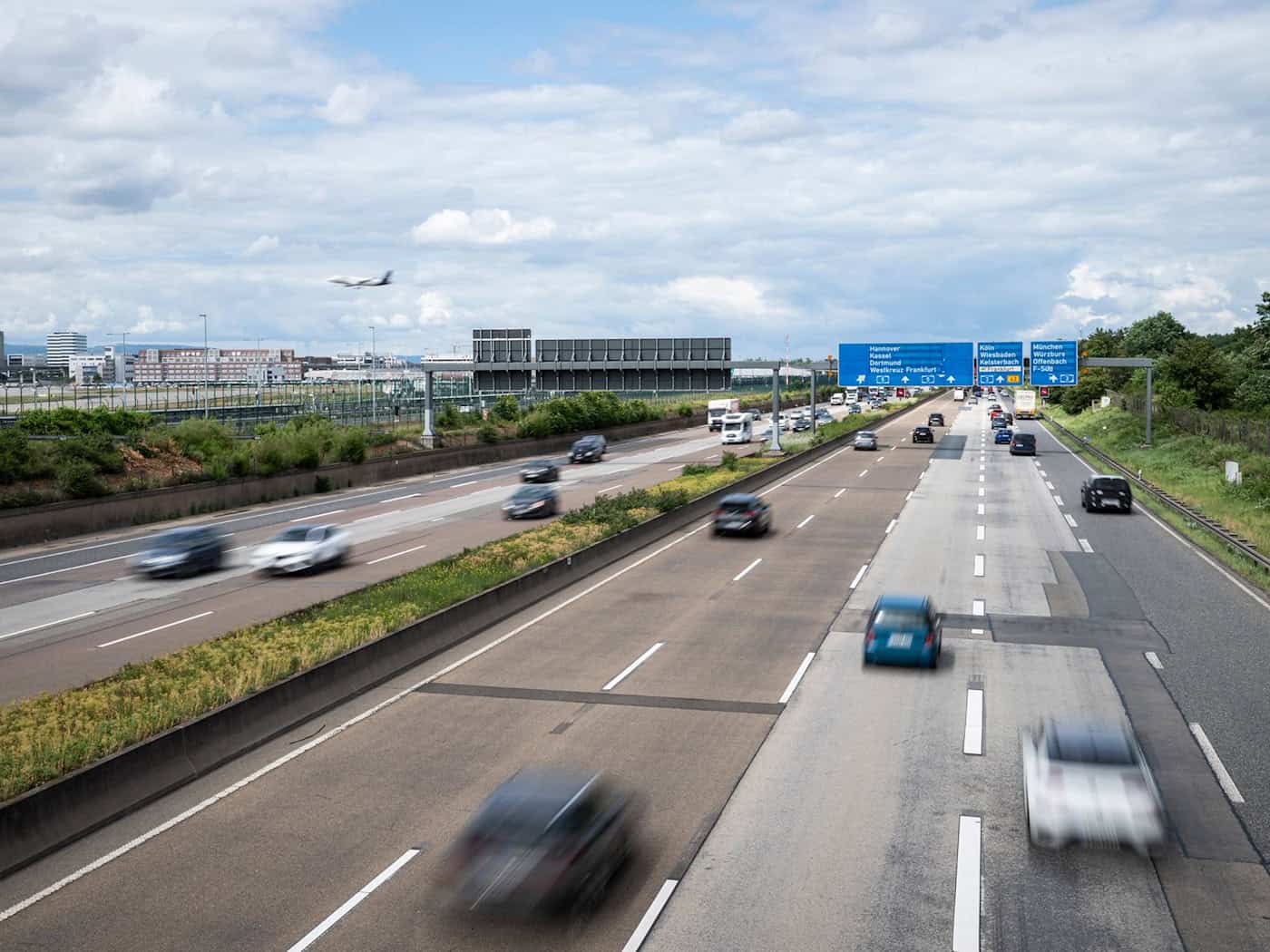
Forgot to use your turn signal, or changed to the left lane too early? According to a survey by Auto Club Europa (ACE), not everything goes smoothly when merging onto the highway. The traffic safety organization found that the most common mistake was failing to use turn signals. However, drivers also failed to make full use of the length of the acceleration lane, the report noted. According to ACE, certain on-ramps stood out for having particularly high rates of driving errors. Between March and June 2026, the traffic club’s testers observed nearly 18,000 merging maneuvers at 134 on-ramps on highways and other major roads as part of random spot checks. According to the findings, irregularities or driving errors were observed in one out of every five merging maneuvers, as the auto club reported in light of Road Safety Day on June 20. Failure to use turn signals, or using them too late or for too short a time, was by far the most common error, accounting for 69 percent of the 4,044 irregularities recorded. According to the ACE, changing lanes directly from the acceleration lane to the left lane is significantly more dangerous. This maneuver was the second most frequently observed, at 13 percent, and poses an increased risk because it can negatively impact the flow of traffic across multiple lanes. Drivers who want to merge safely onto a highway should use the entire length of the acceleration lane, the report stated. Truly critical situations, however, were observed far less frequently: According to the ACE, hard braking, dangerous merging maneuvers, or near-misses accounted for about 6 percent of the observed cases. For the study, on-ramps were observed for 30 minutes at a time. The results therefore essentially represent a small snapshot of traffic conditions and driver behavior. The rates of conspicuous behavior varied significantly depending on the location, the traffic club noted. At the on-ramp at the A61 interchange near Mutterstadt in Rhineland-Palatinate, as well as at the on-ramp to the A4 near Magdala in Thuringia, a high incident rate of 57 percent was recorded in each case. According to ACE, the Plauen-Ost (Saxony) on-ramp to the A72 showed an incident rate of 54 percent. The traffic club also sees major differences when comparing states: Saxony recorded the highest rate of traffic violations, driving errors, and hazardous situations at 33 percent—while Berlin had a much lower rate of 10 percent. The ACE is calling for more education on proper driving behavior and an assessment of problematic on-ramps. In addition, the traffic club is encouraging a discussion on whether the emergency lane should be used briefly in certain exceptional cases to make merging safer. Copyright 2026, dpa (www.dpa.de). All rights reservedFailure to use turn signals and direct lane changes
ACE mentions a few locations with particularly high rates of conspicuous behavior
Should the emergency lane be used in exceptional cases?


