

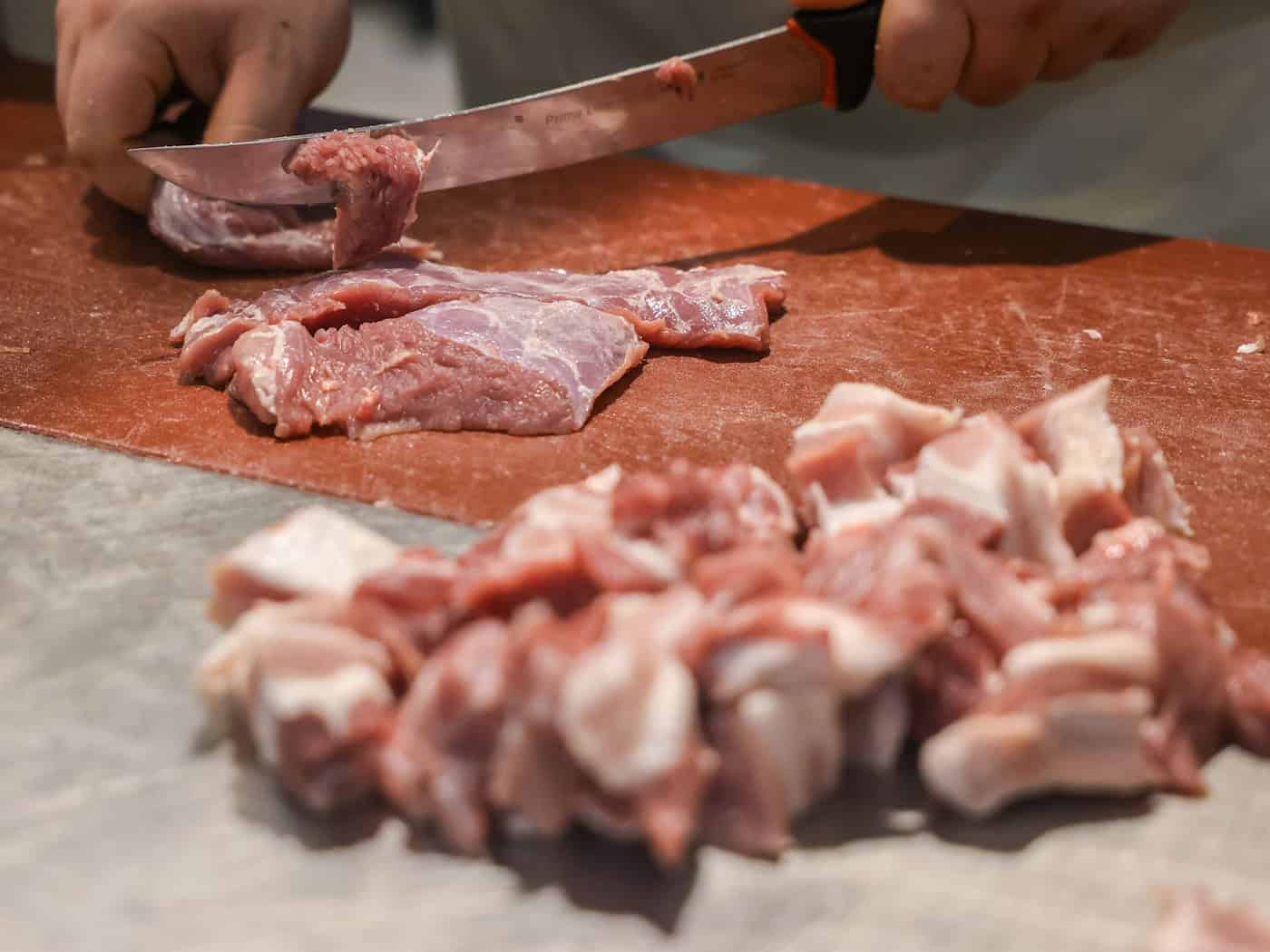
In Saxony, the number of butcher shops has declined significantly over the past ten years. According to information provided by the Regional Directorate of the Federal Employment Agency in response to an inquiry, 287 businesses specializing in meat processing were registered last year. Ten years earlier, there were 438. The number of butcher shops specializing in sales also fell by one-third to 206. In Saxony, 6,338 men and women were employed in meat production and sales last year. According to the Federal Employment Agency, this was 1,577 fewer people than ten years ago. The situation in the apprenticeship market is particularly problematic. As of this past August, 89 vocational training positions for butchers had been reported in the Free State of Saxony, of which 34 were still unfilled. In the field of specialized meat sales, 81 of 209 apprenticeship positions were still unfilled. It is true that the number of butcher shops has declined over the past ten years, said Lars Bubnick, managing director of the State Guild Association for the Saxon Butchery Trade, in response to an inquiry. “But that doesn’t mean the butchery trade is dying out.” The reasons for business closures are complex. “In most cases, it’s the lack of successors to take over the businesses or the growing labor shortage,” Bubnick explained. But rising costs, especially since the outbreak of the war in Ukraine, are also a possible cause. According to Bubnick, beef prices, among other things, have reached an all-time high. The biggest challenge is the staffing situation in the businesses, coupled with the current rise in costs. “Unfortunately, our farms do not benefit from the industrial electricity rate—only industrial facilities do.” It is very difficult to operate profitably under these conditions. At the same time, per capita meat consumption in Germany has recently risen again to just under 55 kilograms. Copyright 2026, dpa (www.dpa.de). All rights reservedTight Situation in the Apprenticeship Market
Guild Association: Succession Issues and Cost Pressure


